
The rumble of earthmovers in the Czech countryside was meant to signal progress. It was the sound of a new future, the D11 motorway stretching towards the horizon.
Instead, the machines uncovered a silent, sprawling testament to a violent past.
Just inches below the topsoil, archaeologists made a chilling discovery. Not one, but four mass graves, their occupants separated by over a century of history yet united in tragedy. This isn’t just a construction site. It’s a forgotten battlefield, a time capsule of European warfare holding secrets frozen for 150 and 280 years.
THE ASTONISHING FIND: METAL DETECTORS AND UNMARKED GRAVES
The discovery began not with a shovel, but with a beep. Ahead of construction, the Archaeological Centre Olomouc conducted systematic metal detector surveys along a 3.6-kilometre stretch of the planned motorway.
The devices screamed to life, detecting a shocking concentration of lead in the earth. Not modern debris, but ancient ammunition.
This electronic whisper from the past led to a full-scale rescue excavation. What they uncovered was a layered history of conflict. In one area, round musket balls from the 18th century. Just a few kilometres away, the elongated bullets of the 19th.
The earth was telling a story of two separate wars fought on the very same ground.
WHAT THE ARTIFACTS REVEAL: A STORY IN BULLETS AND BUTTONS
The 1745 Grave: A Rare Window into the War of Austrian Succession
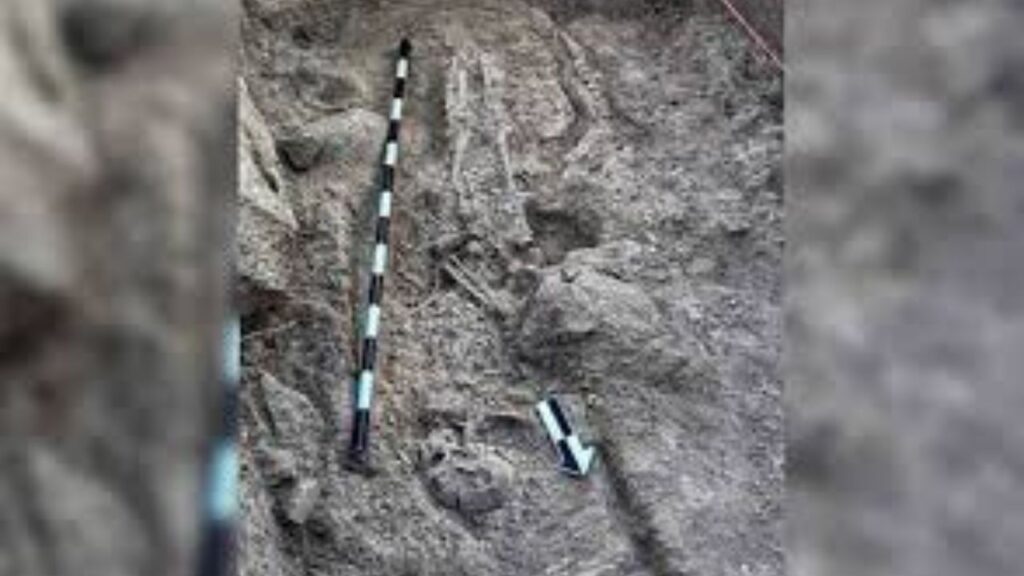
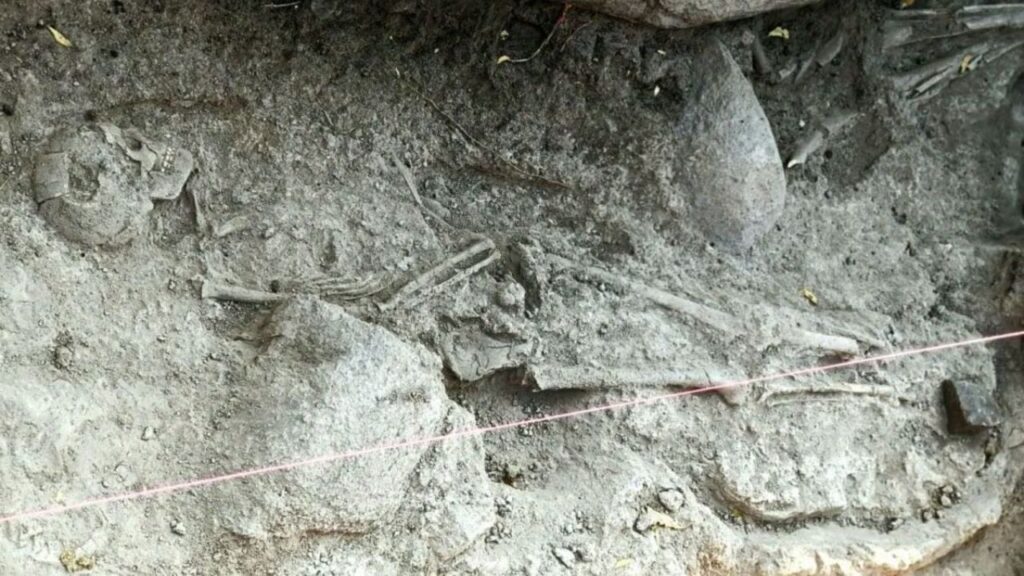
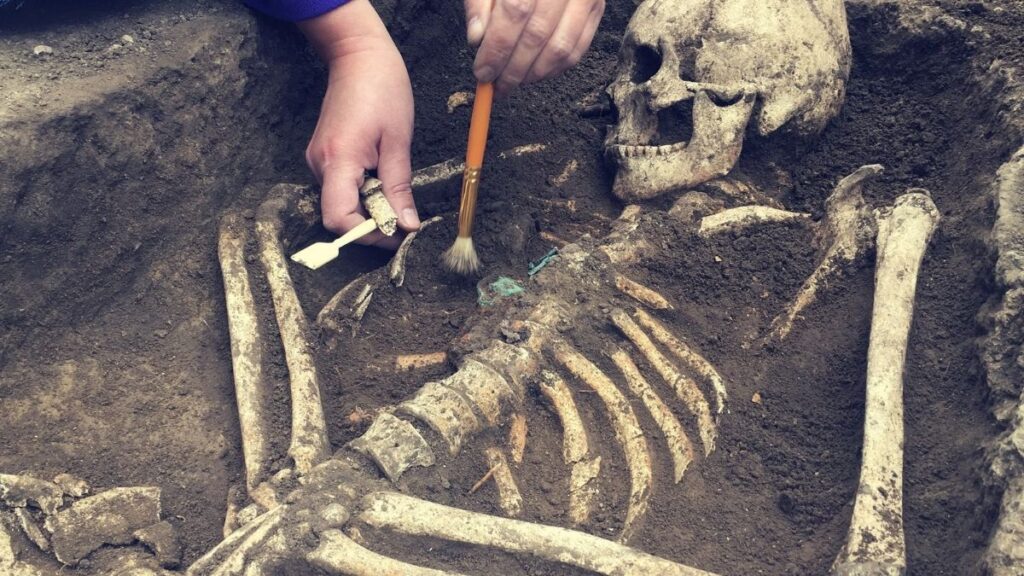
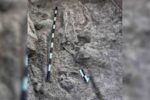
The oldest grave dates to the Battle of Žďár in 1745, part of the Second Silesian War. Inside, archaeologists found the skeletal remains of twelve individuals.
Several bore the horrific, unmistakable signature of battle: lethal gunshot wounds to the head. The grave, lying directly on the historical battle line now followed by the motorway, contained fragments of uniforms, buttons, and personal equipment.
“Which side the fallen belonged to” remains a mystery, making this a poignant puzzle. Such 18th-century mass military graves are exceptionally rare in Europe, making this a find of immense archaeological value.
The 1866 Graves: The Austro-Prussian War’s Frozen Moment
Over a century later, the Austro-Prussian War of 1866 raged across this landscape. The excavation revealed three mass graves from the Battle of Nový Rokytník on June 28, 1866.
Two graves held Prussian soldiers. One contained seven men, the other three. The preservation was extraordinary. Archaeologists recovered “more than 10 boxes of textile material”.
Among the finds were uniform parts, a mirror, and an intimate, everyday object—a pocket coffee grinder.
Just over a mile away, the largest grave was found. It held 23 Austrian soldiers. Their bones were poorly preserved, forcing a somber method of counting: the team tallied the pairs of boots still attached to lower limbs.
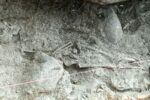
Yet, their belongings spoke volumes. A silver pocket watch adorned with a dog motif. A gold franc coin minted in 1854. A fitting from a saber scabbard, hinting at the presence of a non-commissioned officer among the dead.
GLOBAL IMPLICATIONS: WHY THIS DISCOVERY RESONATES WORLDWIDE
This is more than a local historical footnote. It is a microcosm of European history, a physical map of continental conflict.
The site captures a pivotal technological shift in warfare. The round musket balls of 1745 gave way to the more accurate, elongated rifle bullets of 1866, all found in the same field.
It highlights the brutal efficiency of 19th-century warfare. The separate, regimented burials of Prussian and Austrian troops after the 1866 battle show a swift, organized cleanup—a stark contrast to the coming industrialized carnage of the World Wars.
Most importantly, it transforms abstract historical dates into heartbreaking human stories. The coffee grinder, the pocket watch, the franc coin—these are not just artifacts. They are the last possessions of young men, a direct tactile link to lives cut short.
WHAT THIS MEANS FOR HISTORY: LAYERS OF CONFLICT, ECHOES OF HUMANITY
The D11 motorway discovery is a powerful reminder that history is not buried deep. It often lies just beneath our feet, waiting to be heard.
It validates the critical importance of rescue archaeology. Without the mandated surveys, this “highway of the dead” would have been paved over, its stories lost forever.
For historians, it provides an unparalleled, controlled archaeological context for two major wars. The artifacts will allow for detailed studies of military technology, uniform evolution, and soldier life in the 18th and 19th centuries.
For all of us, it is a monument to the universal cost of conflict. These graves, separated by 121 years, hold the same tragic content: young men from opposing sides, united in death on a foreign field. They remind us that the landscape of Europe is, in many places, a vast, unmarked cemetery.
The soldiers will soon be reburied with dignity. But their accidental exhumation forces a moment of global reflection. As we speed along modern highways, we are sometimes traveling directly over the silent, sacred resting places of history.
5 IN-DEPTH FAQs
1. How exactly were the graves discovered?
The discovery was methodical, not accidental. Before any construction began, archaeologists used metal detectors to scan the entire planned route of the D11 motorway. Concentrations of metal signals—specifically lead musket balls and bullets—pinpointed the locations for targeted excavation, revealing the graves.
2. How can archaeologists tell the graves are from two different wars?
The ammunition is the key. The 1745 grave contained round, spherical lead musket balls designed for smoothbore flintlock muskets. The 1866 graves held elongated, conical bullets designed for the rifled barrels of 19th-century firearms, which are far more accurate. The style of uniform buttons and other artifacts also confirms the periods.

3. Will they try to identify the individual soldiers?
Identifying individuals from 1745 is highly unlikely due to a lack of records. For the 1866 soldiers, while possible in theory through genealogical or military record research, the primary goal is anthropological study. The focus is on understanding the collective story—their health, ages, injuries—and preserving their artifacts. They will be reburied as a group.
4. What happens to all the artifacts that were found?
All recovered materials, from bones to textile fragments to personal items, have been transported to specialist laboratories in Olomouc. There, they will be cleaned, conserved, and studied in detail. Ultimately, the artifacts will be curated by the Museum of Eastern Bohemia in Hradec Králové for future education and display.
5. Why is finding a mass grave from 1745 considered so “rare”?
While mass graves from World War I or the Middle Ages are more common, those from the 18th century are exceptionally scarce in Europe. Battlefield clearance from this era was often thorough, and many temporary burial sites were later lost. Finding a grave in situ on the actual battle line, with artifacts preserved, offers an incredibly rare snapshot of warfare from the War of Austrian Succession.