
Forgotten Superhighway: For centuries, our history books painted the ancient world in isolated strokes. Mesopotamia here. Egypt there. The Indus Valley, mysterious and distant. A collection of solitary flames in the darkness.
But what if those flames were always connected by a brilliant, bustling web of trade and ideas? What if, at the very heart of that web, lay not a desert or a landlocked sea, but a subcontinent we are only now beginning to truly understand?
A revolutionary new exhibition in Mumbai is forcing a seismic shift in perspective. It declares a mind-blowing truth: India was not a peripheral player. It was the dynamic, pulsing centre of the ancient world.
The Astonishing Find: A Gallery of Global Threads
The evidence isn’t from a single, new dig. It’s in the connections.
The Networks of the Past: A Study Gallery of India and the Ancient World at the Chhatrapati Shivaji Maharaj Vastu Sanghralaya (CSMVS) performs intellectual archaeology. It pieces together fragments from across the globe to reveal a forgotten whole.
Imagine a 2nd-century sandstone Mother and Child from Mathura. Now, place it beside a Roman wine jug from Berlin and an Egyptian painted limestone stele from the British Museum.
This is the exhibition’s power. Through breathtaking juxtaposition, it screams a silent truth. These cultures were talking. They were trading. They were influencing each other’s art, faith, and daily life on a staggering scale.
The First Globalizers: The Harappan Code
To understand this network, we must start at the beginning. Over 4,000 years ago.
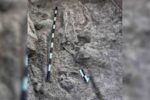
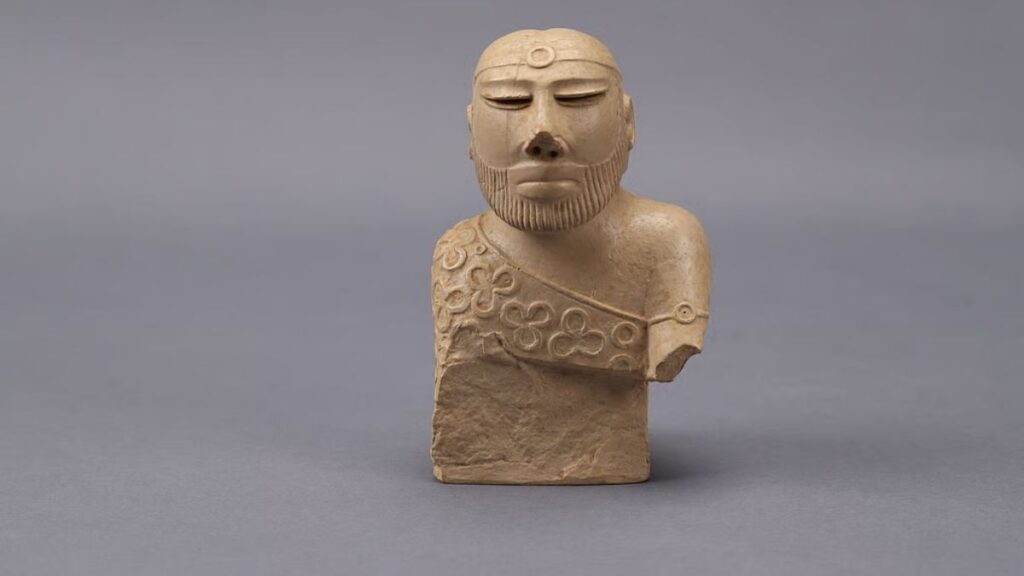
The Harappan Civilization (2600-1900 BCE) was long considered enigmatic. Its elegant, undeciphered script etched onto steatite seals seemed to lock away its secrets. But its artifacts speak a universal language of commerce and connection.
Archaeology now reveals a stunning portrait. Harappan beads made from Cambay carnelian have been found in Mesopotamian royal tombs. Their distinctively etched seals have turned up in ancient Gulf ports.
To the Sumerians, these master traders from the East were known as the people of “Meluhha.” This was not a myth. It was a trade designation for a sophisticated partner. Harappan dockyards at Lothal hint at a maritime ambition we are only starting to grasp.
They were exporting timber, ivory, gold, and exquisite crafts. They were importing silver, tin, and lapis lazuli. This was the Bronze Age’s internet—a complex, trans-oceanic supply chain.
The Golden Bridge: Winds, Monsoons, and Roman Gold
The network did not die with the Harappans. It evolved and exploded.
By the dawn of the Common Era, Indian sailors had mastered the monsoon winds. This was a revolutionary nautical discovery. It turned the Indian Ocean into a superhighway.
Roman historian Pliny the Elder lamented the drain of imperial gold to India. He was right to worry. Recent hoards of Roman coins found in South India are physical proof. They were payment for mountains of pepper, silks, gems, and steel.
Arikamedu in Tamil Nadu was a bustling Indo-Roman trading port. Indian spices filled the kitchens of Pompeii. Frankincense from Arabia flowed through Indian ports to temples across the ancient world.
India was the indispensable middleman. The vital link between the Mediterranean, Africa, Arabia, and the spice islands of Southeast Asia.
The Currency of Ideas: More Valuable Than Gold
The most profound exports were not material. They were intellectual.
As spices and textiles moved west, concepts and beliefs traveled along the same routes. The exhibition highlights this beautifully. Early Buddhist art from Gandhara shows the unmistakable influence of Greek aesthetics. A result of Alexander’s lingering legacy.
Indian numerals transformed mathematics. The concept of zero revolutionized global thought. Ayurvedic knowledge permeated medical traditions across Asia.
This was a two-way street. Architectural motifs, astronomical ideas, and artistic techniques flowed into India. They were absorbed, adapted, and refined. This cultural synthesis created the unique tapestry of Indian civilization.
What This Means for History: A New Central Axis
The implications of this connected history are profound. It shatters the outdated “West vs. East” dichotomy. It reveals a pre-modern world that was intensely interdependent.
India was not a secluded civilization developing in a vacuum. It was an open, networked hub. A colossal engine of economic and intellectual exchange for millennia.
The exhibition’s final focus on the great universities of Nalanda (India) and Alexandria (Egypt) is no accident. They were endpoints of this knowledge network. Both drew scholars from across the known world. Both were built on the free flow of ideas that India’s central position helped facilitate.
This rewrites our global narrative. It places India firmly at the crossroads of human endeavor. It shows that globalization is not a modern invention. It is an ancient reality. One where India played the starring role.
The Unanswered Questions: Your FAQ Guide
1. How was this “network” actually discovered?
No single discovery revealed it. It was pieced together over decades by archaeologists, numismatists, and historians. Key evidence includes: foreign artifacts in Indian sites (Roman coins, Mesopotamian seals), Indian artifacts abroad (Harappan beads in Ur), ancient texts (Greek, Roman, Sanskrit trade records), and the study of monsoon wind patterns enabling ocean travel.
2. Why isn’t the Harappan script deciphered? What would it tell us?
The script remains one of history’s great puzzles. With no bilingual text found (like a Harappan-Rosetta Stone), it resists decoding. If cracked, it could reveal their governance, religious beliefs, trade contracts, and literary world—potentially confirming the scale and nature of their global connections in their own words.
3. What was India’s most valuable ancient export?
While spices like pepper and black gold were immensely valuable, the concept of zero is arguably its most transformative and enduring “export.” It revolutionized mathematics, enabled calculus, and underpins our digital world today.
4. Did this ancient network decline? What happened?
The network transformed rather than vanished. Political shifts, the rise of new empires (like the Sassanians), and later, the opening of direct European sea routes to the Americas and Asia, changed trade dynamics. However, Indian Ocean trade never fully ceased; it was later dominated by Arab, Persian, and eventually European traders.
5. Where can I see physical evidence of this today?
Visit major museums like the CSMVS (Mumbai), the National Museum (New Delhi), or the British Museum. Look for sections on the Indus Valley, ancient trade, or Roman artifacts. Key evidence includes: Roman coin hoards, Indo-Roman pottery, Satavahana bronzes, and Gandharan sculptures showing Greek influence. The story is in the objects that traveled.