

Underground Discovery in Germany: We walk over forgotten worlds every day. Our cities are built in layers, each era burying the last. We assume the big finds are done—that archaeology is just polishing known treasures. Then, the earth gives up a secret.
In a small German town, during a routine survey, the ground revealed a shock. Not a fragment. Not a foundation. A pristine, cavernous space, silent and intact for centuries.
This isn’t a tomb in the desert or a ship in the deep. It’s a 1,000-square-foot vault, hidden beneath the familiar cobbles of a medieval town center. Its discovery proves a thrilling truth: the most profound chapters of our past aren’t just in remote sites.
They are sleeping directly beneath our feet.
The Astonishing Find: A Hollow in the Heart of Lichtenau
The setting is Lichtenau. Its town charter dates to 1321—a classic medieval settlement in Germany’s North Rhine-Westphalia.
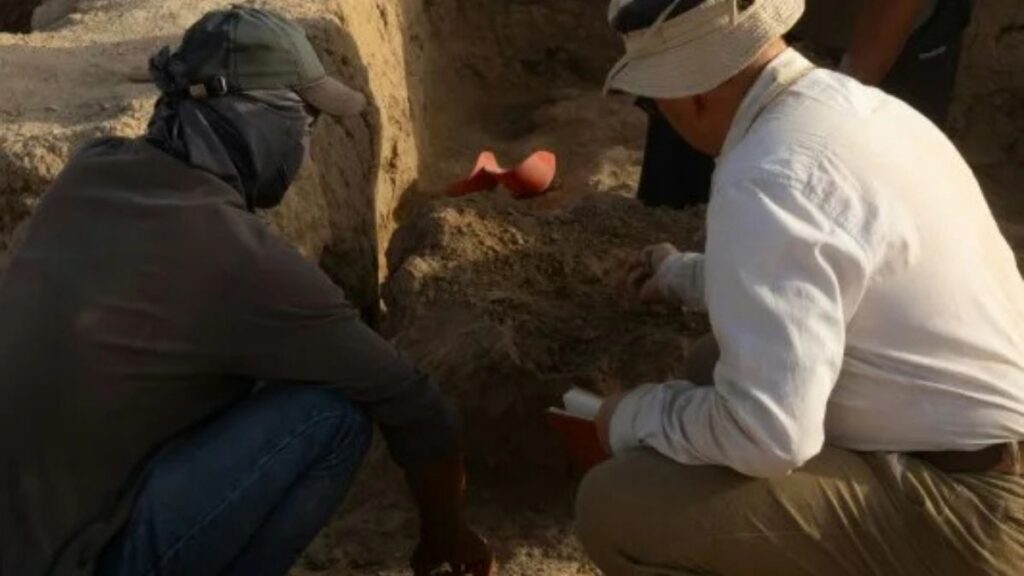
Archaeologists were conducting standard excavations. Then, their tools found emptiness where there should have been solid earth.
They had stumbled upon an architectural marvel. A vast, vaulted cellar, spanning over 1,000 square feet. Its brickwork was shockingly intact. Its space, eerily complete.
It sat ominously close to the site of a known medieval castle. The air within had been still since the Late Middle Ages. This was no forgotten crawl space.
It was a substantial, engineered room. A purposeful void preserved for 700 years.
What the Walls Whisper: Theories of a Hidden Purpose
Who built this? And why? The pristine stone holds its secrets tight, but experts are weaving compelling theories.
The sheer scale suggests major civic or commercial importance. This was not a simple root cellar for a peasant home. In the precarious economy of a young medieval town, such a secure space was invaluable.
Was it a communal storage vault? A place to safeguard the town’s grain reserves, precious wine, or traded goods from fire and raid.
Could it have been a clandestine workshop? The stable, cool temperature would be perfect for artisans working with beer, leather, or metals.
Or was it the beating heart of a lost building? Perhaps the only surviving part of a once-grand structure, its upper floors lost to fire or decay.
Its location near the castle is the crucial clue. This vault could reveal the hidden logistics of power. How a medieval lord stored his wealth. Or how a town fortified its economic survival.
Global Implications: The Accidental Archive
The Lichtenau vault is a stunning example of “accidental archaeology.” These unplanned finds are often the most revealing.
They bypass modern research biases. They appear where we least expect, filling gaps we didn’t know existed.
A family on a walk finds a 3,500-year-old Bronze Age dagger after a rainstorm. Roadworkers in eastern Germany uncover Mesolithic graves. Each find rewrites local narratives in an instant.
These discoveries form a global pattern. They tell us that our historical record is incredibly fragile—and miraculously resilient.
Protected by a perfect seal of soil and luck, entire chapters survive. Waiting for a plow, a shovel, or a construction crew to turn the page.
A Silent Lesson for the Modern World
This German vault is a wake-up call. It screams a simple truth: history is not a sealed book.
It is an active, subsurface layer of our world. The Lichtenau discovery underscores the non-negotiable value of archaeological surveying before construction.
It’s not a bureaucratic delay. It’s a rescue mission for stories not yet told.
For citizens everywhere, it’s an invitation to wonder. The park you cross, the old street you live on, the field at the town’s edge—they are all potential landscapes of mystery.
The past isn’t behind us. It’s directly below.
What This Means for History
The Lichtenau vault changes everything for that town. Its early history must now be re-evaluated around this physical hub.
But on a grander scale, it reinforces a powerful ethos in archaeology: humility. No matter how advanced our technology, chance remains a primary curator of the past.
The find is a testament to continuity. A 14th-century engineer built a room to last. Unknowingly, they built it for us to discover.
They created a time capsule of stone. Now, its door is finally open.
5 In-Depth FAQs
1. How was the vault discovered without anyone knowing it was there?
It was found during a routine archaeological assessment, a standard procedure in historic European towns before any underground work begins. Using careful manual excavation, archaeologists detected a change in soil compaction and then exposed the crown of the vault. No prior records or maps hinted at its existence, as it had been completely filled with earth and debris over centuries, making it invisible to ground-penetrating radar.
2. Why is its preservation considered so “rare” and “significant”?
Most medieval underground structures were either repurposed, filled in, or collapsed. To find one of this size completely intact, with its vaulted ceiling unsupported, is extraordinary. It hasn’t been looted or altered. It’s a sealed snapshot of medieval masonry and spatial design, offering pristine data on construction techniques, materials, and intended use.
3. What are the next steps for archaeologists studying the site?
The immediate focus is on secure documentation and structural stabilization. Every layer of fill inside the vault will be sieved and analyzed for artifacts—seeds, tools, pottery, coins—that can pinpoint its age and function. Dendrochronology (tree-ring dating) on any timber supports, and mortar analysis, will provide a precise construction date.
4. Could this be linked to hidden tunnels or networks found in other European towns?
While possible, it’s currently unlikely. Many medieval towns have legendary tunnel networks, often exaggerated in folklore. This structure appears to be a singular, large cellar. However, its discovery will prompt renewed investigation of local oral histories and maps for clues of other connected spaces, fundamentally reshaping Lichtenau’s known historical layout.
5. Will the public ever get to see this vault?
After full documentation and stabilization, there is a strong possibility. Such a visually impressive find often leads to a museumization process. Local authorities may install lighting, a secure entrance, and interpretive displays, integrating it into the town’s cultural heritage and tourism trail. It could become a centerpiece showcasing Lichtenau’s deep medieval roots.