
Imagine standing in the roar of modern Rome, just steps from the iconic Colosseum. The world sees a hill of imperial rubble. But beneath your feet lies a silent, stunning secret. A complete Roman home, frozen in time, its walls screaming with color. For centuries, it was the exclusive domain of emperors, then archaeologists. Now, for the first time in two millennia, the world is invited inside. This isn’t just a tour. It’s a digital resurrection.
The Astonishing Find: The House That Time (And Emperors) Buried
The Palatine Hill is the epicenter of Roman power. This is where Romulus supposedly founded the city. Where emperors built palaces touching the clouds. But long before the empire, this was Rome’s most exclusive neighborhood. The House of the Griffins is a miraculous survivor from that lost Republican era.
It was built between the 2nd and 1st centuries BC. This was the explosive final century of the Roman Republic. The age of Cicero, Caesar, and brutal civil wars. A wealthy, powerful family lived here, mere meters from the Forum’s political heart. Then, Emperor Domitian commanded a new imperial palace. His architects simply buried this luxurious home. It became a foundation. A time capsule sealed by empire itself.
Descending Virtually: The Revolution in Digital Archaeology
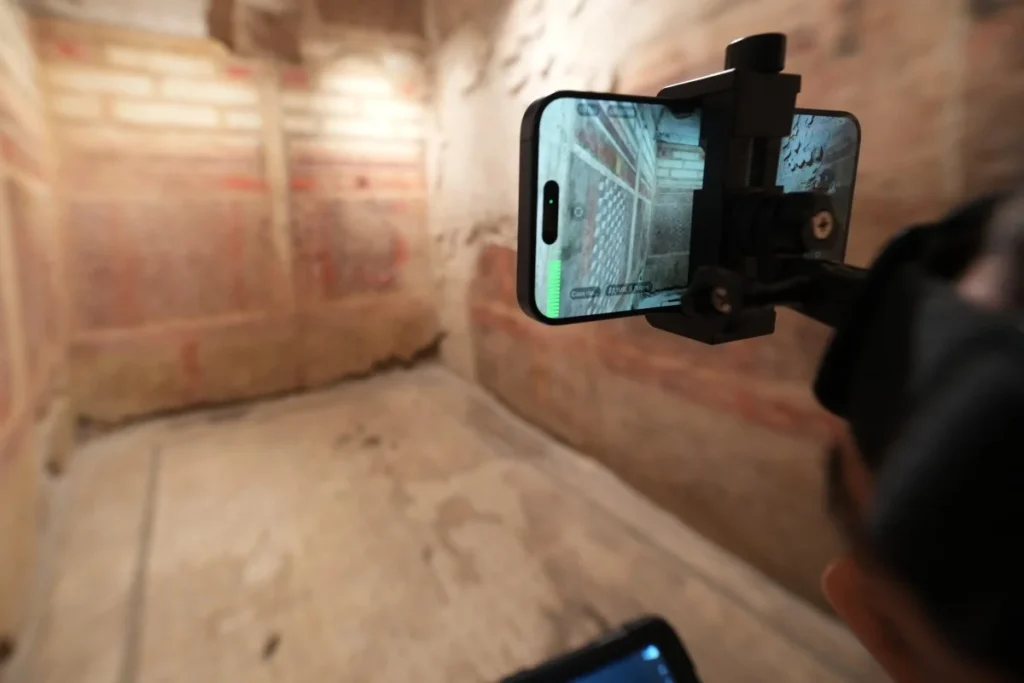
You cannot physically enter the House of the Griffins. The access is a sheer, treacherous staircase. The micro-climate is fragile. This is where technology performs its magic. Guides now descend wearing head-mounted cameras. They live-stream every step in crystal clarity. You stand above ground, watching on a screen, yet you are transported. This is a revolutionary bridge between preservation and access.
You glide through intimate rooms untouched by modern footfall. The guide’s light illuminates corners unseen for generations. The narration is in real time. This is raw, immediate exploration. It’s the closest possible experience to being the first archaeologist breaking through the ancient fill. It democratizes a discovery once reserved for a privileged few.
A Canvas of Power: Decoding the Mind-Blowing Frescoes
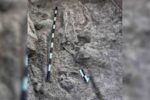
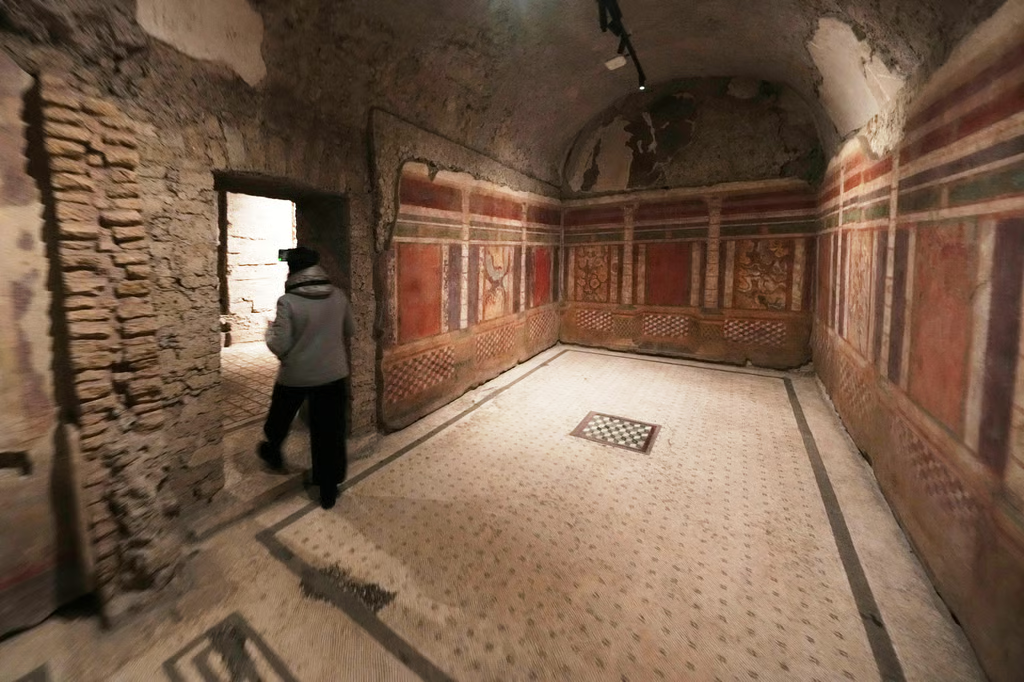
The visual shock is immediate. The walls are not crumbling stone. They are vibrant art. The restoration has revealed frescoes of staggering quality and preservation. They represent a rare, complete snapshot of Republican interior design. This is the “First Pompeian Style.” Artisans created stunning illusions of marble veneers and architectural blocks using only paint and plaster.
But the masterpiece is the namesake. Two majestic griffins face each other in an arched lunette. The griffin, guardian of divine power and priceless treasures. This was no casual decoration. It was a bold statement. A declaration of the homeowner’s wealth, intellect, and connection to the mythical. It shouted their status in a world before emperors. Every brushstroke was political.
Global Significance: A Window into the World Before Caesar
Why does this matter worldwide? Because the Roman Republic forged the blueprint for modern governance, law, and art. We know the empire’s grandeur. But the domestic world of the men who built that empire is shadowy. This house is that world. It captures the aesthetic and ambition of the ruling class just before the republic collapsed into autocracy.
The artifacts and layout whisper secrets of daily life. Of social rituals and private beliefs. Comparing it to homes in Pompeii or villas across the Mediterranean creates a richer, global picture of Romanization. It shows a unified artistic language spanning continents. This isn’t just a Roman story. It’s a chapter in the story of Western civilization’s foundation.
Theories and Whispers: Whose House Was This?
Archaeologists burn with a central question: who lived here? The location is paramount. A domus of this size and artistic quality on the Palatine’s slope was reserved for the elite. Senators? Military commanders? Perhaps a family linked to the powerful Claudii or the Fabii. The griffin motif suggests not just wealth, but a claim to intellectual and spiritual guardianship.
Some theorists suggest it could have been annexed into a later imperial complex. A secret garden retreat for an emperor seeking solace. The truth is still buried. Each digital visit generates new scrutiny. A global audience now becomes a crowd-sourced team of detectives, examining details once seen by only a handful of experts.
What This Means for History: The Future of the Past
The House of the Griffins virtual tour is a paradigm shift. It proves that our most fragile heritage need not be locked away. Digital access can protect the physical site while fulfilling the public’s right to experience it. This model can be applied globally—to flooded caves, unstable pyramids, or sacred sites too delicate for crowds.
It makes history visceral, immediate, and emotionally engaging. You don’t just read about Roman painting. You hover inches from it, following a beam of light. This technology doesn’t replace pilgrimage. It deepens it. It prepares a new generation to be stewards of a past they have already, virtually, touched.
In-Depth FAQs: Your Questions Answered
1. How was the site originally discovered?
The House of the Griffins was first uncovered during systematic excavations of the Palatine Hill in the early 1900s. Archaeologists digging into the foundations of Emperor Domitian’s palace found its vaulted ceilings. It was a classic example of how later Roman construction often preserved earlier layers.
2. Why has it taken so long to open to the public?
The extreme inaccessibility and conservation challenges were primary. The environment needed meticulous stabilization to prevent the frescoes from succumbing to humidity and temperature shifts caused by human breath. Digital access was the perfect solution to this universal archaeological dilemma.
3. What is the historical significance of the “First Pompeian Style” frescoes?
This style, dating from the 2nd century BC, is the earliest of the four Pompeian styles. It reflects Hellenistic Greek influence and a desire to emulate lavish, costly materials like exotic marble through paint. Finding it in Rome, especially in such pristine condition, helps trace the spread of artistic trends across the Mediterranean.
4. Could this technology be used for other inaccessible sites?
Absolutely. This is a groundbreaking prototype. Imagine virtual descents into the deepest chambers of Egypt’s pyramids, tours of inaccessible Amazonian rock art, or journeys through collapsed sections of the Catacombs. It’s a tool for global, equitable cultural heritage access.
5. What are the next steps for research at the site?
Non-invasive techniques are key. Laser scanning will create a millimeter-perfect 3D model. Spectral imaging might reveal hidden underdrawings or later alterations in the frescoes. Soil and plaster analysis could pinpoint the exact pigments and workshop techniques. The virtual access itself allows experts worldwide to collaborate in real-time study without ever stressing the site.