
What if a handful of forgotten coins could rewrite the narrative of an entire empire? Not just as economic tokens, but as portable propaganda, whispering secrets of faith, power, and breathtaking cultural fusion across two millennia.
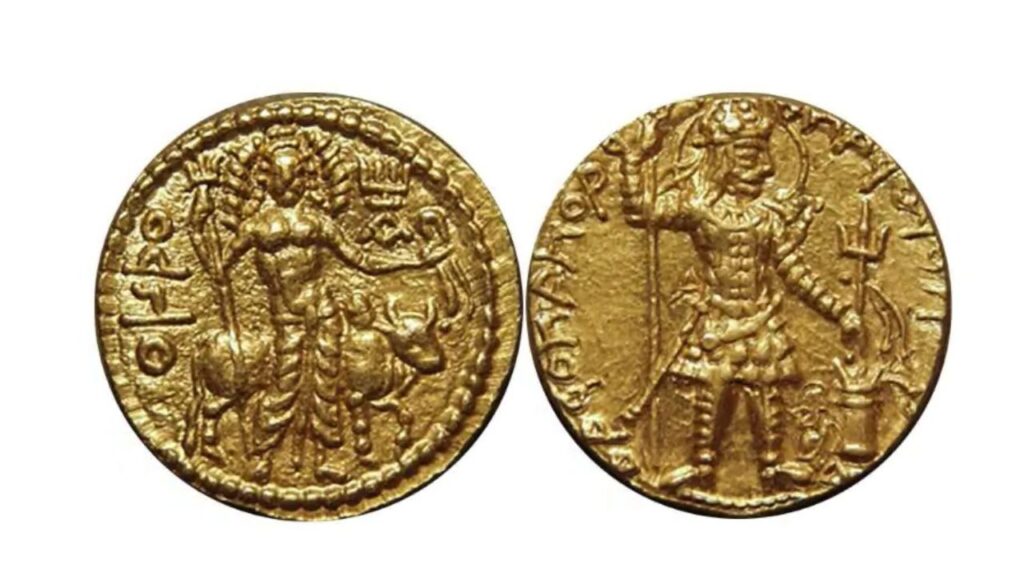
In a quiet field in Pakistan, archaeologists have struck rhetorical gold. A cache of 2,000-year-old bronze coins, bearing the stoic image of King Vasudeva, has been unearthed. But it’s the message stamped on the reverse that is sending shockwaves through the historical community.
This isn’t just a monetary find. It’s a direct line to the soul of the Kushan Empire. A revolutionary discovery proving that this ancient superpower thrived on a radical idea: religious pluralism as state policy.
The Astonishing Find: More Than Just Loose Change
The discovery was made at the historic Bhir Mound near Taxila. This is no ordinary archaeological site. Taxila was the epicenter of learning and commerce, a crucible where East met West.
Archaeologists were meticulously sifting through layers of history when the earth gave up its treasures. Tarnished bronze coins, once exchanging hands in bustling markets, emerged. Alongside them, fragments of deep blue lapis lazuli stone told a longer, even more fascinating story.
A Timeline in the Dirt
The lapis lazuli fragments date to the 6th century BCE. This brilliant blue stone, sourced only from distant Afghanistan, proves Taxila’s role in long-distance trade networks for centuries.
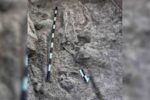
The coins, however, belong to the 2nd century CE. They are firmly from the reign of King Vasudeva I, one of the last great rulers of the Kushan Dynasty. This single dig site encapsulates over 800 years of continuous cultural and economic activity.
What the Artifacts Reveal: A King and His Gods
Scientific numismatic analysis revealed the coins’ mind-blowing details. On the obverse, the portrait of King Vasudeva stares out, a symbol of temporal authority. The reverse, however, is where the true historical bombshell lies.
The Divine Revelation
Stamped beside the king is the clear image of a female deity. She is Ardoksho, the Kushan goddess of wealth and prosperity, a direct analog to the Greek goddess Hera and the Roman Juno.
This pairing is revolutionary. It was a conscious, state-sanctioned declaration. The king’s power was shown to be inextricably linked to divine favor. But not just one divinity from one tradition.
A Pantheon on a Paycheck
Kushan coinage is famous among historians for its theological diversity. Earlier rulers like Kanishka the Great issued coins featuring a staggering array of figures. Greek, Zoroastrian, Sumerian, and Indian deities stood alongside Buddha and Shiva.
Vasudeva’s coin continues this tradition. It physically proves the empire’s enduring ideological framework. Power was not derived from enforcing a single state religion, but from patronizing and harmonizing the myriad faiths of its subjects.
The Global Implications: The First Multicultural Superpower?
The Kushan Empire was the silent giant of the ancient world. It controlled the Silk Road nexus, connecting Rome, China, Persia, and India. This find at Taxila offers a masterclass in how they managed such diversity.
Taxila: The Ancient World’s Metropolis
The discovery of both coins and imported lapis lazuli underscores Taxila’s monumental role. It was a cosmopolitan hub where Gandharan art fused Greek realism with Buddhist spirituality.
Think of it as a first-century CE global city. Philosophers, traders, monks, and artists mingled. The Royal Highway linked it directly to Pataliputra in India, facilitating an endless flow of ideas and goods.
A Blueprint for Coexistence?
In an era often simplified into tales of conquest and dogma, the Kushans present a different model. Their coins were miniature billboards broadcasting a message of inclusivity to a vast, multi-ethnic population.
This tangible evidence from Vasudeva’s reign suggests this wasn’t a fleeting policy. It was a cornerstone of imperial stability that lasted for centuries. It challenges our modern assumptions about ancient societies being inherently insular or theocratic.
What This Means for History: Rewriting the Narrative
The Bhir Mound discovery is not just about adding coins to a museum tray. It’s a corrective lens on a forgotten era of profound syncretism.
First, it cements the Kushan Empire’s reputation as a pragmatic and culturally intelligent regime. Their power was built on economics and ideology, on swords and symbols.
Second, it elevates Taxila’s status. This was not a peripheral outpost. It was a beating heart of administration, trade, and theological dialogue whose influence rippled across continents.
Finally, these artifacts force us to reconsider the map of ancient globalization. They are physical proof of interconnectedness. A king in Central Asia used iconography from the Mediterranean to govern a population steeped in Indian and Persian traditions.
It was a world far more connected, and far more thoughtfully managed, than we often imagine.
In-Depth FAQs
How was the site discovered?
The Bhir Mound in Taxila is a known archaeological site, first excavated in the early 20th century. Recent digs by Pakistani archaeologists, using modern stratigraphic methods, targeted deeper, less-explored layers. This systematic approach led to the precise uncovering of the coin hoard and lapis lazuli fragments in situ.
Who exactly was King Vasudeva?
Vasudeva I was a major Kushan emperor who ruled circa 190-230 CE. He is considered one of the last “Great Kushans” before the empire began to fragment. His reign maintained the empire’s vast trade networks and, as this coin proves, continued its legacy of religious patronage, particularly towards Hinduism and local deities.

Why is the lapis lazuli discovery significant?
Lapis lazuli has only one major ancient source: the Badakhshan mines of Afghanistan. Finding fragments dating to 600 BCE in Taxila pushes evidence of long-distance trade networks back centuries before the Kushans. It shows Taxila was a wealthy, connected node in a pre-Silk Road exchange system, trading for this precious commodity for ritual or decorative purposes.
What does this prove about religious beliefs?
It provides irrefutable material evidence of state-sponsored religious pluralism. The Kushans didn’t merely tolerate other faiths. They actively incorporated their iconography into the most universal tool of state power: currency. This was a powerful, daily reminder to all citizens that their diverse beliefs had a place within the empire.
How does this change our view of the ancient world?
It challenges the “clash of civilizations” narrative. The Kushan Empire demonstrates that the ancient world had sophisticated models for multicultural coexistence. This find underscores that globalization and cultural fusion are not modern phenomena, but ancient realities that shaped the course of human history on a grand scale.