


For millennia, the sea has been history’s most powerful vault. It hasn’t just hidden ships; it has swallowed entire cities, locking their stories in darkness-1. Today, a combination of technological brilliance and environmental urgency is forcing that vault open. As modern sea levels creep upward, archaeologists are racing against time to study ancient precursors drowned by the same forces-4. What they are finding is a mind-blowing, interconnected narrative of human ambition, natural disaster, and forgotten eras. From a 7,000-year-old stone wall off France to opulent Roman resorts, these seven sunken metropolises are delivering a revolutionary message: our past is a ghostly mirror of our potential future-6-8.
The Silent Cataclysm: How Cities Drown
The ocean floor is not a natural home for cities. Their presence there marks moments of profound crisis. The causes are as varied as history itself, but they often boil down to Earth’s raw power and its slow, relentless changes-1. Violent earthquakes can liquefy the very ground beneath a metropolis, as likely happened to the Greek city of Helike in 373 B.C.-1. Tsunamis, like the colossal wave generated by a Mediterranean quake in A.D. 365, can devastate coastlines in an instant-1. More insidious is subsidence, the gradual sinking of land, which allowed the sea to claim the Egyptian ports of Thonis-Heracleion and Canopus over centuries-1.
Perhaps the most globally significant force is rising sea levels. Since the last Ice Age, melting polar ice has raised global oceans by over 425 feet, drowning countless prehistoric settlements-1. Each submerged city is a unique time capsule, preserved by the very water that destroyed it. Cold, dark, low-oxygen environments can slow decay to a near halt, protecting wood, fabric, and even organic materials for thousands of years-4. This creates a paradox: the sea is both the destroyer and the ultimate conservator.
Rewriting History, One City at a Time
1. Thonis-Heracleion & Canopus: Egypt’s Drowned Gateways
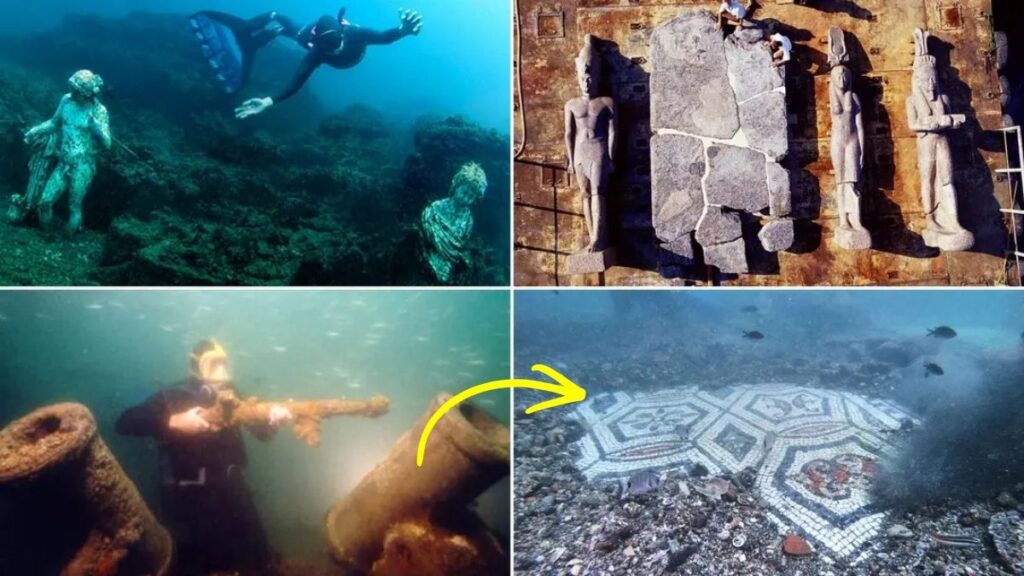
For over a millennium, the twin ports of Thonis-Heracleion and Canopus were mere legends. Then, in 2000, a team led by underwater archaeologist Franck Goddio found them in Abu Qir Bay-1-4. These were not just Egyptian cities; they were bustling international hubs. Recent missions have revealed a Greek sanctuary dedicated to Aphrodite within Thonis-Heracleion, proving deep cultural exchange long before Alexander the Great-2. Canopus is now revealing a “complete Roman-era city” with temples, quays, and sophisticated fish tanks, showcasing a continuous, wealthy occupation that adapted across empires-2. Their discovery rewrites the map of ancient Mediterranean trade, showing a dynamic, multicultural world where Egyptian, Greek, and Roman cultures converged.
2. Baiae: The Sunken Sin City of Rome
While Pompeii was frozen in ash, its notorious neighbor, Baiae, was claimed by the sea. This was the pleasure resort of Rome’s elite, infamous for its hedonism-2. Recent dives have uncovered stunning new details of its opulence. In 2024, archaeologists revealed an ornate mosaic and opus sectile floor in a submerged villa-2. By 2025, they announced the discovery of a complete Roman bathhouse with intact heating systems-2. These finds are not just about luxury; they are a window into the elite engineering and architectural prowess funded by imperial excess. Baiae’s slow submersion, due to volcanic bradyseism (the gradual rising and falling of land), offers a perfect, accessible laboratory for underwater archaeology-2.
3. Pavlopetri: The World’s Oldest Sunken City
Off the coast of Greece lies Pavlopetri, a city that thrived around 3500 B.C.-1-4. This makes it the oldest known submerged city in the world. Its incredible preservation includes a full street grid, buildings, courtyards, and a complex water management system-1-4. The discovery of Minoan-style loom weights suggests it was a key textile trade center, connecting mainland Greece with the advanced Minoan civilization of Crete-1. Pavlopetri forces historians to radically rethink the scale and sophistication of early Bronze Age commerce and urban planning in Europe.
4. Toru-Aygyr: The Silk Road City Beneath a Lake
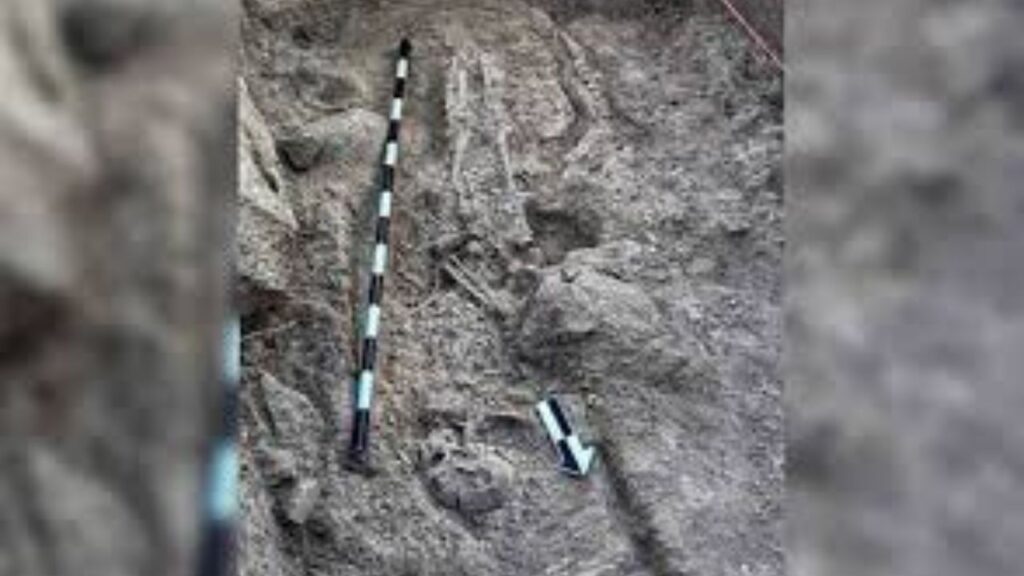
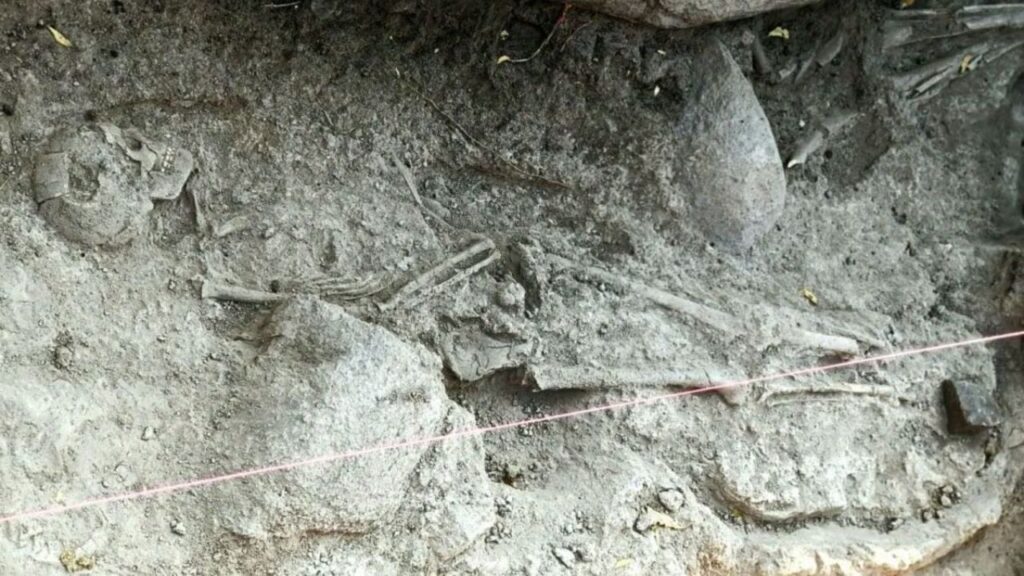
In the high mountains of Kyrgyzstan, Lake Issyk-Kul holds a secret: the medieval city of Toru-Aygyr. Long thought a minor outpost, 2025 surveys confirmed it was a major Silk Road urban center-2. The discovery of a 13th-14th century Muslim necropolis, with burials meticulously aligned toward Mecca, proves it was a settled, religious community-2. Finds of a grain mill, large ceramic vessels, and fired-brick buildings point to a self-sufficient, prosperous hub-2. Its drowning, likely from a 15th-century earthquake, captures a snapshot of Central Asian medieval life at the crossroads of the world-2.
5. Dwarka: Bridging Hindu Legend and History
The city of Dwarka is central to Hindu scripture, described as the glorious kingdom of Lord Krishna-4. For centuries, it was considered myth. Marine archaeology off the Gujarat coast has changed that. While ongoing, investigations have revealed stone structures, anchors, and pottery that point to a major ancient port-2-4. Early 2026 saw the launch of a renewed, high-tech exploration mission by the Archaeological Survey of India, aiming to finally map its full submerged footprint-2. Dwarka sits at the thrilling intersection of faith and science, where archaeology is beginning to trace the outline of a legendary past.
6. Port Royal: The Pirate City That Sank in Minutes
The story of Port Royal, Jamaica, is one of sudden, moralistic doom. On June 7, 1692, a massive earthquake struck this “wickedest city on earth,” a bustling haven for pirates and merchants-4. Within minutes, two-thirds of the city slid into the Caribbean Sea. Unlike slowly drowned cities, Port Royal offers a macabre, instantaneous snapshot of 17th-century colonial life. Archaeological digs have revealed streets lined with shops, homes filled with everyday objects, and even a pocket watch stopped at the moment of disaster-4. It is a stark reminder of nature’s unpredictable power.
7. The Ghost Walls of Brittany: A 7,000-Year-Old Enigma
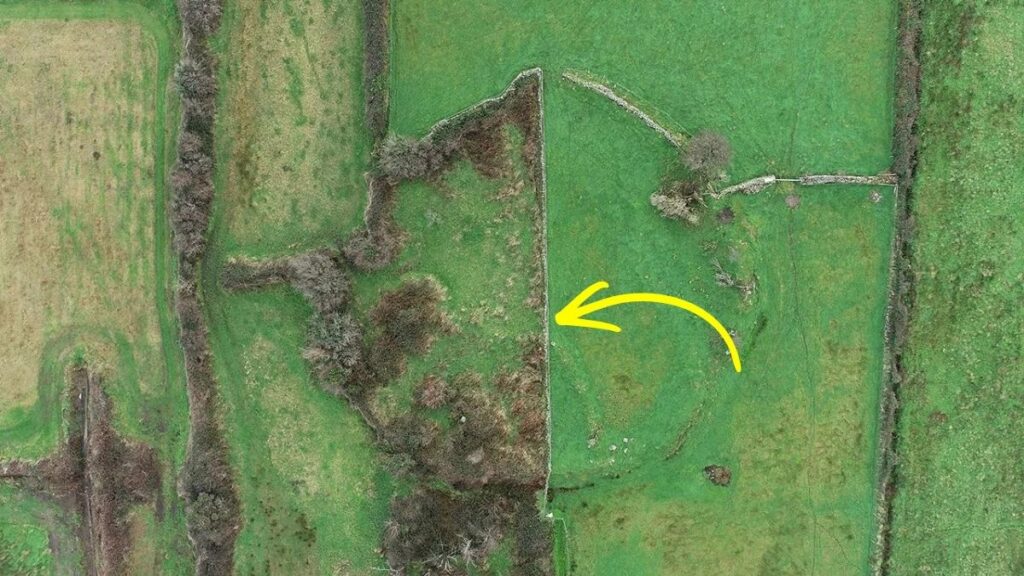
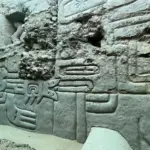
Sometimes, the most revolutionary find isn’t a city, but a hint of one. Off the coast of Brittany, France, divers found a massive 400-foot-long stone wall, dating back an astonishing 7,000 years-6-8. Built by Mesolithic hunter-gatherers when sea levels were lower, its purpose is mysterious—perhaps a fish trap or a flood defense-6. Its scale, requiring “technical skills and social organization” to move multi-ton stones, shatters our view of pre-agricultural societies-8. Researchers suggest such drowned structures may be the real-world origins of local legends about the sunken city of Ys, showing how ancient traumas echo in myth-6-8.

What This Means for History: A Mirror to Our Future
The lesson from these seven cities is profound and urgent. They demonstrate that environmental change and geological instability have always been fundamental shapers of human destiny. The communities of Pavlopetri and Brittany were transformed by post-Ice Age sea-level rise-1-6. Thonis-Heracleion and Canopus likely fell to a combination of rising waters and unstable, liquefying ground-1. Today, with modern climate change accelerating sea-level rise, we are not just observers of this history—we are potential subjects of the next chapter-4. These sunken cities are not merely relics; they are case studies in resilience, adaptation, and sometimes, catastrophic failure. They teach us that the line between a thriving port and a drowned ruin has always been perilously thin.
In-Depth FAQs: Your Questions Answered
1. How do archaeologists find and study these cities?
The hunt starts with historical texts, local lore, and geological surveys-5. Researchers then use remote sensing tools like side-scan sonar and magnetometers to map the seafloor and detect anomalies-3-5. Once a site is located, teams of scientific divers conduct meticulous surveys, using underwater photography, 3D photogrammetry, and even autonomous robots to create precise maps without disturbing the site-1-4. It’s a slow, methodical process of non-intrusive data collection before any artifact is ever moved-3.
2. Why are artifacts often better preserved underwater?
Water can be an excellent preservative. Cold, dark, anaerobic (low-oxygen) environments, like those found in the Black Sea or deep silt, dramatically slow the decay of organic materials like wood, leather, and even food-4. This is why shipwrecks can remain intact for millennia. However, saltwater is also corrosive, and the moment artifacts are raised, a race against time begins to conserve them through complex processes like desalination-4.
3. What is the single oldest thing ever found underwater?
While cities like Pavlopetri are ancient, even older structures exist. In 2024, a 10,000-year-old stone wall was discovered in the Baltic Sea off Germany, believed to be a hunting structure built by Stone Age communities-6. Closer to “cities,” the 7,000-year-old wall off the coast of France provides stunning evidence of complex social organization long before the pyramids were built-6-8.
4. Are these sites threatened today?
Absolutely. Beyond natural erosion, the greatest threats are human activity. Looting, destructive fishing practices (like bottom trawling), and coastal development can destroy sites in an instant-3. Furthermore, climate change and pollution are altering the very marine environments that have preserved these sites for centuries. Protecting them is an international challenge addressed by agreements like UNESCO’s 2001 Convention on underwater cultural heritage-4.
5. How does a city simply “sink” without being completely destroyed?

Catastrophic sinking is rare. More often, it’s a gradual process. Subsidence, as seen in Baiae and the Nile Delta, slowly lowers the land-1-2. Coupled with a steady rise in sea level, this allows water to encroach over decades or centuries. Buildings may collapse over time, but their foundations, streets, and heavier artifacts settle into the silt, creating a preserved urban plan. Earthquakes can cause sudden liquefaction, where water-saturated soil loses its strength, causing structures to tilt and sink relatively intact, as may have happened at Thonis-Heracleion-1.