
Imagine a single drop of tree resin, falling through a humid, dinosaur-thronged forest. It lands, entombing a tiny wasp in a golden prison. For 100 million years, that scene remained frozen. Not as a flattened impression, but as a perfect, three-dimensional snapshot of life. That droplet of time has just been opened. What scientists found inside is revolutionizing our understanding of a lost era and showcasing a preservation so flawless, it feels like cheating time itself.
The Astonishing Find: More Than Just “Insect in Amber”
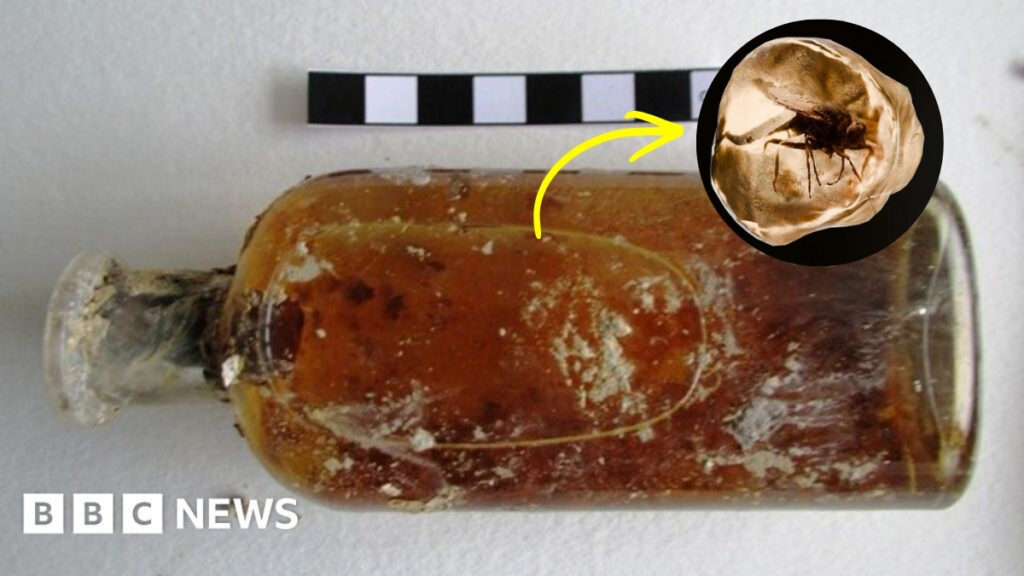
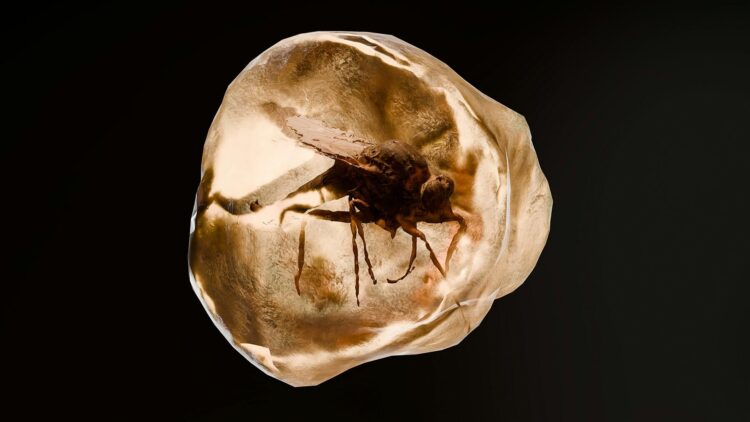
This is not a scene from Jurassic Park. This is real, groundbreaking science emerging from the hallowed caves of Cantabria, Spain. The El Soplao cave system, a paleontological treasure trove, has yielded another miracle. Encased within a fragment of Cretaceous-period amber is a newly discovered species of wasp, Cretevania orgonomecorum.
The creature’s preservation is nothing short of miraculous. Every microscopic detail is intact. The delicate structure of its antennae. The intricate venation of its wings. The fine hairs on its exoskeleton. This level of detail is the holy grail for paleontologists. It transforms a fossil from a mere silhouette into a biological dossier.
7 Cities the Sea Stole- How Underwater Archaeology is Rewriting History
2,000-Year-Old King’s Coins Unearthed in Pakistan Shatter Ancient Myths
Why Amber is the Ultimate Time Capsule
Amber is fossilized tree resin. It acts as a natural embalming fluid, dehydrating and enveloping organisms in a sterile, anoxic environment. This halts decay and prevents distortion. The result is a specimen preserved in lifelike pose, often with soft tissues and even cellular structures intact. Each piece is a miniature ecosystem, a window into a single moment in deep time.
Decoding the Time Traveler: Cretevania orgonomecorum
The newly christened Cretevania orgonomecorum is a revelation. It belongs to the Evaniidae family, known today as “ensign wasps” for their flag-like abdomen. But this ancient ancestor tells a far older story.
A Key to Dating the Ancient World
Researchers have identified this group as a potential “guide fossil.” This is a revolutionary concept. Because Cretevania species are widely distributed and evolved rapidly, their presence in a rock layer can help pinpoint its age with remarkable accuracy. Finding this species helps calibrate the geological timeline of the entire Cretaceous period across continents.
Anatomy of a Discovery
The wasp is notably larger than its known relatives. Its unique antennae and wing vein patterns provide new diagnostic “fingerprints.” These features allow scientists to reclassify and better understand the entire Cretevania genus. It’s a single data point that sharpens the entire picture of ancient insect evolution.
Global Implications: Rethinking a Prehistoric Planet
This tiny wasp is a proxy for a vanished world. The Cretaceous period (145-66 million years ago) was a time of profound global change. Flowering plants were exploding in diversity. Dinosaurs ruled the land. The continents were slowly shifting into their modern positions.
A Snapshot of a Lost Ecosystem
The presence of this wasp in Spanish amber hints at a lush, dense forest ecosystem. Such insects often have complex relationships with plants and other animals. Its discovery adds a crucial piece to the puzzle of Cretaceous food webs and biodiversity. It shows life thriving in intricate complexity long before humans walked the Earth.
Unholy Relic or Jovial Jester? The 400-Year-Old Glass Phallus That Shatters Convent Stereotypes
Spain’s Amber on the World Stage
Lead researcher Enrique Peñalver of the IGME-CSIC has highlighted “the extraordinary paleontological richness of Spanish amber.” This find elevates the El Soplao deposit to global significance. It joins legendary sites like the Hukawng Valley in Myanmar and the Baltic region as a premier window into prehistoric life. The site has already yielded over 1,500 inclusions and 30 new species. The potential for future discoveries is staggering.
The Silent Revolution in Paleontology
This discovery underscores a quiet revolution in how we study the ancient past. Gone are the days of relying solely on pickaxes and sketches. Today’s paleontologists wield micro-CT scanners. This technology allows them to create perfect 3D digital models of specimens without ever physically extracting them from the amber.
They can digitally “dissect” the wasp, layer by layer. They can study mouthparts, internal structures, and even potential parasite loads. This non-invasive technique preserves the original specimen forever while unlocking secrets our predecessors could only dream of seeing.
What This Means for History
The unsealing of this 100-million-year-old time capsule is more than a new species entry. It is a profound reminder of life’s resilience and complexity. It proves that the smallest creatures often hold the keys to the grandest narratives. They are the constant threads in the ever-changing tapestry of life on Earth.
This wasp lived through the zenith of the dinosaur age. It witnessed a world alien to our own. Its flawless preservation now allows it to bear witness to us. It challenges us to think deeper about time, preservation, and our endless quest to understand the planet’s forgotten chapters.
Every such discovery is a message in a bottle from a different shore of time. And with modern technology, we are finally able to read them in their original, breathtaking language.
In-Depth FAQs
1. How was this specific amber time capsule discovered?
The fragment was uncovered during a systematic excavation of the El Soplao amber deposit in Cantabria, Northern Spain. This site has been meticulously studied since its major announcement in 2008. Researchers screen through layers of sediment and amber-bearing rock, often discovering inclusions under microscopes in the lab long after the initial dig.
2. How can scientists be sure it’s 100 million years old?
The age is determined through biostratigraphy and geological context. The amber layer is sandwiched between rock strata of known age, based on other index fossils and radioisotopic dating. The specific evolutionary stage of the wasp itself, compared to other dated Cretevania species, also provides a highly accurate chronological marker.
3. What makes this better than a typical dinosaur bone fossil?
While bones reveal structure, amber preserves biology. It captures organisms in life-like detail, including soft-bodied creatures that almost never fossilize otherwise. It can preserve behavioral moments (like an insect laying eggs) and ecological interactions (like a wasp caught in a spider web), offering a dynamic snapshot rather than a static skeleton.
4. Could we ever extract DNA from such a well-preserved specimen?
The current scientific consensus is no. Despite phenomenal morphological preservation, DNA molecules degrade over such immense timescales—millions of years. While Jurassic Park remains fiction, the anatomical data we can extract is invaluable for understanding genetic and evolutionary relationships through comparative morphology.
5. What are the next steps for this research?
The priority is non-invasive analysis. The specimen will undergo high-resolution micro-CT scanning to build a complete digital model. This model will be studied by entomologists worldwide to decipher its full anatomical secrets. It will also be compared to other Cretaceous wasps from amber deposits in Lebanon, Myanmar, and France to map global insect dispersal in the ancient world.