



Egypt’s Wonders: For centuries, the Great Pyramid has stood as a silent, stoic challenge to human ingenuity. Its very existence whispers a tantalizing question: how? How did a Bronze Age civilization move 2.5 million stone blocks, some weighing more than two adult elephants, into near-perfect alignment? The classic answer—an army of men dragging blocks up massive ramps—has always felt incomplete. It’s a theory straining under the weight of the stones themselves. Now, a revolutionary idea is surging to the surface. What if the ancient Egyptians didn’t just conquer the desert? What if they mastered one of nature’s most fundamental forces to build their wonders? What if the key to lifting the pyramids was, in fact, water?
The Astonishing Find: Scans and Shadows
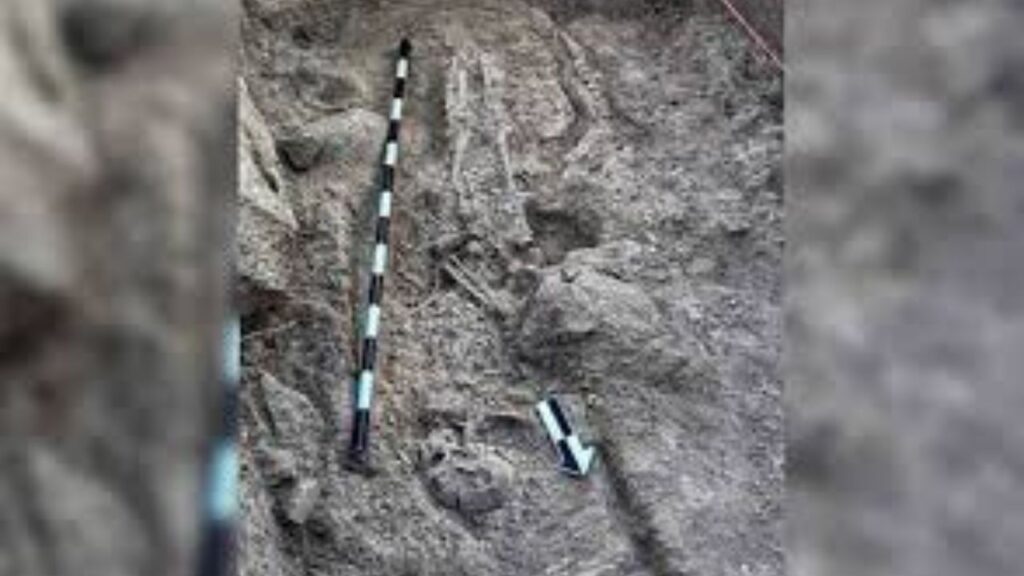
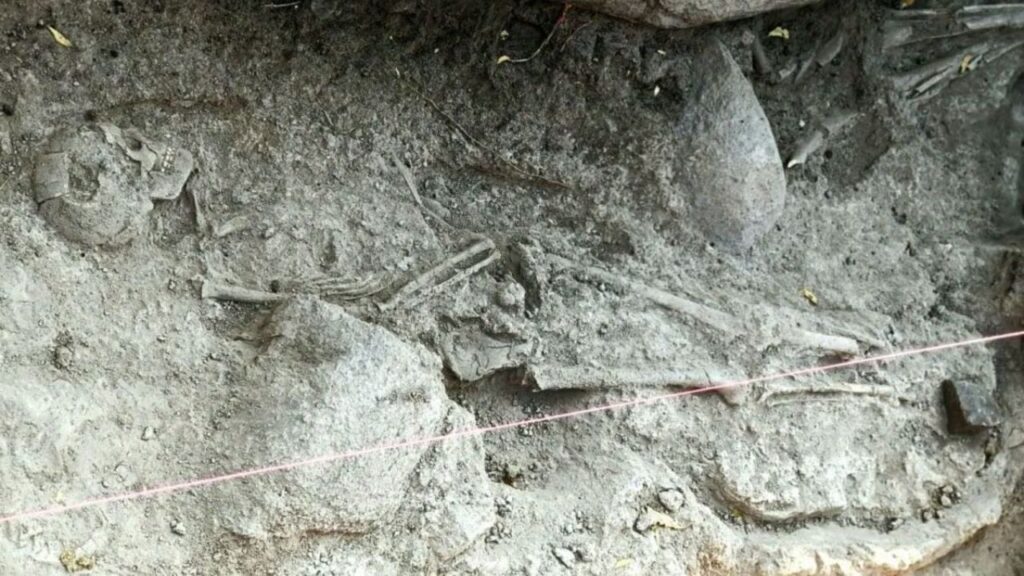
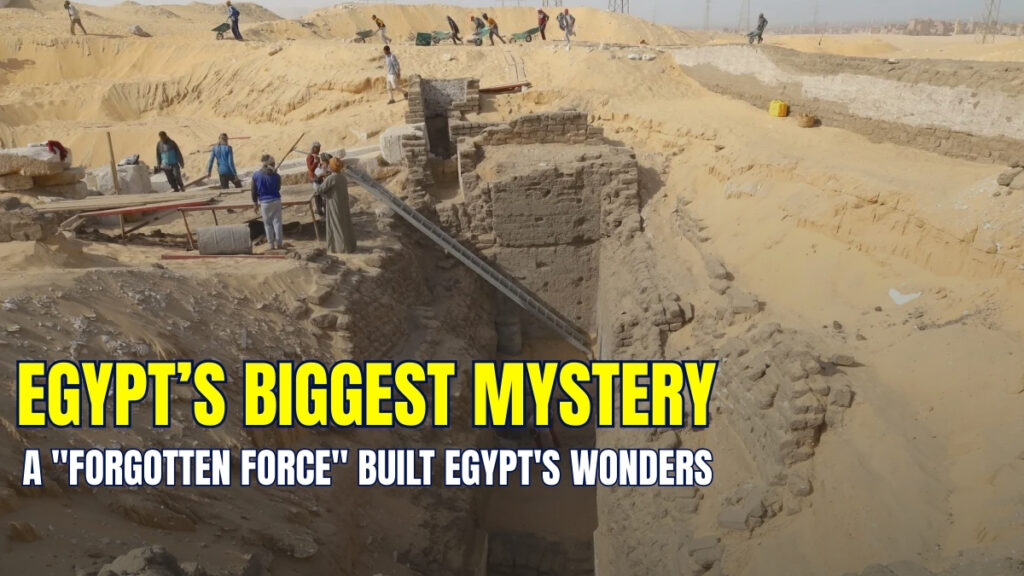
The story doesn’t begin at Giza, but 30 kilometers south, at the sands of Saqqara. Here stands the Step Pyramid of Pharaoh Djoser, the prototype, the genesis of all Egyptian pyramids. Recent ground-penetrating radar and meticulous site analysis have revealed something extraordinary. The complex is laced with a network of subterranean channels and what appears to be a vast, ancient reservoir system.
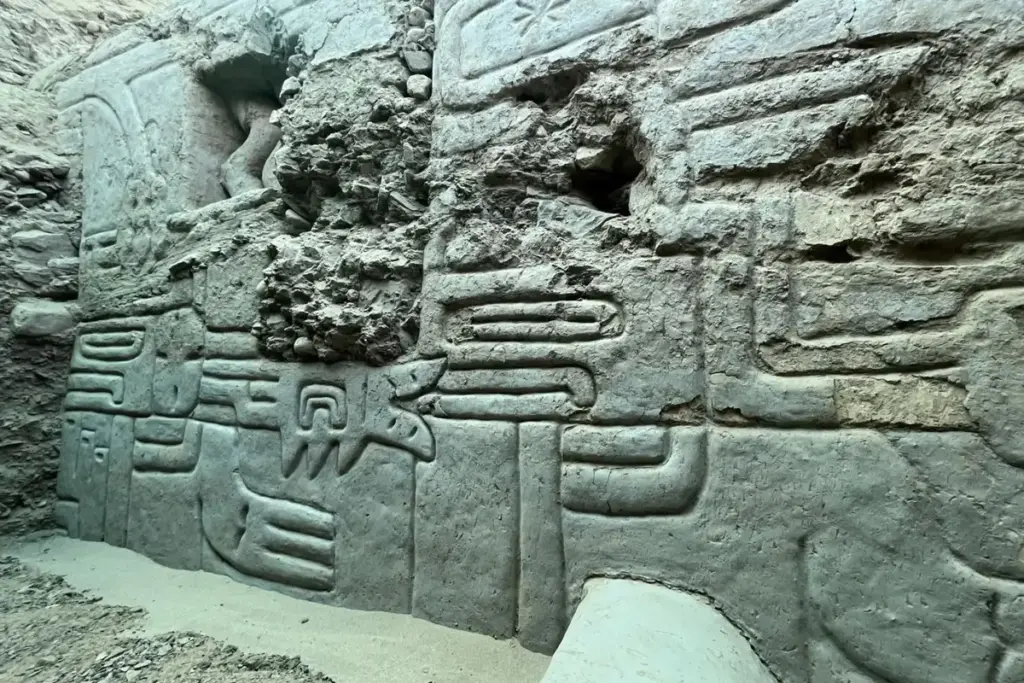
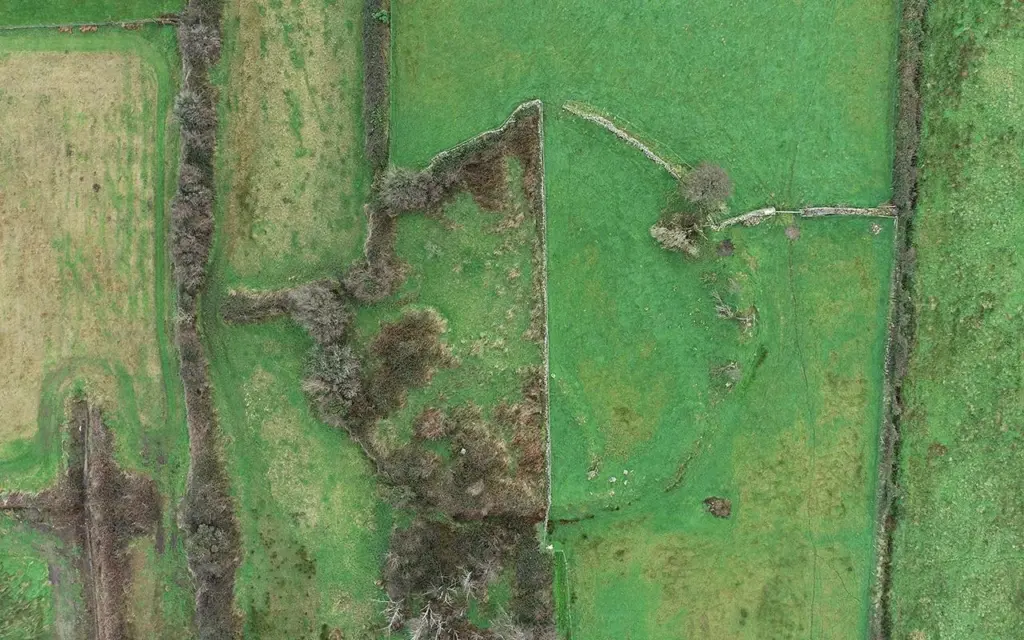
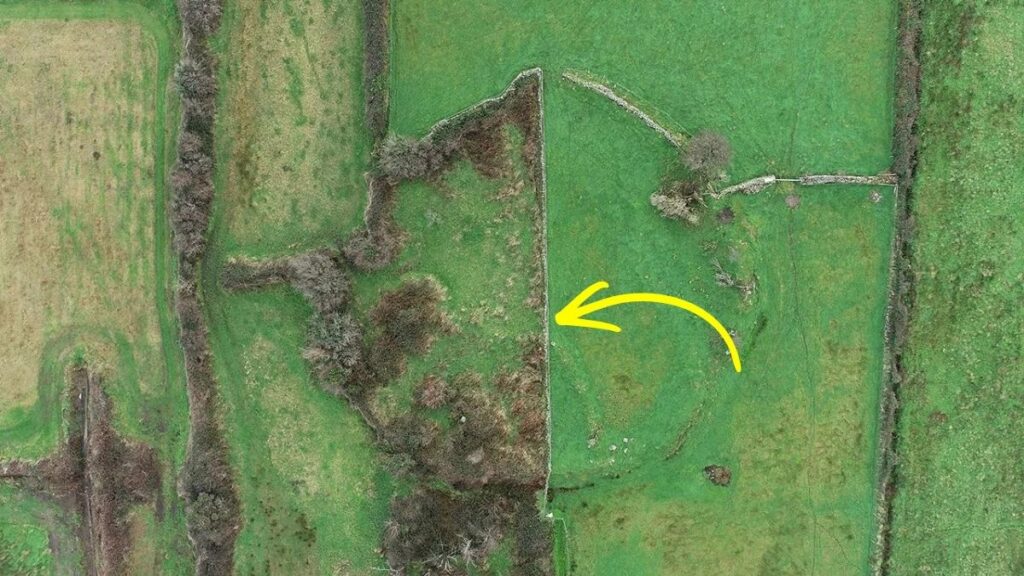
For decades, a mysterious, monumental wall near the site was cataloged as a fortress or a ceremonial enclosure. But the new data paints a different picture. Its structure, location, and hydrological context are consistent with one thing: a check dam. This was not a barrier against armies, but a sophisticated means of capturing and controlling seasonal water flow from the Nile. The ancient builders weren’t just moving earth; they were engineering water.
What the Artifacts Reveal: Blueprint in Stone
This is where the theory transforms from speculation into a compelling architectural argument. Led by researchers like Dr. Xavier Landreau, a re-examination of the Step Pyramid’s core has yielded mind-blowing insights. The focus is on the pyramid’s deep, internal vertical shaft—a feature long puzzling to Egyptologists.

Surrounding this shaft are intricate arrangements of granite boxes and limestone blocks sealed with ancient, water-resistant clay. These aren’t just burial chambers or symbolic rooms. Their placement and design are functionally consistent with a hydraulic system. They suggest settlement basins, pressure chambers, and water outlets.
Most telling is the architecture of the shaft itself. Its smooth, sealed interior and strategic alignment with the hypothetical water catchment area create a perfect scenario. It is the ancient equivalent of a piston chamber. The theory proposes that submerged barges or counterweighted containers, lifted by controlled water pressure within this shaft, could have hoisted massive stone blocks with a efficiency and scale that ramps alone could never achieve.
Global Implications: Rewriting the Engineering Timeline
This isn’t just about one pyramid. It’s about shattering our perception of ancient technological capability. If proven, this “hydraulic lift” hypothesis places advanced fluid dynamics and mechanical engineering knowledge in the 27th century BC. That’s over 4,500 years ago.
It recontextualizes the entire Old Kingdom. The ancient Egyptians were not merely tomb builders guided by ritual. They were proto-engineers of the highest order. They understood their environment with a genius we are only now beginning to decode. This theory connects dots across the ancient world. It invites us to re-examine massive stone works from Gobekli Tepe to Stonehenge with new questions about the “forgotten forces” their builders might have harnessed.

The implications are seismic. It suggests a lineage of applied science that predates the Greeks by millennia. This was a civilization that saw a river not just as a source of life, but as the ultimate power tool. They didn’t fight the landscape; they recruited it as a silent partner in their most ambitious projects.
The Counter-Theory and Why It Matters
Skepticism, of course, is the bedrock of good archaeology. The traditional “ramp theory” school remains powerful. They point to archaeological evidence of ramp remnants at sites like the Hatnub alabaster quarries and the unfinished pyramid of Sekhemkhet.
Yet, the hydraulic theory doesn’t necessarily erase ramps. Proponents propose a hybrid model. Ramps may have been used for the massive lower tiers, moving stones into position at the base. But for the final, dizzying ascent to the pyramid’s apex—where constructing a stable ramp becomes geometrically monstrous—the water-powered internal lift would have been the elegant, practical solution.
This fusion of ideas is perhaps the most exciting. It portrays the pyramid builders not as users of a single, brute-force technique, but as versatile masters of multiple technologies. They were problem-solvers who adapted their methods to the ever-growing challenge above them.
What This Means for History: A New Chapter Unfolds
The discovery, if fully validated, forces a historic paradigm shift. The pyramids stand not as monuments to sheer human toil, but to applied scientific wisdom. It elevates the ancient Egyptian architect from an overseer of labor to a genius of environmental physics.
This theory also solves lingering logistical nightmares. It explains how the finest, heaviest granite beams from Aswan, placed in the King’s Chamber deep within the Great Pyramid, could have been positioned with such precision. Dragging them up a narrow, steep ramp seems almost impossible. Lifting them vertically through a water-filled shaft, however, becomes a manageable, controlled operation.
The world’s oldest wonder may have just revealed its youngest secret. And in doing so, it reminds us that the past is never fully understood—it is only waiting for us to look at it with fresh eyes, and to listen to the whisper of forgotten forces.
5 In-Depth FAQs: Your Questions, Answered
- How was this “hydraulic system” actually discovered?
The breakthrough came from interdisciplinary analysis. Hydrologists studying ancient Nile flood patterns, combined with archaeologists re-excavating the Saqqara complex, noticed the anomalous “dam” structure. Advanced subterranean scanning then revealed the extensive channel network feeding toward the pyramid site. Re-assessment of the pyramid’s internal architecture, led by teams like Dr. Landreau’s, provided the final, crucial link. - What is the concrete evidence for water being used inside the pyramid?
The evidence is architectural and material. The specific layout of the deep central shaft, the presence of water-tight seals (like certain clay binders), and the strategic placement of granite “boxes” that align perfectly with hydraulic piston chamber principles form a compelling chain of logic. While the water itself is long gone, the engineered pathways designed to contain and direct it remain. - Doesn’t this contradict all known Egyptology?
It doesn’t contradict; it complicates and enriches. Egyptology has always evolved. The discovery of the worker’s town at Giza revolutionized our understanding of the labor force. This theory seeks to revolutionize our understanding of the engineering. It fits within the known brilliance of Egyptian mathematics and astronomy, applying it to a new domain: large-scale mechanics. - Could this technique have been used for the Great Pyramid of Giza?
Absolutely. The Giza plateau has its own fascinating hydrological features, including evidence of a major ancient harbor and canal system delivering stones to the base. The internal structure of the Great Pyramid, with its Grand Gallery and so-called “construction chambers,” has long baffled experts. Some researchers now posit the Grand Gallery’s unique corbelled design could have served as a slide or track for a massive counterweight system, potentially water-balanced, to lift the heaviest beams. The theory is currently being modeled for Giza’s unique architecture. - What’s the next step to proving this theory?
The next phase involves non-invasive verification. Expect more sophisticated muon tomography scans (cosmic-ray imaging) to map density voids inside the Saqqara pyramid that could correspond to ancient hydraulic channels. Simultaneously, soil core sampling around the suspected dam and canals will search for geological signatures of sustained, artificial water retention. This is a slow, meticulous process, but each new data point brings us closer to understanding one of humanity’s ultimate achievements.