
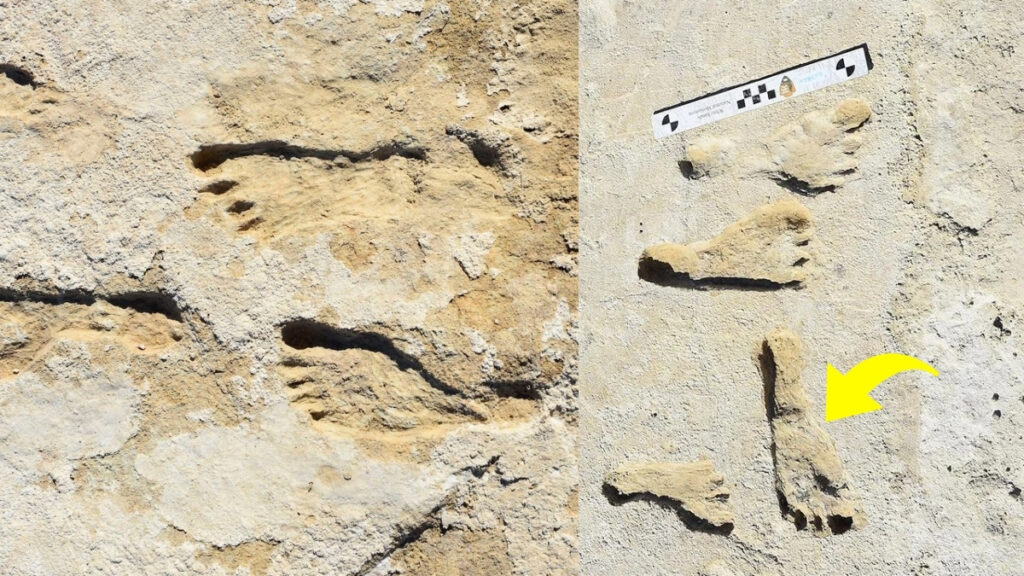
Imagine a scene 800,000 years ago. A small band of early humans trudges across a vast, muddy estuary in what is now eastern England. The air is cool but not frigid. They are far, far north of their ancestral homeland. Behind them, the fleeting impressions of their feet are left in the silt.
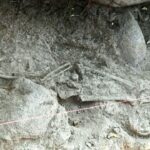
Then, imagine those same footprints emerging from the sand today, exposed for a few brief hours by the brutal North Sea tides before being erased forever.
This is not a cinematic fantasy. It is a revolutionary archaeological reality. On a storm-battered beach in Norfolk, scientists have documented the oldest human footprints ever discovered outside of Africa. This is not merely a discovery of ancient bones or stone tools. This is a direct, intimate snapshot of a single day almost a million years ago. It is a ghostly echo of a journey that fundamentally reshapes our understanding of human courage, migration, and survival in a forgotten era.
An Unlikely Chain of Geological Miracles: How the Footprints Survived
The survival of the 800,000-year-old footprints at Happisburgh is a story of near-impossible geological luck. Their preservation required a perfect, multi-step sequence of events—a literal one-in-a-million alignment of conditions. It defies the norm, as soft sediment impressions are among the most fragile and ephemeral of all archaeological evidence.
Here’s the remarkable chain of events that preserved this momentary walk:
1. The Perfect Impression Medium: Estuarine Silt
The group walked across a tidal river mudflat at the edge of an ancient estuary. The sediment was ideal: fine-grained, cohesive silt, damp enough to hold a sharp impression (like perfect molding clay), but not so waterlogged that it immediately collapsed. This created a crisp, detailed print.
2. Rapid Burial: The First Seal
This is the most critical step. Shortly after the prints were made—likely within days or weeks—they were gently but completely covered by a layer of fine sand or silt during a seasonal flood or tidal event. This layer protected the delicate impressions from wind, rain, and further trampling. If they had been exposed for long, they would have eroded away completely.
3. Deep Geological Entombment
Over centuries and millennia, more and more sediment accumulated on top, burying the footprint surface dozens of meters deep. The immense weight compressed the layers, but the sequence remained intact. This deep burial shielded the negative space of the footprints (the hollows themselves) from the destructive forces of ice ages, rivers, and weathering that sculpted the landscape above.
4. Mineralization and Stabilization
As groundwater percolated through the sediments, minerals like calcium carbonate likely precipitated around the particles lining the footprints. This process, a very early stage of fossilization, helped cement the shape in place, essentially creating a natural cast within the surrounding matrix.
5. The Modern Reveal: Coastal Erosion
Finally, in the modern era, the relentless North Sea waves began eroding the coastline at Happisburgh, cutting back the cliffs. This acted like a geological scalpel, slicing through the millennia of overlying deposits and re-exposing the buried estuarine layer horizontally on the modern beach foreshore. The erosion had to be precise—too aggressive, and it would have destroyed the layer entirely; too slow, and it would remain hidden.
6. The Final, Fleeting Window
The layer containing the footprints was exposed on a tidal beach. It was revealed only during particularly low tides and after storms had scoured away the modern beach sand. This gave archaeologists a vanishingly brief window—literally hours—to discover, document, and digitally capture the footprints before the sea returned to obliterate them forever.
In essence, the footprints survived because they were made in ideal mud, sealed quickly, buried deeply and peacefully for 800,000 years, and then revealed with just enough warning for science to record them. Their preservation is not due to being frozen in ice or baked in arid ash, but to a perfect, gentle sequence of sedimentary events—a geological lottery won against astronomical odds. What we have now is not the original mud impression, but its hardened, mineralized ghost, captured in digital form just in time.