
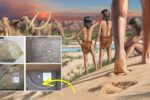
The World’s Oldest Wooden Toolkit: Imagine a shallow, marshy lakeshore 430,000 years ago. A small band of early humans has returned to the carcass of a massive straight-tusked elephant. The air hums with activity. Stone flakes slice through thick hide. But the scene holds a revolutionary secret, one that has remained invisible at nearly every other ancient site on Earth.
Alongside the stone tools—durable and commonly found—they are using tools made of wood. One individual shapes an alder branch into a sturdy digging stick. Another uses a whittled sliver of willow for a delicate task. Then, they leave. The tools are dropped, forgotten, and slowly swallowed by the soft, wet lakeshore mud.
For millennia, that very waterlogged environment performed a miracle. It created an oxygen-poor tomb that halted decay. It preserved the unpreservable. Now, at Marathousa 1 in Greece, archaeologists have recovered these wooden artifacts. They are not just the oldest wooden tools ever discovered; they are a breathtakingly intimate portal into the sophisticated, multi-material mind of our ancient ancestors.
The Astonishing Find: The Waterlogged Miracle
The setting of Marathousa 1 is the unsung hero of this discovery. The site was a paleo-lake margin, a dynamic environment where humans repeatedly butchered megafauna.
The Preservation AnomalyWood, plant matter, and soft tissues are the ghosts of the archaeological record. They rot away within years or centuries. At Marathousa, the constant waterlogging created anoxic conditions. This low-oxygen environment stifled the microbes and fungi that cause decay. It’s the same process that preserves sunken ships and bog bodies. For Paleolithic archaeology, it’s a lottery win.
Sifting for ShadowsThe recovery was a feat of meticulous patience. Dozens of fragmented, discolored pieces of wood were lifted from the saturated sediments. To the untrained eye, they were mere muddy splinters. The true challenge began in the lab.
Forensic Analysis: Separancing Human Genius from Natural Chaos
Under microscopes, researchers became forensic detectives. Their mission: distinguish human craftsmanship from the relentless damage of nature over 430 millennia.
The Evidence of IntentionThey analyzed surface topography, internal cell structure, and wood species. They had to rule out damage from carnivore teeth, rodent gnawing, root pressure, and geological crushing. Two fragments emerged with undeniable signatures of human design.
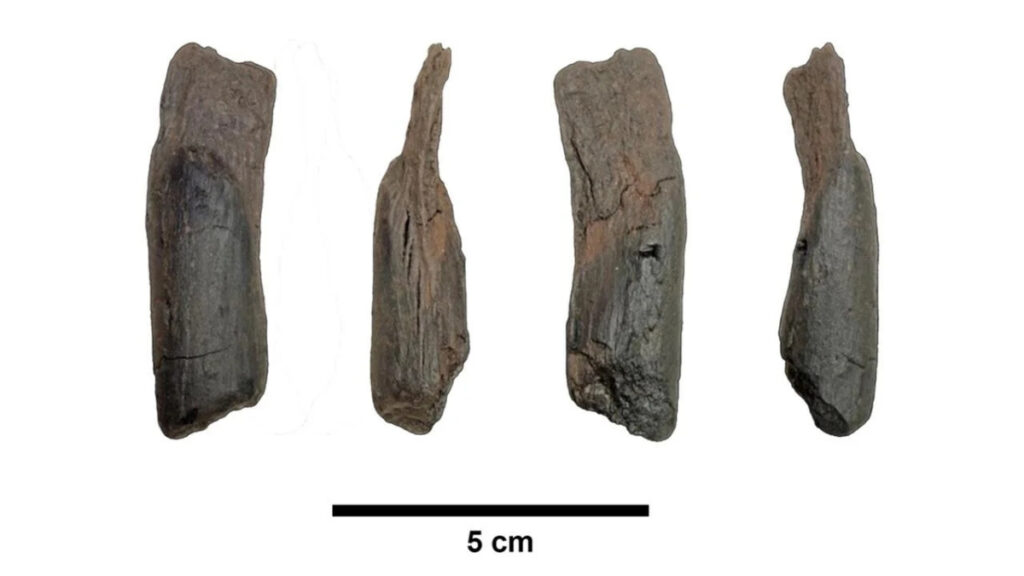
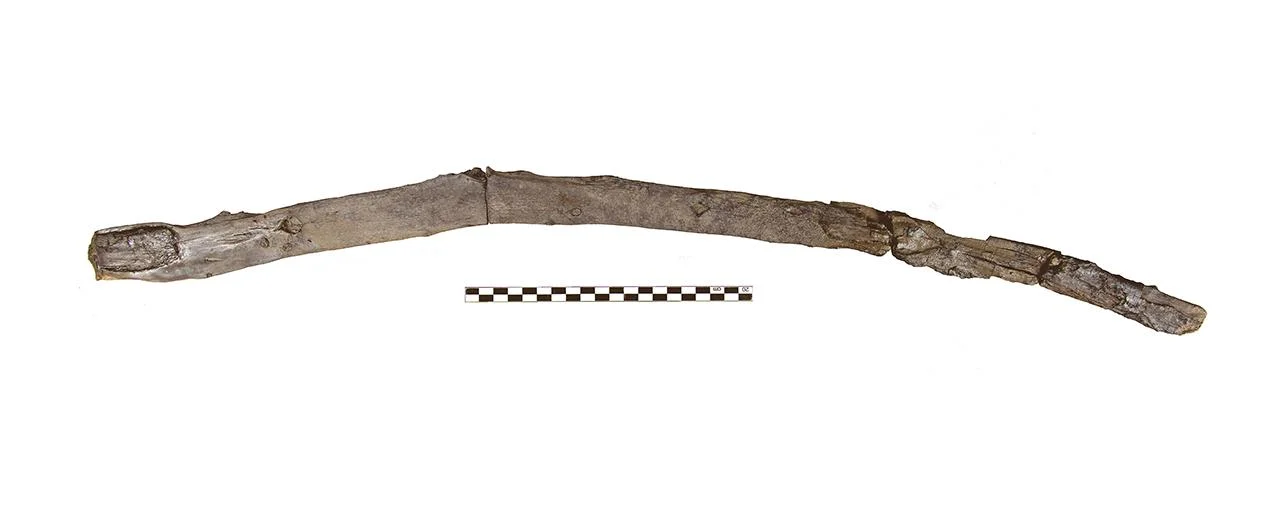
Artifact 1: The Digging Stick of AlderThis tool tells a story of utility. Cut marks from a sharp stone flake show where bark and branches were stripped. The business end is rounded and polished from abrasive contact with gritty soil. This is use-wear—the molecular memory of work. It fits the profile of a digging stick, a versatile tool for prying up roots, loosening earth for tubers, or even helping to dismember a massive carcass.
Artifact 2: The Artisan’s SliverThis smaller fragment, from willow or poplar, is even more telling. Its edges are deliberately carved and smoothed from handling. Its size suggests it was a precision tool, possibly used for pressure-flaking stone tools, working hide, or detailed cutting. It reveals a level of finesse and planning previously hard to attribute to this deep period.
The Scene Reconstructed: A Lakeside of Rivals
The wooden tools alone are revolutionary. But their context paints a electrifying, perilous scene.
A Carnivore’s Calling CardA third piece of wood presented a different narrative. Deep, parallel grooves with crushed fibers were etched into its surface. Microscopic analysis confirmed these were claw marks from a large carnivore, likely a cave bear or a giant hyena. This single fragment places apex predators at the exact same location, at roughly the same time.
A Landscape of CompetitionThe picture is now vivid and tense. Marathousa was not a safe homestead. It was a high-risk, high-reward resource hotspot. Early humans and giant carnivores were drawn to the same water sources and mega-faunal carcasses. They were operating in a landscape of conflict and opportunity, where a dropped digging stick might be found next to the claw mark of a rival.
Global Implications: Shattering the “Stone Age” Stereotype
The Marathousa discovery forces a radical rethinking of a period shrouded in time.
The “Wood Age” ParadoxWe label this deep past the “Paleolithic” or Old Stone Age. This terminology inadvertently creates a bias. Stone survives; wood does not. Marathousa proves that woodworking was not a late innovation. It was a foundational technology from the earliest periods of human expansion. Our ancestors thought in multiple materials from the very beginning.
Cognitive Blueprint in LigninSelecting specific tree species—alder for its durability, willow for its flexibility—demonstrates an advanced understanding of raw material properties. This isn’t random grabbing. It’s arboricultural knowledge passed through generations. It shows planning, experimentation, and a deep environmental intelligence.
Filling the Southeastern European MapBefore this, the oldest known wooden tools came from sites in Germany (Schöningen) and Africa. Marathousa firmly plants this sophisticated technology in southeastern Europe 430,000 years ago. It illuminates the capabilities of the human populations—likely early Neanderthals or their immediate predecessors—inhabiting this crucial migratory corridor.
What This Means for History: A Deeper, Richer Humanity
The marbles and palaces of later history have no equivalent in the deep past. Our connection to these ancestors relies on such humble, miraculous finds. The Marathousa digging stick is more eloquent than any monument.
It tells us that innovation was not just about hunting. It was about digging, processing, and precise crafting. It reveals a life intertwined with the forest, a tactical mind aware of predators, and a social group sharing complex technical knowledge.
These waterlogged splinters collapse time. They transform our ancestors from shadowy “cavemen” into resourceful, ingenious survivors, whose full technological repertoire has been hiding in plain sight, waiting for the right muddy conditions to finally tell their story.
5 In-Depth FAQs
1. How can we be sure these tools are 430,000 years old and not younger?The age is determined through absolute dating techniques applied to the sediments encasing the tools, not the wood itself. Methods like post-infrared infrared stimulated luminescence (pIR-IRSL) on mineral grains directly date the last time they were exposed to sunlight before burial. This, combined with the geological context and associated extinct fauna (like the straight-tusked elephant), provides a robust and precise chronology.
2. Why is the carnivore claw mark on the wood so significant?It provides direct, tangible evidence of human-carnivore interaction at a resource site. It moves beyond theorizing about competition to documenting a shared moment in time. It critically informs our understanding of the dangers and challenges of Paleolithic life, suggesting carcass processing was a race against both spoilage and powerful rivals.
3. What happened to the humans at Marathousa? Which species were they?No human fossils have been found at Marathousa 1 yet. Based on the timeframe and location in Europe, the toolmakers were likely either Homo heidelbergensis or very early Neanderthals. Both species are known to have possessed the cognitive and technical capacities for such crafted tools. Future discoveries may provide the definitive answer.
4. How does this compare to the 476,000-year-old wooden structure at Kalambo Falls, Zambia?That discovery, while older, is fundamentally different. The interlocking logs at Kalambo Falls are interpreted as part of a fixed structural platform or dwelling. The Marathousa finds are handheld, portable implements. They represent different facets of woodworking: one in construction, the other in tool technology. Marathousa now holds the record for the oldest known tools.
5. Could older wooden tools exist and simply not have been preserved?Almost certainly. The consensus among archaeologists is that wood was a ubiquitous material from the earliest times. The record at Marathousa is a rare glimpse into a vast, vanished world of wooden technology. It is a profound reminder that what we find is a tiny, biased fraction of what once existed, skewed heavily toward materials that survive in rare conditions like permanent waterlogging, extreme aridity, or volcanic ash.