
For over a century, the story was elegantly simple. First, humans discovered agriculture. The stability of farming led to surplus food. That surplus allowed for specialization, hierarchy, and permanent settlements. Then, and only then, did humanity have the time, resources, and social organization to build monuments and temples.
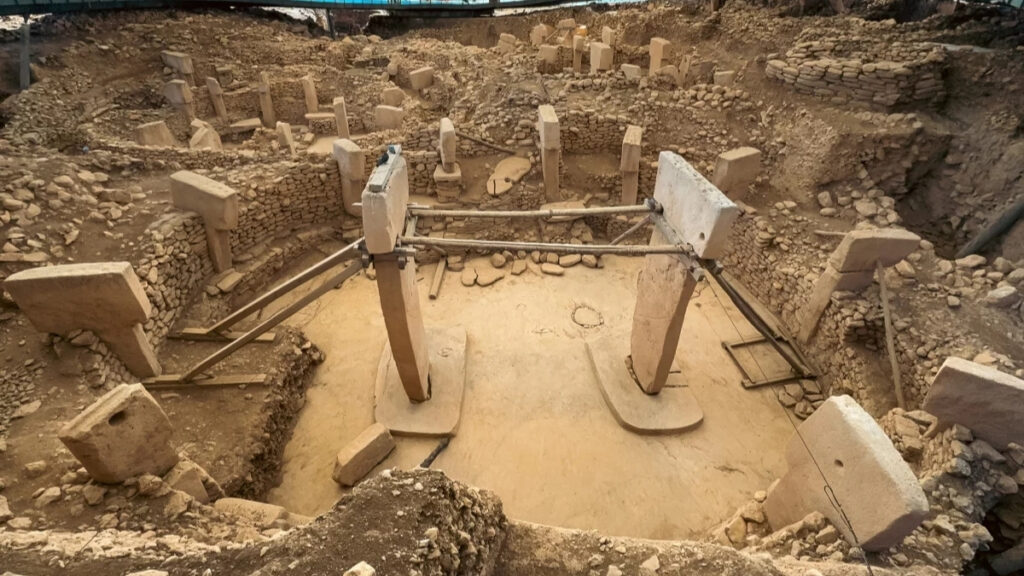
Then, a German archaeologist named Klaus Schmidt climbed a limestone ridge in southeastern Turkey in the 1990s. What he found didn’t just tweak that timeline—it shattered it. Göbekli Tepe, a vast complex of carved stone pillars arranged in great circles, was radiocarbon dated to 9600 BCE. It was built 7,000 years before Stonehenge, 5,000 years before the Great Pyramid of Giza. And the builders were not farmers. They were hunter-gatherers.
This single site forces a revolutionary and unsettling question: What if monumentality—the drive to build something colossal for a collective purpose—didn’t result from civilization, but actually caused it?
The Astonishing Find: Architecture in the Age of Foraging
Göbekli Tepe’s power lies in its sheer, inexplicable scale. This is not a crude arrangement of stones. It is sophisticated, deliberate, and awe-inspiring architecture from a time we believed was capable of little more than basic survival.
The Titans of the Pre-Pottery NeolithicMore than 20 enclosures have been identified. Each is a ritual arena defined by monolithic, T-shaped limestone pillars. The largest weigh over 50 tons and stand 5.5 meters (18 feet) tall. They were quarried from local bedrock, shaped with stone tools, transported hundreds of meters, and erected in precise circular patterns. The central pillars often face each other, flanked by slightly smaller counterparts set into dry-stone walls.
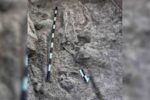
This was not the work of a family band. It required a coordinated labor force of hundreds, with planners, artisans, and overseers—a level of social organization previously deemed impossible for pre-agrarian societies.
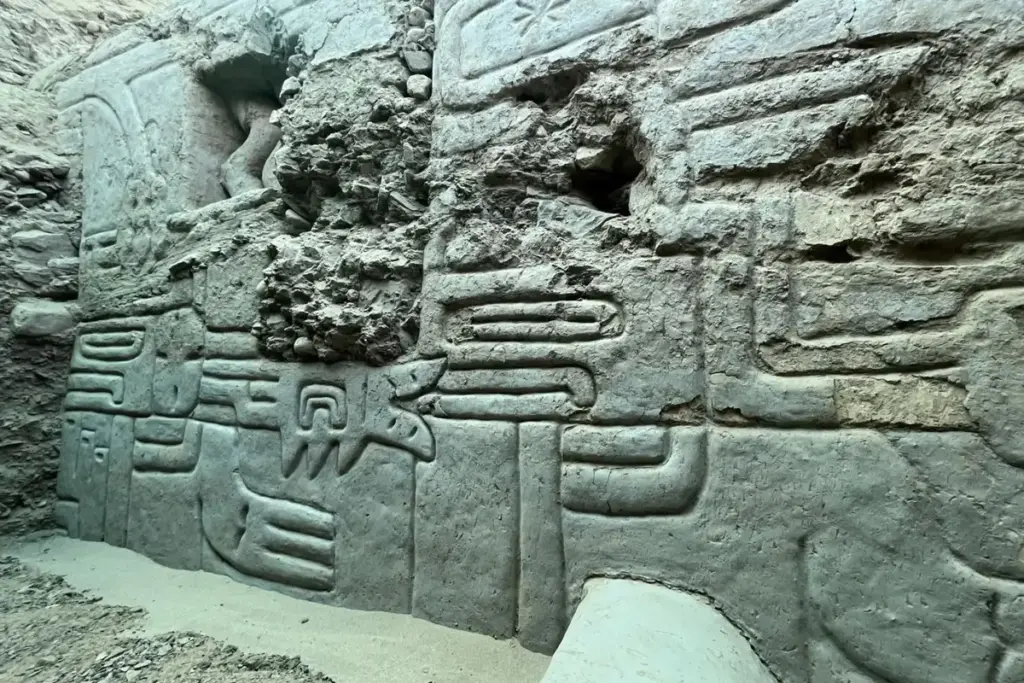
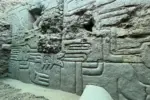
A Bestiary in Stone: The World’s First Narrative Art?The pillars are not blank. They are a canvas for the world’s oldest known large-scale narrative art. Their surfaces swarm with a breathtaking menagerie: foxes, snakes, scorpions, wild boars, cranes, and fearsome lions. The reliefs are deep, dynamic, and masterfully executed.
A few pillars bear human-like elements: carved arms, hands, and loincloths, suggesting the T-shapes themselves are stylized, abstract human figures—perhaps ancestors or deities watching over the rituals. The 2023 discovery of a painted, life-sized stone boar, colored with red, white, and black pigments, confirms the site was once a riot of color, a psychedelic sacred space.
Deep Dive: Rethinking the Hunter-Gatherer Myth
The artifacts and eco-facts found at Göbekli Tepe are as telling as its pillars. They paint a picture of a society at a profound pivot point.
The Feast Before the FarmAnalysis of animal bones reveals a diet of wild gazelle, aurochs, and birds—the classic fare of hunters. Plant remains are dominated by wild cereals, like einkorn wheat. There is no conclusive evidence for domesticated plants or animals at the time of its primary construction. This is the ultimate paradox: monument-building preceded domestication.
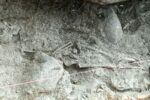
The “Cathedral” Model and the Birth of SettlementFor years, Schmidt proposed the “cathedral” hypothesis: Göbekli Tepe was a regional cult center, a pilgrimage site where nomadic groups gathered seasonally for rituals, exchanging knowledge and mates. The construction project itself—requiring sustained cooperation—may have been the social glue that later incentivized people to experiment with cultivating grains to feed the workers, slowly tethering them to place.
Recent excavations support a more complex view. Evidence of smaller domestic structures, tools for food processing, and cut marks on human bones suggest longer-term occupation in the surrounding area. Göbekli Tepe was likely the dazzling ritual core of an emerging, year-round settlement complex, not an isolated temple in the wilderness.
Global Implications: The Psychology of Monumentality
Göbekli Tepe’s global significance transcends archaeology. It challenges fundamental assumptions about human motivation and social evolution.
Did Ritual Create Society?The traditional model is materialist: environment and economy shape society. Göbekli Tepe suggests a cognitive and ideological model: shared belief and collective ritual can drive socio-economic change. The human need to gather, to believe, to create something larger than oneself, may have been the engine that forced the development of complex logistics, labor organization, and eventually, agriculture.
A Lost Chapter of Human IngenuityThe site resets the clock for human artistic and engineering achievement. The precision of the carvings, the understanding of lithic technology, and the architectural planning demonstrate a level of sophistication we reserved for much later “civilized” peoples. It reveals a “Golden Age” of hunter-gatherer culture in the Neolithic Near East, one with its own hierarchies, specialists, and spiritual complexity, long before kings and empires.
What This Means for History: A More Mysterious, More Human Past
Göbekli Tepe does not offer easy answers. With each excavation season, it becomes more enigmatic. That is its greatest gift.
It liberates us from a linear, deterministic view of progress. It shows that human history is not a straight line from simple to complex, but a web of possibilities, dead ends, and astonishing cultural explosions.
The pillars stand as a silent rebuke to our arrogance. They tell us that our foraging ancestors were not primitive strugglers, but visionary architects of their world. They possessed a collective genius we are only beginning to comprehend. They built not for necessity, but for meaning. And in doing so, they may have accidentally invented the very world we live in today.
5 In-Depth FAQs
1. How was Göbekli Tepe dated so precisely?The primary method is radiocarbon dating of organic materials found in the construction fill of the enclosures. Charcoal fragments from the layers used to bury the structures (intentionally filled in around 8000 BCE) provide the most reliable dates, consistently clustering between 9600 and 8200 BCE. This places its active use squarely in the Pre-Pottery Neolithic A and B periods.
2. If they weren’t farmers, how did they feed the workers?This is the central puzzle. The leading theory is intensive foraging of wild resources. The region was part of the “Fertile Crescent,” incredibly rich in wild einkorn wheat, pistachios, almonds, and game. Organized hunting parties could supply protein, while large groups could harvest and process vast quantities of wild grains. The project itself may have spurred the first steps toward deliberate cultivation to create a more predictable food supply for the workforce.

3. Who exactly built it? What human species?The builders were anatomically modern humans (Homo sapiens), just like us. They were part of the cultural complex of the Pre-Pottery Neolithic of Upper Mesopotamia. They are our direct ancestors in the region, possessing the same cognitive capacity for symbolic thought, complex language, and large-scale project management.
4. Why was Göbekli Tepe deliberately buried?This is one of its greatest mysteries. Around 8000 BCE, each enclosure was carefully backfilled with tons of earth, stone tools, and animal bones, preserving it perfectly. This was not an collapse. It was a ritual termination. One theory suggests each enclosure was built for a specific purpose or social group and had a “ritual lifespan.” Once its time was done, it was “retired” with reverence, sealed away for eternity. This act of burial is why the carvings are so pristine.
5. What is being found now, and what’s next for the site?Current work focuses on the broader “Taş Tepeler” (Stone Hills) landscape—a 200km area with at least 12 other contemporary sites, like Karahan Tepe. This reveals Göbekli Tepe was not alone, but part of a vast ritual complex. Future research will explore the relationships between these sites, search for the main residential settlements, and use techniques like soil chemistry to understand the exact activities that took place within the pillars. The story is expanding from a single hilltop to an entire sacred province.