

For centuries, Marcus Vitruvius Pollio existed as a ghost in the foundations of Western architecture. His ten-volume treatise, De architectura, was the sacred text of the Renaissance, guiding masters like da Vinci and Palladio. It laid down the immutable laws of proportion, symmetry, and beauty. Yet, a haunting question remained: Were these just brilliant theories, or had Vitruvius ever actually built?
The only building he explicitly claimed to have constructed—a basilica in the Roman colony of Fanum Fortunae (modern Fano)—was considered by many to be a literary phantom, an ideal model described but never realized. Now, after 500 years of scholarly search, archaeologists have unearthed walls and columns in Fano that align with Vitruvius’s description with eerie, precise fidelity. This isn’t just another Roman ruin. It is the materialization of a foundational idea, a direct dialogue across two millennia between the architect’s pen and the mason’s trowel.
The Astonishing Find: A Manuscript Made Manifest
The discovery, buried beneath the historic center of the coastal town of Fano, is sending shockwaves through the worlds of archaeology and architectural history. It represents that rarest of finds: a 1:1 scale model from a two-thousand-year-old textbook.
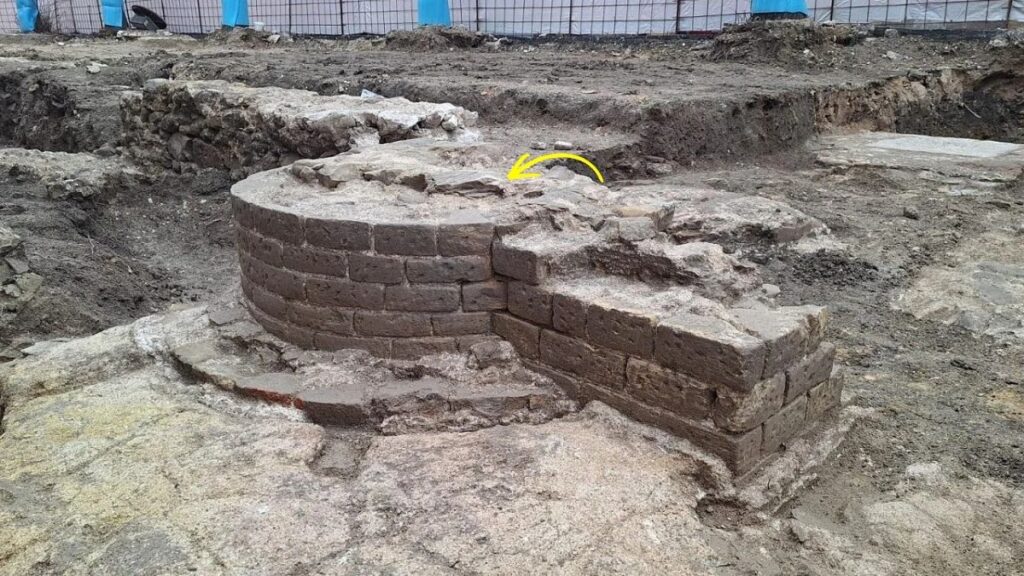
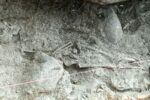
The “Smoking Gun” Alignment The excavated foundations reveal a rectangular basilica plan of grand proportions. What has stunned researchers is the exact numerical correspondence with Vitruvius’s text. He described a layout with ten columns along the longer sides and four along the shorter ends. The excavation revealed precisely that arrangement.
The most cinematic moment came when archaeologists, following Vitruvius’s written dimensions, calculated where a missing column base should be. They excavated at that precise spot and found it waiting. This level of textual-literary corroboration is almost unheard of in Roman archaeology.
The Vitruvian DNA Vitruvius was more than a builder; he was a philosopher of space. He championed the principles of firmitas, utilitas, venustas (durability, utility, beauty) and believed architecture should mirror the perfect proportions of the human body. The Fano basilica was his practical test case for these theories.
Finding its physical remains allows us to forensically examine his methodology. We can now measure the intercolumniation (column spacing), analyze the proportions of the space, and see how theoretical ideals of harmony and public function were translated into load-bearing limestone and mortar.
Deep Dive: The Architect and His Legacy
To understand the magnitude of this find, one must grasp Vitruvius’s shadow over history.
The Lost Renaissance Master Key During the Renaissance, Vitruvius’s De architectura was rediscovered and became the bible for architects seeking to revive classical glory. Yet, they were working from a cryptic, illustration-free manuscript. The Fano basilica was a crucial puzzle piece they could never locate. Masters like Leon Battista Alberti and Andrea Palladio produced their own interpretations of his lost design, based purely on the text.
The discovery now provides the true reference point. It allows us to see how the Renaissance geniuses interpreted him—where they divined correctly, and where they improvised. It closes a scholarly loop open since the 15th century.
More Than a Basilica: A Cultural KeystoneIn Roman times, a basilica was a hub of public life—a hall for commerce, law, and social gathering. That Vitruvius chose this quintessential public building type for his masterpiece is significant. He wasn’t just designing a structure; he was proposing an ideal framework for civic interaction, engineered according to divine mathematical principles.
Global Implications: Bridging the Idea and the Artefact
This discovery transcends Italian archaeology. It offers a profound case study in human intellectual history.
The Theory-Practice NexusArchaeology often deals with objects whose purpose is lost, or structures built without a manual. Here, we have the ultimate “instruction manual” lying next to the “finished product.” It provides an unparalleled opportunity to study ancient construction tolerances, material choices, and the compromises between ideal design and practical reality. This elevates the site from a ruin to a primary source on ancient engineering philosophy.
A New Linchpin for Classical StudiesThe confirmed basilica becomes a fixed, datable point in the timeline of Roman architectural evolution. Other structures can now be compared to it with fresh insight, helping scholars better understand the spread and adaptation of Vitruvian principles across the Empire. It moves him from a theoretical figure to a practicing, influential architect whose work physically shaped a Roman colony.
What This Means for History: The Concrete Triumph of an Idea
The Fano basilica does more than validate an ancient claim. It celebrates the enduring power of the architectural idea.
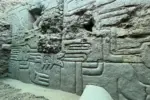
Vitruvius wrote that architecture must “derive its effect from proportion and symmetry.” For two millennia, this was an abstract creed. Now, we can stand on the very floor that manifested it. The discovery reaffirms that the Roman genius was not just in monumental construction, but in the codification and dissemination of universal design principles.
It also adds a deeply human dimension. We can now picture Vitruvius not just as a writer in a scriptorium, but on a dusty construction site in Fano, overseeing the translation of his complex ratios into a tangible, soaring space for his fellow citizens. The ghost has taken solid form.
5 In-Depth FAQs
1. How can we be sure this is Vitruvius’s basilica and not just another similar one?The correlation is based on a unique combination of location, precise dimensions, and specific architectural features that collectively match the only description Vitruvius gave of a building he claimed to have built. The exact column count (10×4), the proportional ratios of the plan, and its placement in the colony of Fanum Fortunae create a multi-point verification that scholars find overwhelmingly convincing, though formal peer-reviewed publication will provide the final academic consensus.
2. Why is Vitruvius so important if none of his buildings were known until now?His importance rests entirely on his treatise, De architectura. It is the only major work on architecture to survive from classical antiquity. It preserved priceless knowledge on Greek and Roman building techniques, engineering, and aesthetics. It became the foundational textbook for Western architecture from the Renaissance onward, making him influential through his ideas rather than his built legacy.
3. What does this mean for our understanding of Renaissance architecture?It provides a “Rosetta Stone.” Renaissance architects like Palladio created famous designs based on their interpretation of Vitruvius’s lost Fano basilica. By comparing Palladio’s drawn reconstruction with the actual excavated plan, historians can now perform a forensic analysis of Renaissance interpretation. It reveals how 16th-century minds read, interpolated, and sometimes creatively re-imagined classical sources.
4. What are the major challenges for excavating and preserving this site?The site sits beneath a modern city, requiring careful, limited excavation amidst urban infrastructure. The remains are fragile foundations; raising the site for public access without destroying it is a major engineering and conservation challenge. Decisions will balance scholarly research, preservation, and the public’s right to see a monument of world significance.
5. Could this lead to the discovery of other Vitruvius buildings?It dramatically increases the possibility. By establishing his “architectural fingerprint” in a verified building, researchers can look for similar proportional and stylistic signatures in other unidentified Roman structures, particularly in central and northern Italy. It gives a concrete reference point, turning speculative searches into more targeted investigations.