Landmark Discovery in Spain : What if a single, misplaced bone could whisper the secrets of one of history’s most audacious military campaigns? For centuries, Hannibal Barca’s epic march against Rome has lived in the realm of legend and ancient texts. His war elephants, the living tanks of the ancient world, have been mythical symbols of his daring. But where is the proof? Where is the physical, tangible evidence that these giants truly walked into war? Now, in the sun-baked earth of southern Spain, archaeologists may have found it. This isn’t just another bone fragment. This is a potential key to unlocking the material truth behind a story that shaped the Western world.
The Astonishing Find: An Ankle Bone Out of Time
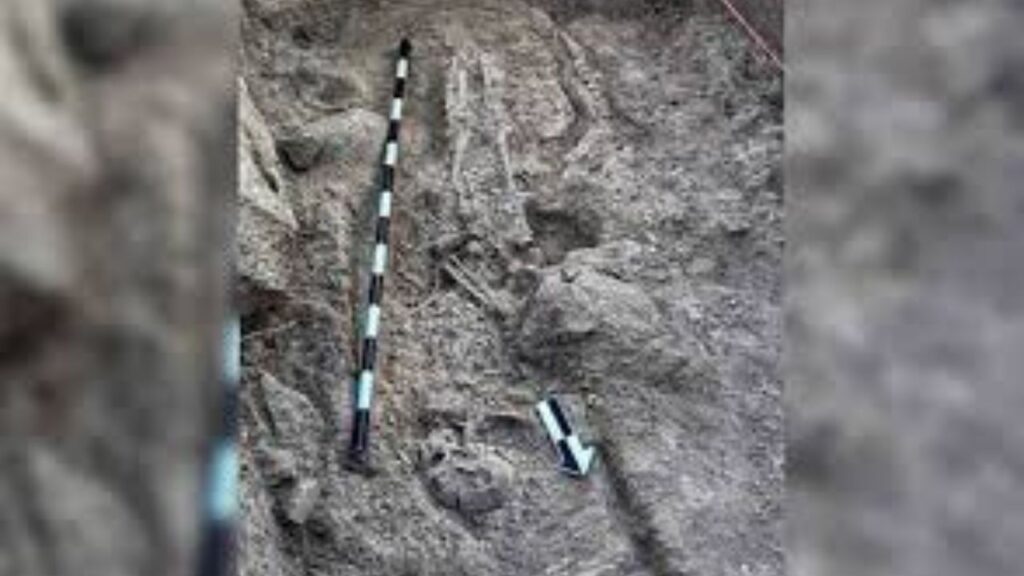
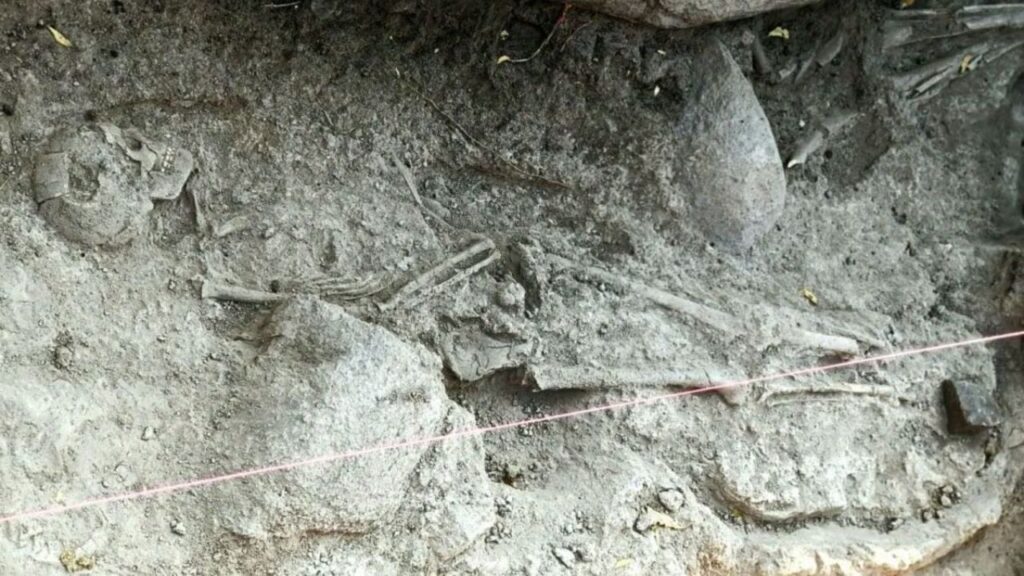
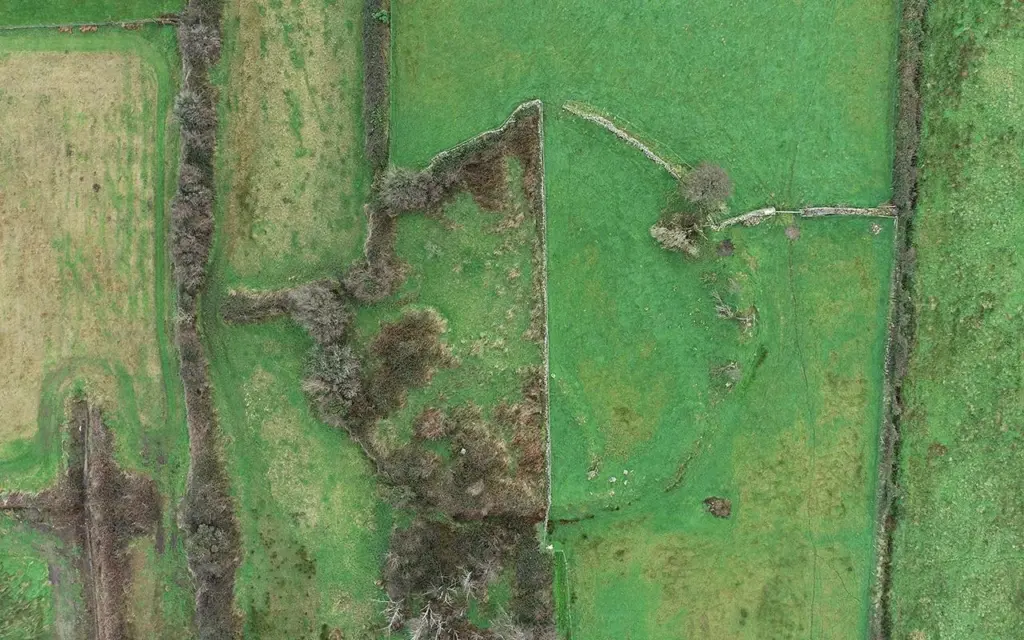
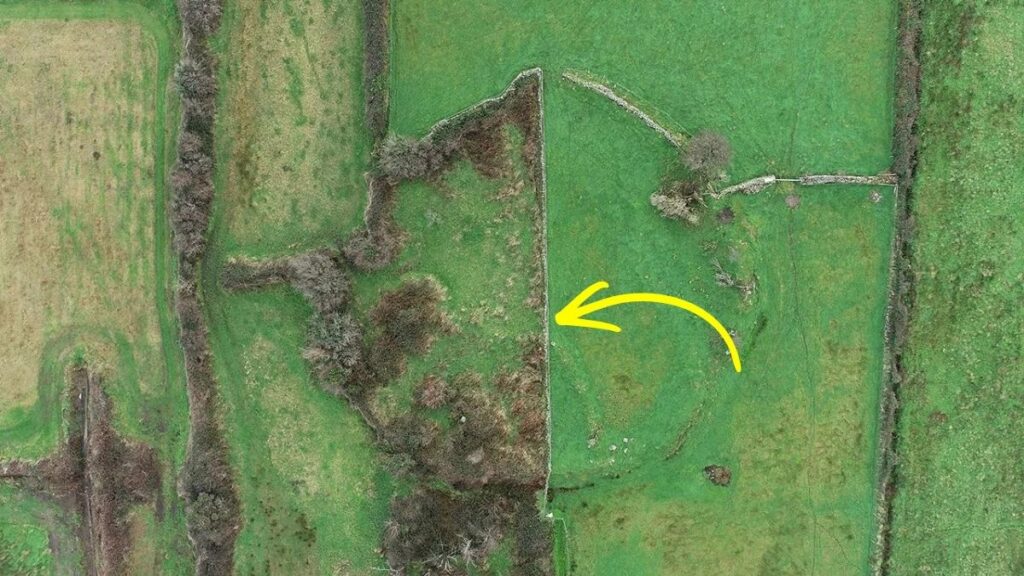
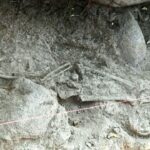
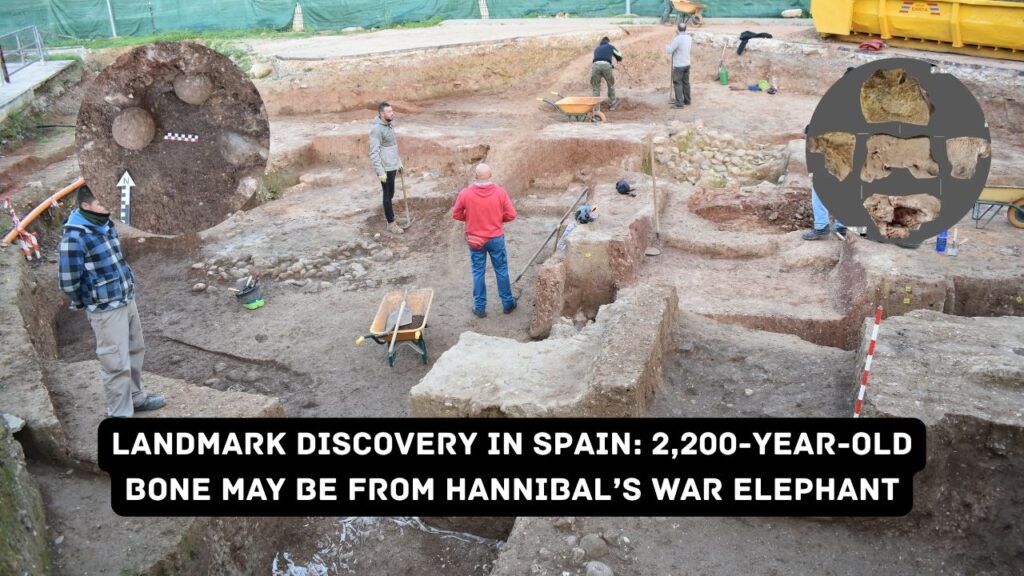
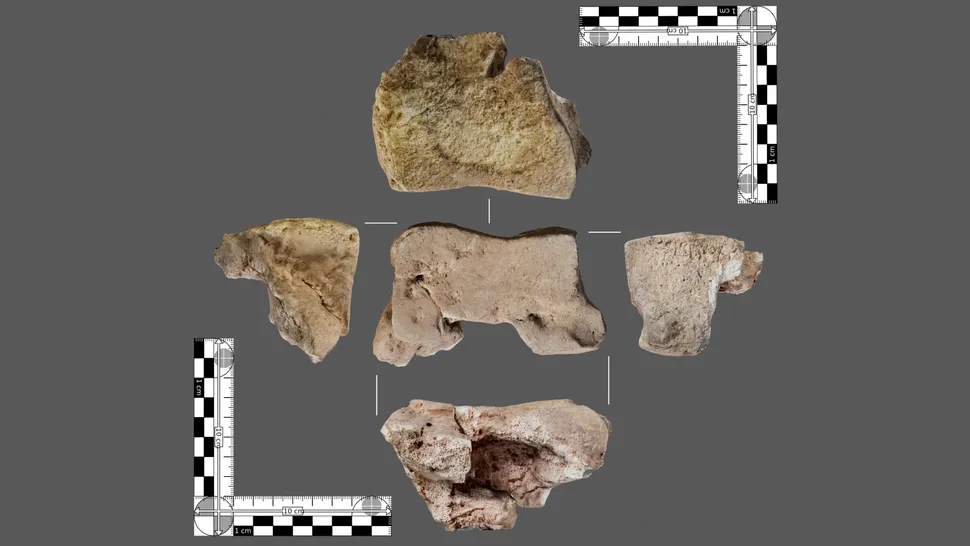
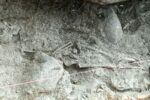
In 2019, during a routine excavation near Córdoba, Spain, archaeologists unearthed a perplexing object. It was roughly the size of a baseball, dense, and wholly unfamiliar. The site was a fortified Iberian settlement, a Celtic stronghold known as an oppidum. The bone didn’t belong to any native European animal. For years, it sat as a quiet mystery. Then, in a flash of revelation, researchers identified it. This was the right carpal bone—the equivalent of a wrist bone—from the foreleg of an elephant. An animal that had no business being in Iron Age Iberia. Radiocarbon dating placed it firmly around 2200 years old, a time of seismic conflict: the Second Punic War.
A Scene of Ancient Conflict
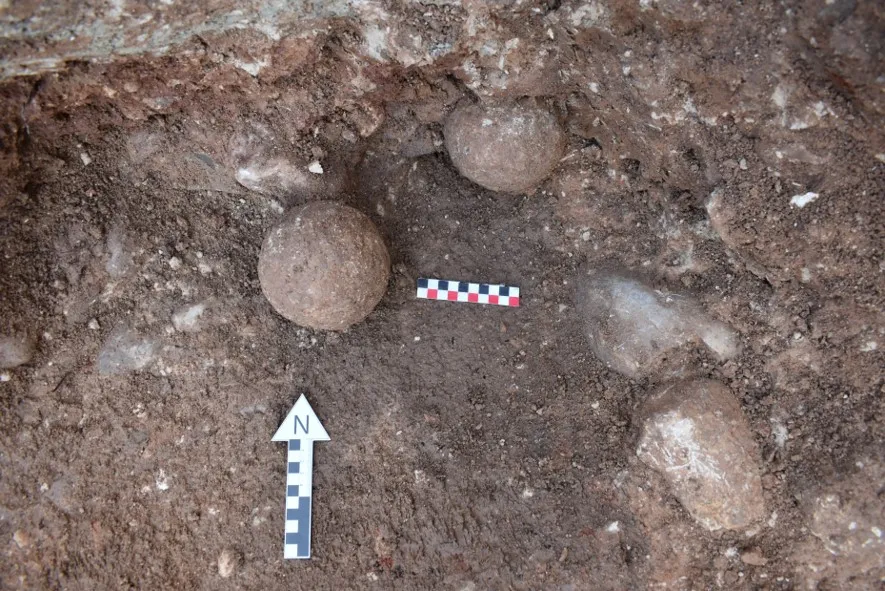
The bone was not found in isolation. Its context tells a story of sudden violence. It was discovered alongside 12 spherical stones of perfect size and shape for Carthaginian catapult ammunition. The layer of earth spoke of conflict and destruction. Researchers believe the elephant’s skeleton largely rotted away in the elements. Yet this one bone was miraculously preserved, protected by the collapse of an ancient wall. There is another, tantalizing possibility. Perhaps a survivor of the battle picked it up. A soldier, in awe of the fallen beast, may have kept it as a grisly souvenir from a day the giants came to their village.
Decoding the Pachyderm Puzzle: Whose Elephant Was It?
This discovery is revolutionary not just for its existence, but for the historical doors it cracks open. The immediate, electrifying connection is to Hannibal Barca. In 218 BC, he famously mobilized 37 war elephants for his impossible trek from Iberia, over the Pyrenees and the Alps, to strike Rome directly. However, this particular elephant was not one of those legendary travelers. It died in Spain, a continent away from the Alpine snows. This points to the vast scale of Carthaginian operations. Hannibal’s campaign was merely the spearhead. This elephant was likely part of the Carthaginian forces securing territories and battling local Iberian tribes in the brutal rear-guard actions of the war.
A Biological Mystery
A fascinating question remains. What type of elephant was it? The Carthaginians are historically associated with the now-extinct North African forest elephant (Loxodonta africana pharaoensis), a smaller, more agile species ideal for war. Yet they also had access to, and sometimes used, Asian elephants. Scientific analysis may yet reveal the species. This detail is crucial. It could trace trade routes, reveal Carthaginian logistical networks, and tell us exactly what kind of biological weapon this ancient superpower deployed against its enemies.
Global Implications: Beyond the Battlefield
This “landmark” find, as lead researcher Rafael Martínez Sánchez calls it, transcends a single battle. Until now, the strongest archaeological evidence for Hannibal’s elephants were ambiguous soil disturbances in an Alpine pass. This bone is direct, incontrovertible testimony. It moves the elephant from the pages of Livy and Polybius into the physical record. It confirms the terrifying reality these communities faced. Imagine the earth shaking, the unfamiliar trumpets, and the sight of an animal larger than a house crashing through your defensive walls. This bone makes that horror real.
The Clash of Civilizations
The Second Punic War was a fight for the soul of the Mediterranean world. Carthage, the maritime Phoenician powerhouse, versus the rising, disciplined might of the Roman Republic. This elephant bone is a relic of that existential struggle. It represents the far-reaching arm of Carthaginian military might deep into the Iberian peninsula. Its presence underscores how globalized ancient conflict could be, employing beasts from Africa or Asia in European wars. This find connects a local skirmish in Spain to the grand narrative of Rome’s ultimate triumph, which would dictate the course of European history for a millennium.
What This Means for History: A New Chapter Begins
This discovery is a starting pistol, not a finish line. It validates the pursuit of “legend.” It proves that material evidence for history’s most epic tales can still lie buried, waiting for the careful hand of an archaeologist. The site near Córdoba is now a priority. Researchers will scour for more fragments—a tusk, a tooth, more bones—that could tell the full story of this elephant’s life and death. Did it die in battle from a hail of stones? Was it wounded and put down? Every new piece of data will refine our understanding of Carthaginian battlefield tactics and animal handling.
Most importantly, it gives a voice to the conquered. History is written by the victors, and Rome wrote volumes disparaging Carthage. This bone is a physical artifact from the Carthaginian perspective. It is a silent witness to their power, their reach, and their ultimate, tragic struggle against an empire that would erase their city from the map. It is a ghost of a lost civilization, finally stepping into the light.
5 In-Depth FAQs
1. How was the site discovered, and was this find a surprise?
The site, known as an Iberian oppidum (fortified settlement), was likely identified through surveys or prior knowledge of ancient habitation in the region. The discovery of the bone was absolutely a surprise. Excavators were uncovering a layer from the 3rd century BC, expecting typical domestic or military artifacts. The bizarre, unidentifiable bone fragment was a total anomaly that only revealed its world-shaking significance years later in the lab.
2. How can researchers be sure it’s from a war elephant and not, for example, a circus animal from Roman times?
The dating is critical. Radiocarbon dating placed the bone firmly in the late 3rd century BC, the exact period of the Second Punic War. The Roman conquest and pacification of this region came decades later. Furthermore, the context is militaristic—found with catapult ammunition and in a destroyed layer. The Romans later used elephants for games, but not in this early period in this conflict zone. The confluence of date and violent context points overwhelmingly to a war elephant from the Carthaginian conflict.
3. Could this actually be from one of the elephants that crossed the Alps with Hannibal?
Almost certainly not. Hannibal’s Alpine contingent was a specific, fast-moving force that departed from northeastern Spain and did not engage in major sieges in the south. This elephant died in a local battle near Córdoba, in southern Spain, likely as part of Carthaginian forces securing their territory and resources while Hannibal was conducting his Italian campaign. It is a contemporary of Hannibal’s elephants, but not a member of his famous Alpine corps.
4. What are the next steps for this research?
Scientists will attempt to extract ancient DNA or conduct stable isotope analysis on the bone. DNA could confirm the elephant species. Isotope analysis could reveal where the animal drank water and grew up, potentially tracing its origins to North Africa or beyond. Archaeologists will also intensify excavation at the site, searching for associated artifacts, more skeletal remains, or evidence of the battle’s progression.
5. Why is this considered such a “landmark” discovery if only one bone was found?
In archaeology, context is everything. Before this, there was zero direct physical evidence for Carthaginian war elephants. Their existence in these wars was purely a matter of historical record. This bone changes that paradigm. It provides the first tangible, datable link to those legendary creatures. It transforms them from literary figures into historical fact and opens up entirely new avenues for researching Carthaginian military logistics, Iberian battlefield experiences, and ancient human-animal relationships in warfare. One bone can indeed overturn a mountain of uncertainty.