Forbidden Tombs & A Giant’s Resurrection: Luxor doesn’t sleep. While tourists marvel at its sunset-lit colonnades by day, a different kind of awe unfolds under the cover of stars and in high-tech labs. This is no longer just the world’s greatest open-air museum. It has transformed into a global nerve center of archaeological innovation, where laser scanners whisper to stone, and international teams piece together puzzles left by earthquakes and time. We are witnessing a paradigm shift: from treasure hunting to forensic history. From the meticulous rebirth of a pharaoh’s colossal gateway to the intimate funeral texts of a forgotten artisan, Luxor is telling new, profound stories about ancient life, death, and belief. This is the cutting edge of where our past meets our future.
The Astonishing Finds: From Official Tombs to Personal Prayers
Across the Nile on the sacred West Bank, the ground is speaking. In the necropolis of Dra Abul-Naga, Egyptian archaeologists have breached sealed tombs of New Kingdom state officials. These aren’t just burial chambers; they are time capsules of bureaucracy and power.
The Elite of the Empire Revealed
Each artifact, each inscription from these senior officials’ tombs adds a new line to the operating manual of an ancient superpower. We learn who managed the granaries, who oversaw temple estates, who whispered in the pharaoh’s ear. This is history written in limestone and ambition, detailing the social ladder that propped up the throne of Egypt’s golden age.
Meanwhile, at Deir Al-Medina—the village of the royal tomb builders—a French mission has performed a miracle of patience. They have resurrected the shattered stone sarcophagus of Pachedo, a man who lived under the giants Seti I and Ramses II.
A Moral Code for the Afterlife
The significance is mind-blowing. On his coffin, Pachedo carried a “Negative Confession”—a spell where he lists 42 sins he declares he did not commit. “I have not stolen. I have not caused pain. I have not lied.” This is more than magic; it’s a rare window into the personal ethics and profound self-reflection of an individual from 3,200 years ago. It’s the voice of the common man, seeking purity beside the gods.
Global Implications: A New Model of International Partnership
The work in Luxor today shatters the old colonial model of archaeology. This is a era of equals, of shared technology and mutual respect. At the Montu Temple in Karnak, an Egyptian-Chinese mission is a flagship of this new cooperation.
The Silk Road of Archaeology
“As the first Chinese mission to work in Egypt, starting in 2018, this partnership has blossomed into five separate Chinese teams across the country,” explains archaeologist Abdel-Ghaffar Wagdi. Together, they are revealing Osiris chapels and a sacred lake, proving that cultural diplomacy’s most enduring legacy is often written in stone and scholarship.
But the most ambitious symbol of this global effort is rising, block by agonizing block, at the Ramesseum.
The Colossal Task: Rebuilding Ramses II’s Fallen Pylon
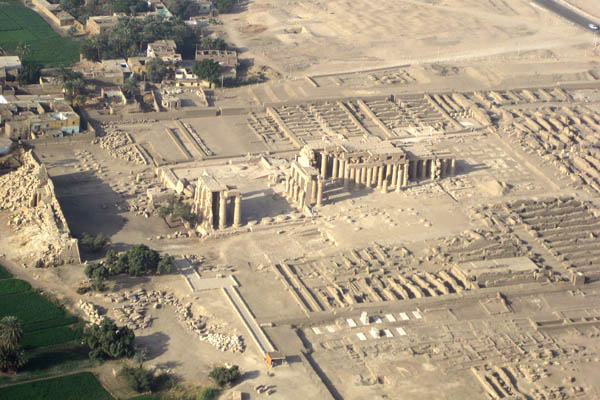
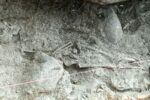
Imagine a 3D jigsaw puzzle where the pieces weigh tons and the original blueprint is lost to time. This is the reality for the Egyptian-Korean mission at the mortuary temple of Ramses II. Their goal: the complete restoration of the First Pylon, the monumental gateway that collapsed in a catastrophic ancient earthquake.
Science Meets Sandstone
Using 3D laser scanning, they have mapped every discovered block—hundreds of them, excavated from centuries of sand. Recent finds of foundation stones bearing Ramses’ cartouche are the forensic proof needed to begin the careful reassembly. “This isn’t reconstruction; it’s scientific resurrection,” states Hisham Al-Leithi of the Supreme Council of Antiquities.
The process is meticulous:
Structural stabilization to prevent further collapse.
Digital documentation creating an immortal record.
Delicate cleaning to reveal original reliefs.
Sustainable tourism planning to protect the restored monument.
This project is a statement: Egypt’s heritage is not a static relic, but a living entity worthy of the 21st century’s best technology and care.
The Silent Revolution: Museums as Living Narratives
While excavations grab headlines, a quiet revolution is happening behind the scenes. In Luxor’s museum storage facilities in Qurna and Abul-Goud, a transformation is underway. State-of-the-art climate control, security, and conservation labs are being installed.
“These behind-the-scenes developments are the unseen foundation of everything the public admires,” emphasizes Mohamed Ismail Khaled, former Secretary-General of the SCA.
Re-Staging History at Luxor Museum
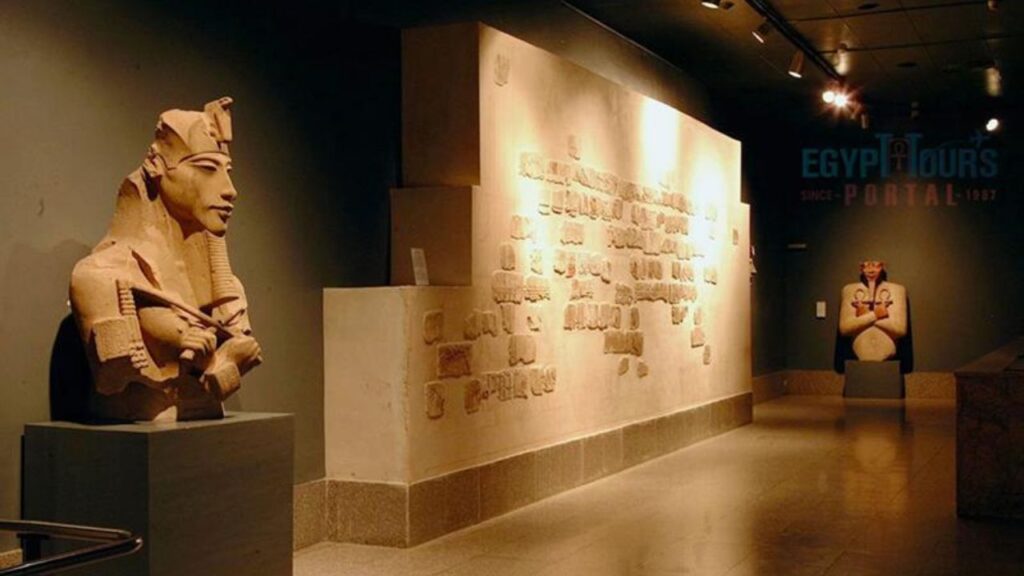
The most visible change is at the Luxor Museum itself, specifically in the hall dedicated to the famous “Luxor Cachette”—a hoard of stunning statues found buried in the temple courtyard. The statues are being re-choreographed.
“The goal is to present a coherent historical moment, not just a row of beautiful objects,” says Mahmoud Mabrouk of the museum’s committee. New interactive screens, precise lighting, and thoughtful sequencing will tell the story of why these statues were hidden, creating an immersive narrative journey.
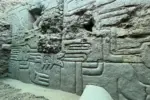
Crucially, the museum’s ethos is evolving. If a statue travels for an international exhibition, its empty place will be honestly explained, and a substitute from the newly organized storage will fill the gap. The story remains intact. This is a commitment to transparency and continuous narrative, treating visitors as informed participants in history’s preservation.
What This Means for History: A Legacy Reforged
Luxor’s current chapter is a masterclass in holistic heritage management. It connects the dots from the moment a trowel uncovers a shard, to the laboratory analysis, the digital archiving, the structural engineering, and finally, to the powerful, educational story told in a museum gallery.
This integrated approach ensures that discoveries are not isolated events, but threads woven back into the grand tapestry of human history. It guarantees that Ramses’ pylon will stand for centuries more, that Pachedo’s voice will be heard, and that the officials of Dra Abul-Naga will reclaim their place in history’s ledger.
The message is clear: Ancient Egypt is not a closed book. It is a manuscript being diligently restored, with new pages found every day, written in the universal language of human ingenuity. Luxor is proving that the past has a dynamic, meticulously curated future.
5 In-Depth FAQs
1. What exactly is the “Negative Confession” found at Deir Al-Medina, and why is it so significant?
The Negative Confession, found on the sarcophagus of Pachedo, is a spell from the Book of the Dead. It’s a list of 42 moral and ethical sins (e.g., “I have not stolen,” “I have not caused anyone to weep”) that the deceased recites before the gods of the underworld. Its significance is profound. It moves beyond royal ideology and shows the personal moral consciousness and hopes for salvation of an ordinary, albeit skilled, artisan. It provides direct insight into the ethical framework of New Kingdom society.
2. How does the Egyptian-Korean mission’s use of 3D scanning change restoration work?
3D laser scanning creates a hyper-accurate digital “fingerprint” of every stone block and the site as it exists. This allows archaeologists to virtually test reassembly plans, identify where blocks originally joined, and monitor structural stability with millimeter precision. It removes guesswork, creates a permanent record of the in-situ condition before intervention, and is a cornerstone of modern, ethical conservation.
3. Why is the upgrade of storage facilities in Qurna and Abul-Goud as important as new excavations?
Proper storage is the backbone of archaeology. Thousands of artifacts not on display require stable temperature, humidity, and security to prevent deterioration. Upgraded facilities with modern labs mean objects can be studied, conserved, and ready for future research or exhibition. It protects the “library” of material that future generations of scholars—with future technologies—will rely on. It’s an investment in unknown future discoveries.
4. What is the “Luxor Cachette,” and how is its display being changed?
The Luxor Cachette is a collection of over 800 stone statues and artifacts discovered in 1989 buried within Luxor Temple’s courtyard. They were ritually interred by priests in antiquity. The new museum display is moving from a static exhibition to a dynamic storytelling experience. By reorganizing statues chronologically and thematically, and adding interactive context about their burial, the museum transforms the cachette from a “find” into a historical event visitors can understand.
5. How does the new approach to loaning artifacts (like at Luxor Museum) benefit the public?
The new policy of transparency—explaining when an artifact is on loan and replacing it with a relevant piece from storage—respects the visitor’s intelligence and preserves the narrative flow of the museum. It turns a potential gap in the display into an educational moment about international cultural exchange and active research. It ensures the story of Egyptian civilization remains coherent and uninterrupted, even as its ambassadors travel the world.