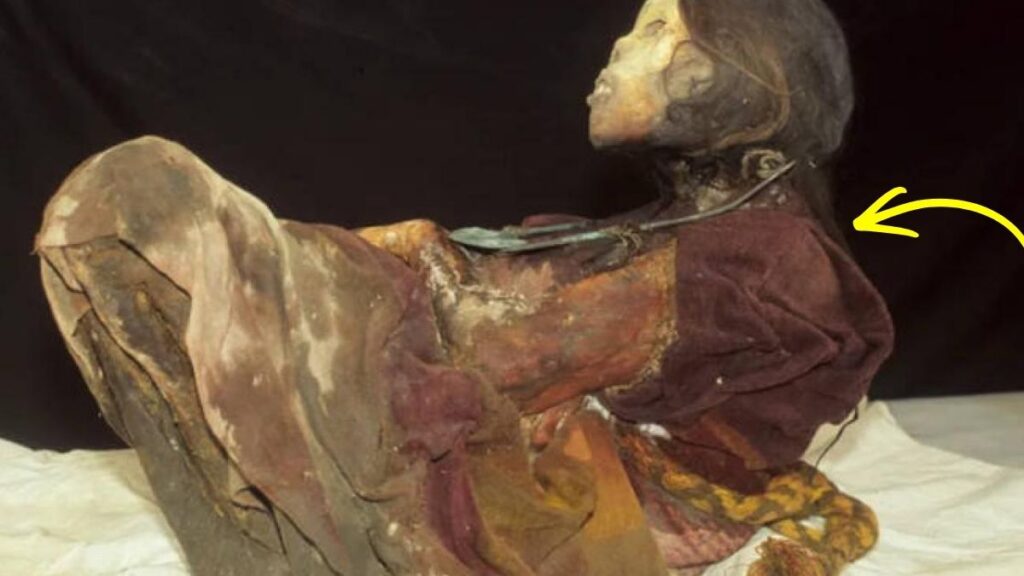
High on the wind-scoured peaks of the Andes, the Inca conducted their most solemn rite: the capacocha. Chosen children, often described as “perfect,” were offered to the mountain gods, becoming immortal messengers in a frozen state. For decades, science viewed these ice mummies as tragic time capsules, preserved by nature at the moment of their death. But a new, forensic look inside four of these children has shattered that stillness.
Using non-invasive CT scanning, a research team has made a revolutionary discovery. One child mummy, a sacrificial victim from Mount Ampato, shows clear signs of deliberate mummification and post-mortem manipulation after the initial burial. Bones were displaced, foreign materials inserted, and the body’s internal arrangement was altered. This is the first scientific evidence that at least some capacocha victims were not simply left in their icy tombs. They were curated, possibly transported, and ritually “repaired,” transforming them from sacrificial offerings into active, mobile relics of state power. The child’s journey, it seems, did not end on the mountaintop.
The Astonishing Find: A Body Telling Two Stories
The research, led by bioarchaeologist Dagmara Socha, employed computed tomography as a digital autopsy, revealing secrets locked within the frozen tissues for over 500 years.
The Surface Story: Ritual SacrificeThe scans confirmed the brutal final act. Evidence of fatal blunt-force trauma to the head was visible in multiple children, aligning with historical accounts of sacrificial methods. In one eight-year-old girl, the scans revealed a heartbreaking chronic condition: lesions consistent with Chagas disease, causing an enlarged esophagus and lung damage. This finding alone rewrites history, disproving the myth that only physically flawless children were selected. The Inca’s criteria were likely ritual or astrological, not purely physical.
The Hidden Story: Post-Mortem InterventionThe scan of “Ampato 4” revealed an anomaly. Internally, the body was in disarray.
- Displaced and Missing Bones: The skeleton was not in anatomical alignment.
- Foreign Inclusion: The abdominal cavity contained stones and compacted textiles.
- Internal Re-arrangement: The overall structure suggested the body had been reopened and altered after the initial freezing.
This was not the result of natural freeze-thaw cycles or animal scavenging. This was a deliberate, human act of post-mortem curation. The body had been manipulated, perhaps packed for preservation, or ritually prepared for a new purpose.
Deep Dive: The Capacocha as a Living Ritual
This discovery fundamentally recontextualizes the capacocha. It was not a one-time event ending with death. For the Inca, it may have been an ongoing relationship.
The Child as a Persistent MessengerIn Inca cosmology, the sacrificed children became mallquis (ancestral mummies) or intermediaries, dwelling with the mountain deities (apus). If the body was moved, it suggests the “messenger” was being redeployed to broker relationships with different sacred landscapes or to legitimize Inca rule in new territories. This mirrors the state policy of mitimaes—the forced resettlement of populations—but applied to the divine realm.
The Ritual “Repair” and Eternal DutyThe insertion of stones and textiles could be interpreted as a symbolic act of completion or strengthening. After natural desiccation or damage, priests might have “repaired” the body to maintain its ritual integrity, ensuring the messenger remained whole and effective for its eternal duty. The mummy became a sacred object, akin to the idol of a god, requiring maintenance and veneration.
A State Tool of UnificationA portable, sacred child mummy would have been a potent political and religious tool. Transporting it to a new region could symbolize the extension of the Inca sovereign’s sacred covenant with the gods over that land. The child’s body physically embodied the state’s spiritual authority.
Global Implications: Rethinking Sacrificial Archaeology
This study provides a new methodological and theoretical framework for understanding ritual sacrifice worldwide.
The “Biography of the Body” ApproachIt moves analysis beyond the cause of death to the post-mortem “life” of the sacrificial victim. Using CT scans, researchers can now non-invasively trace if bodies in other cultures (Celtic bog bodies, Egyptian retainer sacrifices, Shang dynasty victims) were curated, displayed, or moved after death, revealing longer ritual narratives.
Shattering the “Perfect Victim” MythThe evidence of chronic disease in a capacocha child is a profound humanization. It demonstrates that societies performing high-stakes rituals could accommodate imperfection, prioritizing ritual purity or social status over physical flawlessness. This forces a re-examination of selection criteria in sacrificial traditions globally.
Technology as a Time MachineThe study showcases how medical imaging is revolutionizing archaeology. It allows scientists to conduct detailed “virtual autopsies” on irreplaceable remains without causing damage, preserving cultural and physical integrity while extracting unprecedented data. This sets a new ethical and scientific standard for studying human mummies.
What This Means for History: The Child Who Was More Than a Victim
The discovery redefines the capacocha child from a passive victim of a brutal ritual to an active, enduring participant in the Inca state project. Their role did not cease with their last breath. They entered a new, posthumous career as a divine diplomat, a tangible link between the earthly empire and the celestial powers that governed weather, fertility, and victory.
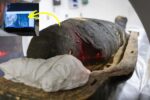
The stones placed inside Ampato 4’s body were not mere packing material. They were ballast for a soul on a continued journey, anchors for a messenger who still had miles to travel for the empire. This finding forces us to expand our temporal view of ritual, understanding that for the Inca, the sacrifice was not an end, but a transformation into a different kind of life—one that served the state forever.
5 In-Depth FAQs
1. How does CT scanning reveal post-mortem manipulation that visual inspection cannot?CT (Computed Tomography) creates cross-sectional X-ray images, building a 3D model of both hard and soft tissues inside the body. Visual inspection only sees the exterior. The scan can reveal:
- Internal bone displacement inconsistent with decomposition.
- Foreign objects (stones, metal, textiles) embedded within body cavities.
- The arrangement of internal organs and evidence of their removal or replacement.
- Subtle fractures and injuries hidden beneath skin and muscle.
2. What is the significance of finding evidence of Chagas disease in one of the children?It critically challenges the colonial Spanish chroniclers’ claim that only “perfect, unblemished” children were chosen. It shows the Inca’s selection criteria were likely more complex, involving lineage, astrological signs, or ritual status. It also adds a layer of pathos, suggesting the child may have lived with a chronic, debilitating illness before being selected for this high honor.
3. Why would the Inca move a mummy after sacrifice?Movement served strategic purposes:
- Political Legitimation: Installing a sacred mummy in a conquered region symbolized the apu’s (mountain god’s) acceptance of Inca rule.
- Ritual Circuit: The mummy might be part of ceremonial processions, especially during key festivals or crises (drought, famine).
- “Repair” and Renewal: The body might be brought to a ceremonial center for rituals of renewal or re-consecration by specialist priests.
4. How does this finding relate to the known Inca practice of ancestor veneration?It directly connects the capacocha children to the Inca cult of the ancestors. Like the mummified remains of Inca emperors (mallquis), which were paraded, consulted, and “fed,” the curated child mummy may have received ongoing veneration. They became a class of “frozen ancestor,” a divine intermediary accessible through their preserved physical form.
5. What are the ethical implications of this research?The study is a model for ethical engagement. Using non-invasive CT scanning avoids physical disturbance or desecration of the remains. The research was conducted with the involvement of the Polish Centre for Mediterranean Archaeology, University of Warsaw, and likely in consultation with Peruvian authorities, focusing on gaining knowledge while respecting the cultural and sacred significance of the mummies as both human remains and cultural patrimony.