




Imagine a civilization that rivaled Egypt and Mesopotamia. Its cities were marvels of urban planning, with the world’s first municipal water and sewage systems, standardized bricks, and orderly, egalitarian grids. It spanned over a million square kilometers, traded from Mesopotamia to Central Asia, and produced an undeciphered script that has guarded its secrets for millennia. This was the Indus Valley Civilization (c. 3300–1300 BCE).
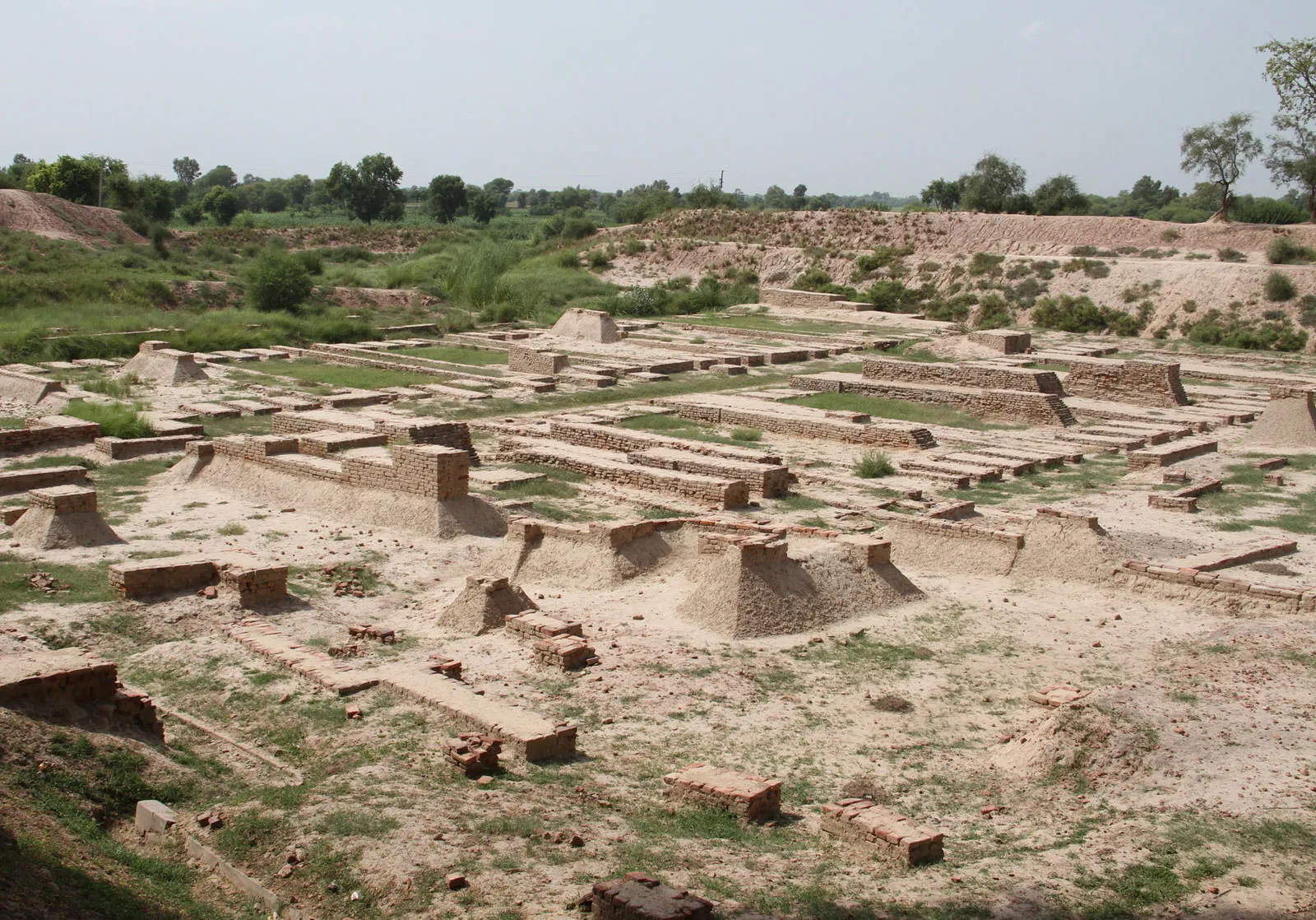
Then, around 1900 BCE, something happened. The meticulous urban order began to fray. The great cities of Mohenjo-Daro and Harappa were gradually, mysteriously abandoned. The script fell out of use. The vast cultural and economic network dissolved. Unlike the collapse of Rome, punctuated by invasion and fire, the Indus decline was a slow fade into silence—a “de-urbanization” so complete it left behind no tales of epic defeat, only empty streets and unanswered questions. It remains one of history’s most profound and haunting disappearances.
The Astonishing Legacy: A Peak Before Its Time
To understand the mystery of its end, one must grasp the scale of its achievement. The Indus Valley Civilization (IVC) was an anomaly of early antiquity.
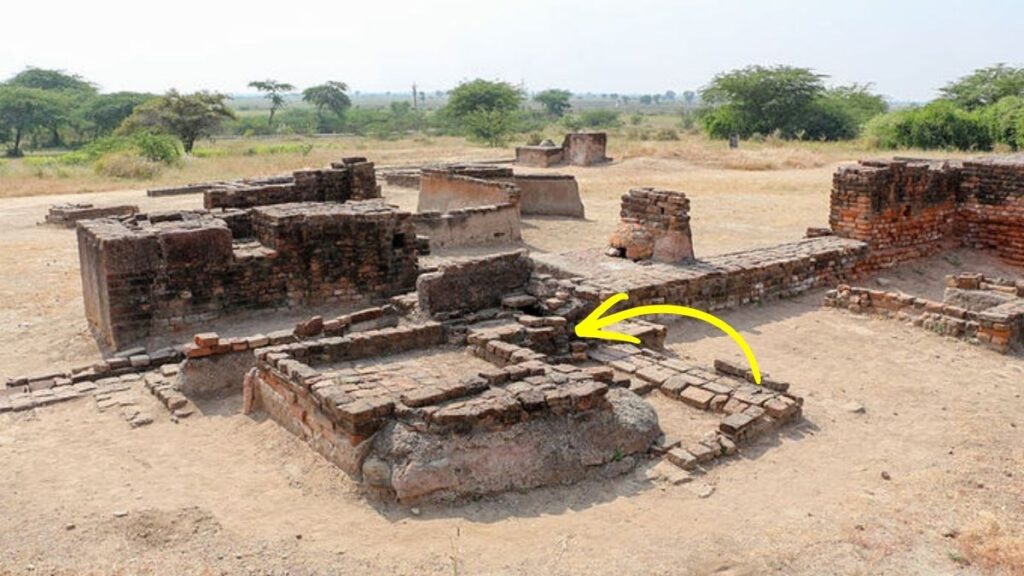
The Geometry of Order Its cities were laid out on a cardinal grid system, with wide main streets and narrow lanes. Houses, often two-storied, featured private bathrooms that drained into a city-wide, covered sewer network—a level of urban sanitation unmatched until the Roman Empire, over 2,000 years later. The Great Bath at Mohenjo-Daro stands as a possible ritual center, showcasing advanced waterproofing with gypsum plaster and bitumen.
A World Without Palaces or Pyramids Intriguingly, archaeologists have found no definitive evidence of temples, palaces, or monumental tombs for god-kings. There is little sign of a centralized, despotic ruler or a priestly theocracy. Power seems to have been distributed, perhaps among merchant guilds or communal councils, making its social structure uniquely modern and adding to the mystery of how it cohered—and how it fell apart.

The Undeciphered VoiceThe Indus script, found on thousands of seals, pottery, and tablets, remains undeciphered. With no Rosetta Stone, its people’s names, laws, beliefs, and histories are mute. This silence is the core of the mystery; we see their meticulously engineered world but cannot hear their explanations for its end.
Deep Dive: The Theories of a Slow-Motion Collapse
No single “smoking gun” explains the IVC’s decline. Instead, scientists and historians see a “perfect storm” of intersecting crises that unraveled a complex system.
1. The Climate & Hydrological Catastrophe (The Most Prominent Theory)
- The Shifting Monsoon: Paleoclimatic data from ocean sediments and stalagmites suggest a prolonged and severe weakening of the monsoon system. The lifeblood of the civilization dried up.
- The Drying of the Ghaggar-Hakra: This major river system, now a seasonal stream, is thought by many to be the lost Sarasvati River of Vedic texts. Its gradual desiccation would have crippled agriculture, forced mass migrations, and shattered the economic backbone of the cities.
2. The Tectonic Upheaval Evidence suggests seismic activity altered river courses. A major earthquake could have dammed the Indus, causing catastrophic flooding at Mohenjo-Daro (where evidence of repairs and raised buildings exists) before eventually diverting water away, turning fertile land into arid plain.
3. The Social and Economic Unraveling

- Trade Breakdown: The collapse of contemporary Mesopotamia (their major trading partner) would have triggered an economic crisis, depleting access to vital resources and prestige goods.
- Over-Exploitation: Deforestation for fuel and brick-making (they fired billions of them) may have led to ecological degradation like soil salinity, reducing agricultural yields.
- Social Contraction: Faced with scarcity, the complex, interdependent urban system may have become unsustainable. People likely dispersed into smaller, self-sufficient village communities, abandoning the high-maintenance urban model. This wasn’t a “death” of a people, but a cultural and technological simplification.
Global Implications: A Blueprint for Fragility
The Indus collapse is not just an ancient curiosity; it’s a stark case study with urgent modern parallels.
The Vulnerability of Complex SystemsThe IVC demonstrates that highly specialized, interconnected urban civilizations are uniquely vulnerable to systemic shocks. Its dependence on a stable climate, predictable rivers, and long-distance trade made it resilient in good times but fragile when multiple systems failed.
De-Urbanization as an AdaptationThe decline challenges the linear narrative of “progress.” For the Indus people, abandoning cities may have been a successful adaptation, a strategic return to a more resilient, rural way of life in the face of ecological change. Their legacy survived not in monuments, but in the cultural seeds that later germinated in South Asian traditions, from ritual bathing to goddess worship.
The Mirror of Climate Change It serves as one of history’s oldest and clearest warnings: advanced civilizations can be undone by environmental change. The prolonged drought that likely crippled the IVC is a prehistoric echo of the climate pressures faced by societies today.

What This Means for History: Redefining “Collapse”
The story of the Indus Valley Civilization forces us to rethink what we mean by “collapse.” There was no dramatic, fiery conquest depicted on temple walls. Instead, we witness a gradual “failure to maintain complexity.”
The people didn’t vanish; they changed their way of life. The script, the weights, the urban blueprint—the very hallmarks of their civilizational identity—were no longer useful in a new, harsher world. Their end is a lesson in humility: that civilization is a fleeting experiment, a delicate balance between human ingenuity and environmental grace. The silent streets of Mohenjo-Daro don’t whisper of a single catastrophe, but of a long, slow goodbye to a way of life that the earth could no longer support.
The mystery endures not because there are no clues, but because there are too many, intertwined like the bricks of their own mighty walls. It reminds us that history’s greatest secrets are not always about how civilizations rose, but about the quiet, complicated ways they chose, or were forced, to fade away.
5 In-Depth FAQs
1. Were the Indus Valley people invaded and destroyed by “Aryans”?This once-popular theory, based on later Vedic texts, is largely rejected by modern scholarship. There is no archaeological evidence at major sites like Mohenjo-Daro or Harappa of widespread warfare, burning, or weapon-strewn massacres coinciding with the decline. The change appears ecological and internal. The Indo-Aryan migrations likely occurred after the urban civilization had already fragmented, interacting with its remnant populations.

2. What happened to the people of the Indus Valley?They did not disappear. Genetic and archaeological studies show cultural and biological continuity in the region. The population likely dispersed eastward and southward, merging with other groups. Their knowledge of agriculture, pottery, and possibly social structures fed into the later Vedic Culture and subsequent historical periods of the Indian subcontinent. The “collapse” was urban and political, not biological.
3. Why is the Indus script so difficult to decipher?The corpus is frustratingly short (approx. 5,000 inscriptions), with the longest text having only 26 signs. There are no bilingual texts (like the Rosetta Stone). We don’t know what language family it represents (was it Dravidian? Indo-European? A lost language?). Furthermore, the inscriptions may be primarily non-linguistic—name tags, clan symbols, or religious sigils—making them even harder to crack using linguistic methods.
4. What is the single strongest piece of evidence for the climate change theory?Data from oxygen isotopes in stalagmites from caves in Oman and Northeast India provide a regional rainfall record. They show a dramatic decline in monsoon strength that began around 4,200 years ago and lasted for over two centuries—precisely coinciding with the de-urbanization phase of the IVC. This climatic shift is considered the primary stressor that made the complex urban system untenable.
5. Could disease have played a role in the collapse?While possible, there’s no direct archaeological evidence for a pandemic. Some scholars speculate that the crowded, water-reliant cities could have been breeding grounds for water-borne diseases, especially as sanitation systems failed due to depopulation and neglect. However, this is considered a potential contributing factor within the wider ecological crisis, not a primary cause. The pattern of gradual abandonment over centuries fits an environmental model better than a sudden plague.