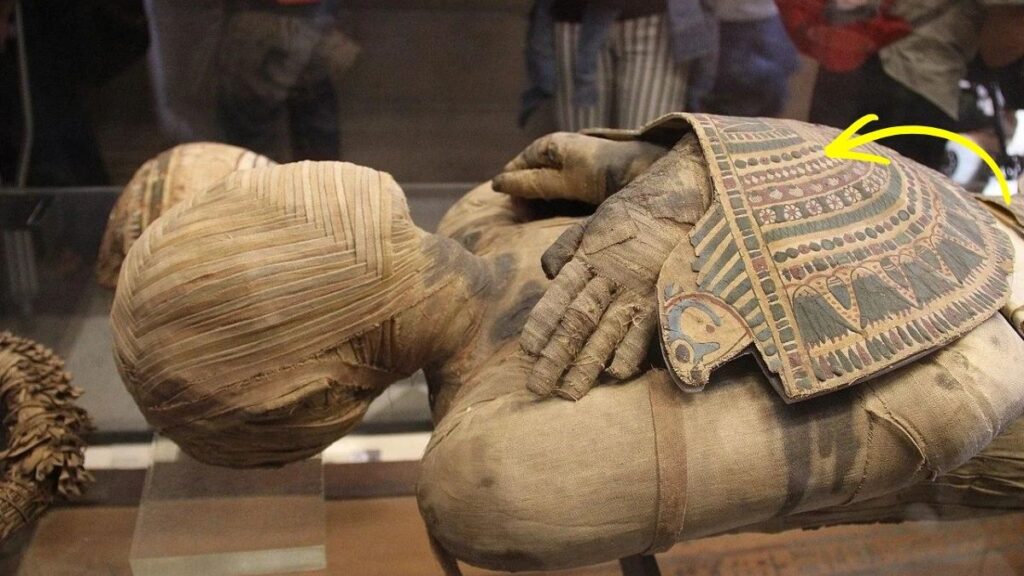
Scents of ancient Egypt: For centuries, the musty odor surrounding ancient Egyptian mummies was dismissed as the simple scent of decay. A mere byproduct of age. New, revolutionary science reveals this smell is anything but. It is, in fact, a complex chemical message. A preserved whisper of sacred rituals and sophisticated recipes meant to last for eternity. Researchers have now cracked this aromatic code. They are translating ancient air into a biography of embalming, tracing trade routes, social status, and spiritual beliefs through molecules we can now smell once more.
This is the story of how the “Scent of the Afterlife” is resurrecting lost knowledge.
The Astonishing Find: A Nose for Non-Destructive Science
The breakthrough lies in a paradigm shift in methodology. Traditional chemical analysis required cutting into precious bandages or dissolving balms. This damaged fragile remains. The new approach is elegantly non-invasive. Teams from the University of Bristol and the Max Planck Institute use headspace solid-phase microextraction.
This technique acts like a high-tech nose.
It captures the volatile organic compounds (VOCs) floating in the air just above a mummy or inside a storage jar. These gases are then separated and identified. The result is a detailed molecular fingerprint of the embalming materials without touching the artifact itself. A study analyzing 35 samples from 19 mummies identified 81 distinct VOCs, painting an unprecedented picture of the embalmer’s craft.

What the Chemical Signatures Reveal
These 81 compounds are not random. They group cleanly into four categories, each telling part of the mummification story.
Fats & OilsBeeswaxPlant ResinsBitumen
Ingredient CategoryKey Chemical Signatures RevealedWhat It Tells Us Aromatic compounds, short-chain fatty acids .The fundamental, accessible base of many balms. Mono-carboxylic fatty acids, cinnamic compounds .Used as a sealant and preservative; indicates advanced technique. Aromatic compounds, sesquiterpenoids .Often imported (e.g., conifer, pistachio); signals wealth & long-distance trade. Naphthenic compounds .The “Pitch of Judea”; used sparingly, its detection shows extreme analytical sensitivity.
Cross-disciplinary analysis of mummies in Cairo confirmed these profiles add a “woody,” “spicy,” and “sweet” character to the ancient odor. Furthermore, recipes changed over time and across the body. Early mummies show simpler, fat-dominated profiles. Later ones display complex cocktails of imported resins and bitumen, marking evolving practices and access to luxury goods. Embalmers even used different blends for the head versus the torso.
From Lab to Museum: The “Scent of the Afterlife” Experience
This research has leapt from academic journals into museum halls. In a groundbreaking project, scientists partnered with a professional perfumer, Carole Calvez. Their mission? To translate the biomolecular data from 3,500-year-old canopic jars into an authentic, wearable fragrance.
The challenge was artistic and scientific.
“The perfumer must translate chemical information into a complete… olfactory experience,” explained archaeochemist Barbara Huber. The result is “The Scent of the Afterlife.” Museums like the Museum August Kestner in Germany and the Moesgaard Museum in Denmark have integrated it via scented cards and diffusion stations. Visitors no longer just see history; they inhale it. This moves public understanding “away from the scare factor… toward an appreciation of the motivations,” note curators.
Global Implications: A New Sensory Dimension to History
The implications are profound. First, it provides a powerful, non-destructive screening tool for museums worldwide. Curators can now get a preliminary chemical profile of fragile mummies without risk. Second, it validates olfactory heritage as a serious field of study. Smell is a direct, emotional pathway to the past, offering depth that text alone cannot provide.
Finally, it refines our historical narrative.
Detecting a trace of bitumen confirms trade networks. A shift from local fats to imported resins signals economic change. The smell is a direct chemical record of cultural values, technological skill, and global connections in the ancient world.
What This Means for History: The Past is in the Air
We are entering a new era of sensory archaeology. The faint odor in a museum case is no longer a sign of decay. It is a preserved echo of ancient belief. It is the scent of sanctity, of meticulous ritual, and of a profound desire for eternal life. By learning to smell the past, we engage with history on a fundamentally human level. We connect with the hopes, resources, and artistry of those who believed, deeply, that preservation was the key to immortality.
This research proves they succeeded—just not in the way they imagined. They preserved their story not only in stone and bandage, but in the very air around them. And now, millennia later, we are finally beginning to understand its message.
In-Depth FAQs: Your Questions Answered
1. How can a smell last for thousands of years?The smell isn’t the original, fleeting aroma from 1450 BCE. It is caused by Volatile Organic Compounds (VOCs) that continue to evaporate from the solid embalming materials—the fats, resins, and waxes—over time. These materials degrade very slowly, releasing a stable, long-term chemical signature that our noses and instruments can detect.
2. Does this mean all mummies smell the same?No. The VOC profile, and thus the smell, varies significantly. It depends on the historical period (earlier vs. later recipes), the social status of the deceased (simple fats vs. expensive imported resins), and even the specific body part treated. A mummy from the New Kingdom will have a different aromatic fingerprint than one from the Ptolemaic period.
3. What about the smell of decay? Is it completely wrong?The classic “mummy smell” is a blend. While the dominant signature comes from embalming balms, other factors contribute. Studies note that modern conservation materials (like plant oils), old synthetic pesticides applied to artifacts, and products from ongoing microbiological activity can also add to the complex odor detected today.
4. Why is this method better than studying the balms directly?Non-destructiveness is the key advantage. Direct sampling requires removing physical material, which permanently damages irreplaceable artifacts. The VOC analysis is like a medical breathalyzer test—it gathers critical diagnostic information without any intrusion, making it ideal for precious museum collections.
5. Can we ever know the exact original smell?We can get remarkably close, but an exact replica is challenging. The analysis identifies the core chemical components. However, modern perfumers must find safe, available equivalents for ancient raw materials that may be extinct or restricted. The goal is to create an authentic evocation—a scientifically informed and emotionally resonant interpretation—that brings us closer than ever before to the ancient sensory world.