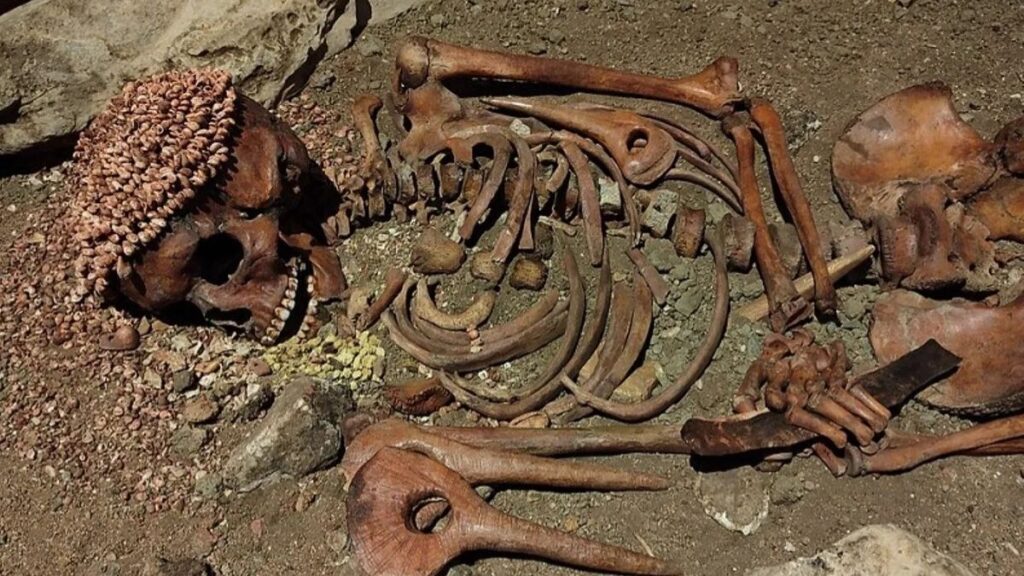
Il Principe Burial: An Ice Age grave long thought to signal prestige may instead record one of the most violent deaths known from the Paleolithic.
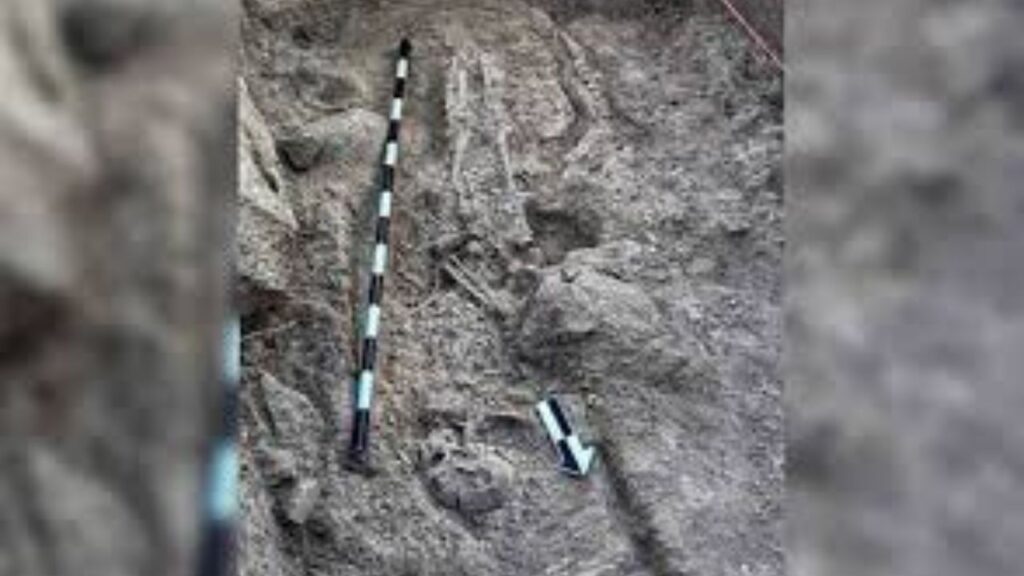
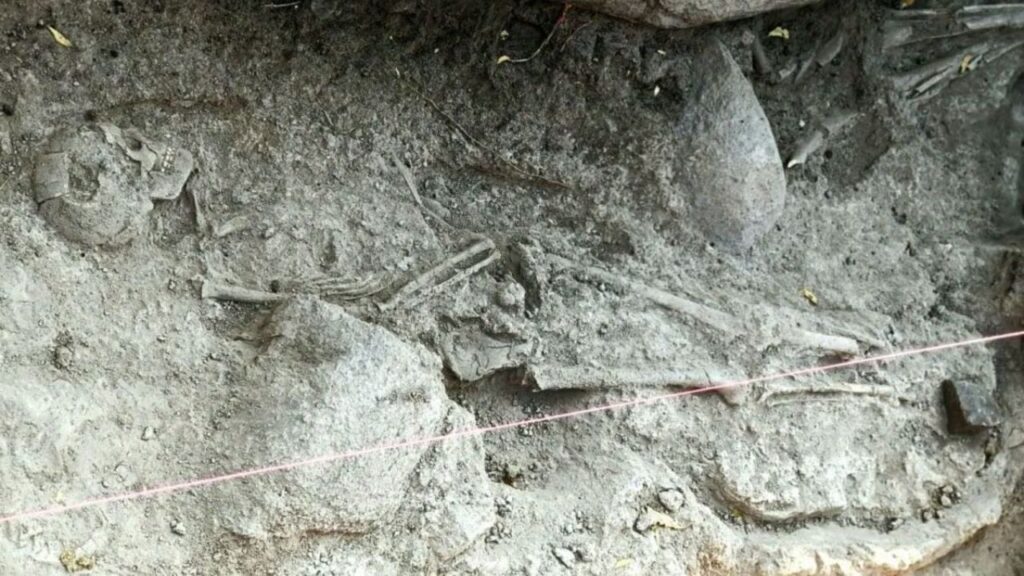
In a cave overlooking the Ligurian coast of northern Italy, archaeologists uncovered a burial so elaborate that it reshaped ideas about social hierarchy in Ice Age Europe. The adolescent buried there—nicknamed “Il Principe” (The Prince)—was laid to rest nearly 28,000 years ago, adorned with hundreds of ornaments and symbolic objects.
But new forensic reanalysis of his skeleton tells a darker story. Rather than dying peacefully or being honored for high status, the teenager likely succumbed days after a devastating attack by a large predator, probably a bear. The lavish burial, researchers argue, may reflect a ritual response to extraordinary suffering, not inherited power.
The Burial at Arene Candide
The grave was discovered in 1942 at Arene Candide Cave, a major Upper Paleolithic site in Liguria, Italy. Radiocarbon dating places the burial between 27,900 and 27,300 years ago, during the Gravettian period, a culture known for its distinctive stone tools, art, and formal burials across Europe.
The individual was a teenage boy, likely between 15 and 18 years old, interred with exceptional care. Grave goods included:
Hundreds of pierced marine shells, likely sewn onto clothing
Carved antler batons
Mammoth ivory pendants
A finely worked flint blade
Such richness earned him the title “Il Principe” and led early researchers to interpret the burial as evidence of elite social rank.
Injuries Written in Bone
Closer examination of the skeleton, however, reveals extensive trauma inconsistent with ceremonial death or interpersonal violence.
Documented injuries include:
A smashed collarbone
A large perforation in the jaw
Fractures to the skull, teeth, neck vertebrae, and fibula
Crushing injuries to the face and chest
The pattern resembles trauma seen in modern high-impact accidents—but in a Paleolithic setting, researchers argue, the injuries are far more consistent with a violent animal mauling.
Notably, the bones show early signs of healing, indicating the boy survived for two to three days after the attack. This suggests that major arteries were not immediately severed and that death likely resulted from internal bleeding, organ failure, infection, or brain trauma.
Bear, Lion, or Leopard?
The research team evaluated multiple explanations, including falls, interpersonal violence, and hunting accidents. These scenarios were rejected because they fail to account for:
The distribution of injuries
The force required
The absence of defensive weapon trauma
Instead, the damage closely matches known patterns of large carnivore attacks. Possible culprits include:
Brown bear (Ursus arctos)
Cave bear (Ursus spelaeus)
Cave lion (Panthera spelaea)
Ice Age leopard
Among these, bears fit the evidence most closely, as their attacks often involve crushing bites to the head and torso rather than clean puncture wounds.
Rethinking Grave Goods and Status
Why, then, was a grievously injured teenager buried with such extraordinary care?
Researchers propose that the burial represents “ritual sanctioning”—a cultural response meant to acknowledge and contain an exceptional event. In this interpretation, the grave goods were not symbols of rank but tools of meaning, helping the community process trauma, danger, and loss.

This idea aligns with a broader pattern in Gravettian Europe. Other lavish burials from the same period frequently involve individuals with unusual injuries, deformities, or atypical deaths, suggesting that difference—not dominance—may have prompted ceremonial burial.
Why This Finding Matters
The reinterpretation of Il Principe’s death challenges long-held assumptions about social inequality in the Upper Paleolithic. Rather than reflecting rigid hierarchies, elaborate burials may reveal:
Early ritual responses to violence and suffering
Deep symbolic engagement with death and danger
A cultural need to mark exceptional individuals, regardless of status
It also provides rare, direct evidence of human–predator conflict during the Ice Age—an everyday risk for hunter-gatherers living alongside Europe’s megafauna.
What We Know vs. What’s Uncertain
What We Know
The burial dates to ~28,000 years ago (Gravettian period)
The individual was a teenage male
He suffered massive trauma consistent with a large animal attack
He survived for several days after being injured
The burial was exceptionally rich by Paleolithic standards

What Remains Uncertain
The exact species responsible for the attack
Whether the encounter occurred during hunting, travel, or at camp
The precise symbolic meaning of each grave object
How widespread such ritual responses were across Gravettian groups