
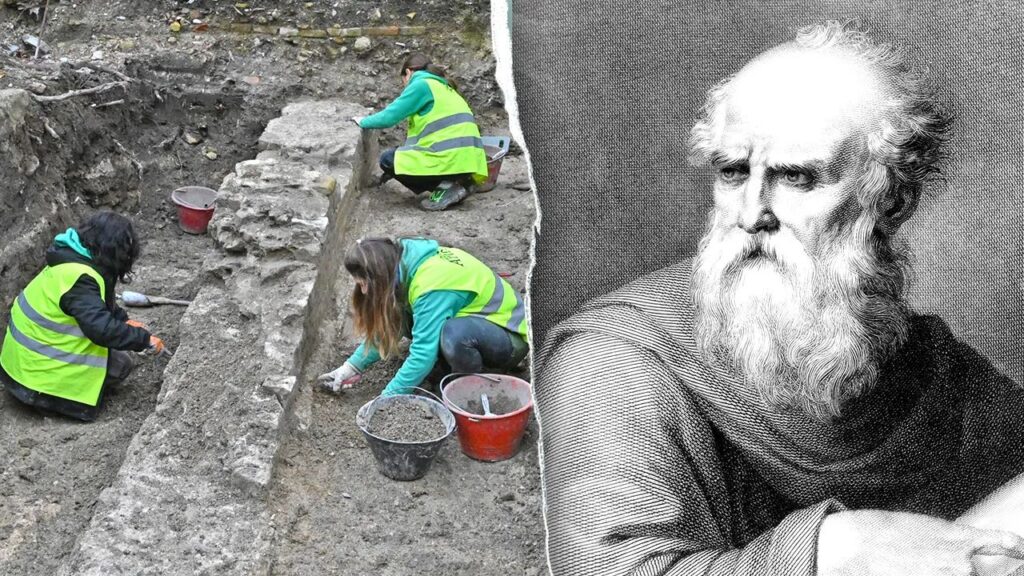
Roman Basilica Linked to Vitruvius Discovered: Archaeologists in Italy have made a landmark discovery that could reshape the understanding of ancient Roman architecture. A 2,000-year-old basilica believed to be directly connected to Vitruvius, the legendary Roman engineer and architect often described as the father of architecture, has been uncovered in the historic city of Fano.
The discovery was officially announced at a press conference on January 19, drawing widespread attention from historians, architects, and cultural experts worldwide. The site is located in Fano, a coastal city approximately 150 miles northeast of Rome, an area long suspected to hold significant Roman-era structures.
A Basilica From the Heart of Ancient Roman Civic Life
Italian officials have identified the structure as a basilica, a type of public building that played a central role in Roman civic life long before basilicas became associated with Christianity. In ancient Rome, basilicas were primarily used for legal proceedings, administrative functions, and public gatherings rather than religious worship.
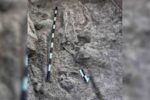
According to archaeologists, the newly uncovered basilica is rectangular in layout, featuring ten columns along its longer sides and four columns on its shorter sides. This architectural configuration closely matches the detailed description found in Vitruvius’s writings, making the discovery exceptionally rare.
Experts say this is the basilica that can be most confidently associated with Vitruvius himself—an extraordinary claim in a field where absolute certainty is often elusive.
Vitruvius and His Enduring Architectural Legacy
Vitruvius, born between 80 and 70 BC and believed to have died around 15 BC, is best known as the author of De Architectura, the oldest surviving treatise on architecture. The work consists of ten books that cover architecture, engineering, construction materials, urban planning, and even acoustics.
His principles of proportion, symmetry, and harmony shaped architectural thought for centuries. Vitruvius’s influence famously extended into the Renaissance, inspiring Leonardo da Vinci’s iconic “Vitruvian Man,” a drawing that visually represents the mathematical proportions of the human body. His ideas also guided the work of later architectural giants such as Andrea Palladio and Christopher Wren.
Archaeologists Call the Match “Extraordinarily Precise”
Regional Archaeological Superintendent Andrea Pessina told reporters that the newly discovered structure aligns with Vitruvius’s descriptions with remarkable precision. He emphasized that archaeology rarely offers complete certainty, but the level of accuracy found in this case is “extremely impressive” and unlike most previous identifications.
The proportions, column placement, and overall design appear to correspond almost exactly with the basilica described in De Architectura, strengthening the argument that this building was either designed by Vitruvius or served as the model he documented.
A Discovery That Could Change Roman Architectural History
Italian Culture Minister Alessandro Giuli described the find as “sensational,” stating that it is a discovery that future generations of scholars will continue to discuss and study. He highlighted the importance of the basilica not only as a physical structure but as a missing link between architectural theory and real-world Roman construction.
Fano Mayor Luca Serfilippi went even further, calling it “the discovery of the century.” He noted that historians and archaeologists have spent hundreds of years attempting to locate this very basilica, guided only by Vitruvius’s ancient descriptions.
What Comes Next for the Historic Site
Archaeologists plan to continue excavations in the coming months to uncover additional sections of the basilica and better understand its full scale and function. Italian authorities have also expressed plans to eventually open the site to the public, allowing visitors to experience a structure that directly connects modern architecture to its ancient roots.
If further findings confirm current theories, the Fano basilica could become one of the most important Roman archaeological discoveries of the 21st century.