

Imagine a place where early humans, our most distant ancestors, shaped their first tools. A landscape that witnessed the dawn of human ingenuity nearly two million years ago.
Now, imagine that same sacred ground being pulverized. Not by time, but by dynamite and excavators.
This is not a hypothetical scenario. It is happening right now in central India. A revolutionary prehistoric site named Bhatala is facing imminent erasure. Its story, crucial to the global human journey, is being blasted into dust.
The Astonishing Find: A Window to the First Humans
The story begins in the Chandrapur district of Maharashtra. Here, researchers from Nagpur University have identified a treasure far older than any pyramid or temple.
The Bhatala site is believed to be two million years old. This places it in a mind-blowing timeline. It is from the dawn of the Paleolithic era, when Homo erectus first began to master stone.
The artifacts found here are deceptively simple, yet earth-shattering. They are primitive stone tools fashioned from red quartzite and chert. We are talking about hand axes, cleavers, and scrapers.
These are not mere rocks. They are the first chapters of human technology. Each scar on their surface is a decision. A moment of problem-solving from a mind so ancient it defies comprehension.
A Pattern of Destruction: From Papamiya Tekdi to Bhatala
Tragically, Bhatala is not the first site to face this fate. Its current crisis echoes the slow-motion destruction of a nearby landmark: Papamiya Tekdi.
Papamiya Tekdi is one of India’s oldest known Stone Age sites. It was a cornerstone for understanding early human migration in the subcontinent.
Despite early documentation and even a 2018 government plan to build a prehistoric museum there, the site has been largely lost. Construction for a medical college and hospital has encroached upon this irreplaceable landscape.
Heritage experts now see a chilling pattern. Bhatala is following the same doomed path. The warning bells are screaming, but is anyone listening?
The Battlefield: Sacred Temple vs. Illegal Mining
The conflict at Bhatala centers on a sacred zone. The Bhavani Temple sits at the heart of the area. It is a legally protected monument.
The law is clear. The Ancient Monuments and Archaeological Sites and Remains Act mandates a 300-meter protected radius around such sites. Mining and blasting are completely banned within 100 meters. They require strict permissions in the next 200.
Yet, researchers have documented a nightmare. Alleged illegal mining and blasting are occurring within this sacred radius. Statutory signboards marking the protected zone have been mysteriously removed.
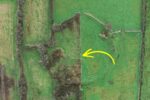
Professor Prabash Sahu of Nagpur University leads the desperate documentation effort. His team’s field surveys show extensive, accelerating damage. “The pace of quarrying suggests the prehistoric site will vanish soon,” he warns.
A Clash of Narratives: Official Denial vs. On-Ground Reality
The official response reveals a frustrating disconnect. While the state archaeology department acknowledges the issue and claims to be acting, enforcement is weak.
The local tehsildar, Yogesh Kautkar, insists no illegal activity is occurring within the 200-meter prohibited zone he recognizes. He states all mining has due permission in a designated zone.
This clashes directly with the archaeologists’ evidence and the stricter 300-meter rule under national law. Professor Sahu poses the critical question: “Is it necessary to carry out mining in this area only when it has been established that it is a prehistoric site?”
The district collector has remained silent on queries. This silence is deafening for a site of such global significance.
Global Implications: Losing a Chapter of the Human Story
The loss of Bhatala is not a local tragedy. It is a global one. This site is a key piece in the puzzle of Early Human Migration out of Africa.
Two million years ago, early humans were spreading across the Old World. Sites like Bhatala in central India are waypoints on that epic journey. They tell us about the routes taken, the tools used, and the environments mastered.

Destroying Bhatala is like tearing pages from the only copy of humanity’s origin story. Each stone tool is a data point. Each layer of soil holds climate and environmental secrets from a forgotten era.
If Bhatala vanishes, we lose irreplaceable evidence. We may never fully understand how and when the first humans arrived in India. Their secrets will be buried forever, not under soil, but under rubble and bureaucratic neglect.
What This Means for History: A Race Against Time
This crisis exposes a fatal flaw in how we protect our deepest past. A temple can be fenced. A medieval fort can be guarded. But a sprawling, open-air Paleolithic landscape is incredibly vulnerable.
Its value is not in towering structures, but in subtle scatters of stone and ancient soil layers. To a miner or a developer, it looks like empty land. To an archaeologist, it is a library of human dawn.
The situation at Bhatala is a urgent test. It tests India’s commitment to preserving its status as a cradle of humankind. It tests the global community’s resolve to safeguard our shared prehistory.
The machinery is at the gate. The blasts are getting closer. The question is whether the world will speak up before the last two-million-year-old hand axe is turned into gravel.
The Unanswered Questions: Your FAQ Guide
1. How was the Bhatala site discovered and dated?
Researchers from Nagpur University identified it through field surveys, finding stone tools on the surface and in exposed sections. The estimated age of nearly two million years is based on the typology (style and technology) of the tools, such as specific hand-axes and cleavers, which match known Paleolithic sequences. This method, called relative dating, is often confirmed by more precise techniques like paleomagnetic dating of the surrounding soil layers, which researchers would seek to apply.

2. Why is this site more important than other Stone Age sites?
Its extreme suggested age is key. If confirmed, Bhatala would be among the very oldest evidence of human presence in the entire Indian subcontinent. It would directly contribute to the map of how early humans (Homo erectus) dispersed from Africa across Asia. Its loss would destroy a rare and ancient node in this global migration network.
3. What exactly is being mined, and is it legally justified?
The area is being mined for stone. Officials claim the activity is in a designated mining zone with permits. However, archaeologists argue the mining is within the legally protected 300-meter radius of the Bhavani Temple, which houses the prehistoric deposits. The core conflict is a clash between mining permits and stronger national heritage protection laws (the AMASR Act).
4. What happened to Papamiya Tekdi, and why is it a warning?
Papamiya Tekdi was a site of similar antiquity and importance. Despite being documented and recognized, large parts of it were ultimately destroyed or irreparably damaged by the construction of a medical college and hospital complex. It shows that bureaucratic promises and initial surveys are not enough without active, physical, and legally enforced protection.
5. What can be done to save Bhatala?
Immediate steps require the district administration to halt all mining within the full 300-meter protected zone as per the AMASR Act. The site’s boundaries need to be formally demarcated and fenced. Long-term, it requires official declaration as a protected archaeological site in its own right, not just as part of the temple’s periphery. This would grant it stronger, independent legal standing against industrial activity. International attention from global heritage bodies can also increase pressure for its preservation.