
For centuries, the waves held a secret ledger of untold wealth. Not of gold, but of connections. It recorded a network so vast it bound continents, only to be erased by the sea in a single, furious day.
Now, that ledger is open.
Marine archaeologists diving off Tamil Nadu’s coast have done more than find a sunken settlement. They have uncovered a vanished port city from the Indian Bronze Age. This isn’t just a collection of ruins.
It is a preserved commercial epicenter. Every artifact pulled from the silt is a transaction record, a shipping manifest, and a cultural passport from a time when this city was a powerhouse of global trade.
The Astonishing Find: A Harbor Frozen in Time
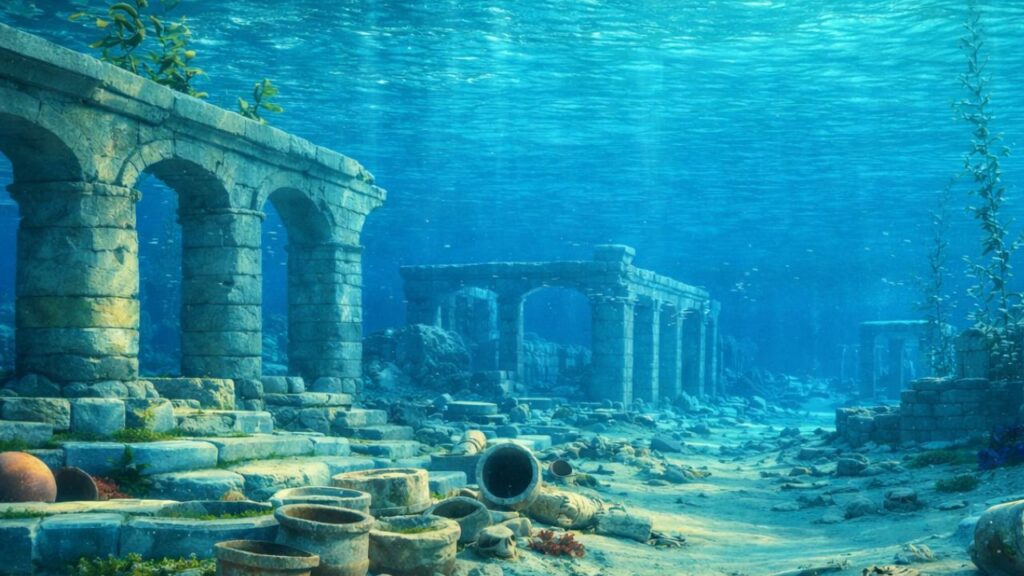
The site, discovered through sonar mapping and local lore, is breathtaking in its scale. This was no simple fishing village. Divers navigated a grid of foundations, massive stone blocks that once formed formidable seawalls and warehouses.
Most critically, they identified a submerged river channel slicing through the urban layout.
This was the city’s lifeblood and its reason for being. It provided safe, deep-water anchorage for large, ocean-going vessels, protecting them from the monsoon’s fury. The very geography screams “international port.”
What the Artifacts Reveal: The Cargo of a Connected World
The true mind-blowing revelations came from the seabed itself. The artifacts form a stunning inventory of a city engaged in long-distance exchange.
The Pottery That Maps the World
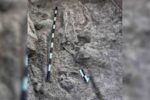
Thousands of ceramic shards tell a silent story of arrivals and departures. Among the local coarseware, archaeologists found definitive, high-quality examples of Black and Red Ware.
This specific pottery type is a key chronological marker of the South Indian Iron Age (circa 1200-300 BCE). Its presence here, in a port context, is revolutionary.
It proves this city was a major exporter of distinctive cultural goods—or a hub where such styles were emulated for trade.
The Tools of the Merchant’s Trade
Even more telling were the small, meticulous finds. Perfectly shaped stone weights, calibrated to ancient standards, were recovered from what appears to be a market or dock area.
These are the literal weights and measures of Bronze Age commerce. They provided the trust necessary for transactions between distant cultures speaking different languages.
Nearby, divers collected ornate carnelian and agate beads. These semi-precious stones, likely worked in nearby industrial centers, were prized luxury exports across the ancient world.
Architectural Grandeur
Beyond trinkets, the architecture spoke of immense wealth and public works. The presence of large, ceremonial stone platforms suggests a powerful, centralized authority that could fund infrastructure.
This was a city confident enough to invest in its future—a future the ocean abruptly stole.
The Global Implications: Redrawing the Ancient Trade Map
This city forces a dramatic rewrite of economic history. It places South India squarely on the map of early globalism.
A Missing Link in the Chain
Historians knew of later Roman trade with South India. They knew of the Mesopotamian trade with the Indus Valley centuries earlier. This city fills the mysterious gap in between.
It reveals a continuous, sophisticated maritime network operating for over a millennium before the Romans arrived.
The Route of Legends
The city’s location points to a probable role in the legendary spice and peacock trade. Tamil literature sings of these exports. Now, we have the port that may have shipped them.
Vessels from here could have caught monsoon winds to the Arabian Peninsula. From there, goods would travel overland to Mesopotamia and the Mediterranean.
This makes the city a crucial nexus, connecting the Indian subcontinent to the cradle of Western civilization.
Theories on a Catastrophic End: The Day the Trade Stopped
How does such a vital hub simply vanish? Geology provides a shocking, plausible answer.
The leading theory is a massive seismic event. A powerful earthquake could have caused the land to subside meters in a matter of hours.
This would have been followed by a devastating tsunami. The city’s protective river channel would have become a funnel for the killer wave.
The orderly nature of the ruins—walls still standing, artifacts in place—supports a rapid, catastrophic submergence. Trade did not decline here. It ended at the height of the city’s power, in a single day of terror.
What This Means for History: Commerce Before Empires
This discovery elevates the role of the merchant and the sailor in ancient history. It shows that complex trade networks often preceded and underpinned great empires.
First, it proves South India’s early civilizations were outward-looking and maritime-focused. Their prosperity was built on ocean winds and shrewd exchange, not just agriculture.
Second, it suggests cultural fusion happened constantly in ports like this. Ideas about technology, art, and governance sailed in with every ship, shaping the subcontinent’s development.
Finally, it is a stark lesson in human vulnerability. The very sea that brought this city its wealth ultimately consumed it. Its perfectly preserved state offers an unparalleled, poignant snapshot of a working commercial world, frozen at its peak.
In-Depth FAQs
1. What is the city’s name?
Its ancient name is lost to history. Archaeologists are currently referring to it by its modern geographic location. Researchers are cross-referencing findings with Tamil Sangam literature, which describes ancient coastal cities, in hopes of identifying it.
2. How do we know it was a trade hub and not just a large town?
The evidence is in the specialization. The stone weights are tools for standardized trade. The quantity and variety of non-local pottery suggest bulk handling of goods. The monumental harbor structures required investment only justified by significant commercial traffic. This was an economy built on exchange.

3. Who were they trading with?
While direct evidence like foreign coins is still sought, the timeline suggests likely partners. Contemporary civilizations included the Mesopotamian empires, the Phoenicians, and early cultures in Southeast Arabia and possibly Southeast Asia. The city was a critical link in the Indian Ocean exchange system.
4. Why are there no major shipwrecks fo und yet?
Wooden ships decay quickly in tropical waters. A wreck would only survive if buried instantly in anoxic silt. The search continues for such a preserved vessel, which would be an archaeological treasure trove. The port infrastructure itself, however, is the ultimate proof of maritime activity.
5. Will this site be turned into an underwater museum?
This is a key goal for archaeologists and the Indian government. Advanced photogrammetry is creating a full 3D digital model of the site. This virtual museum will be accessible worldwide. Controlled, respectful diving tourism is a future possibility, following the model of sites like Egypt’s submerged city of Heracleion.