


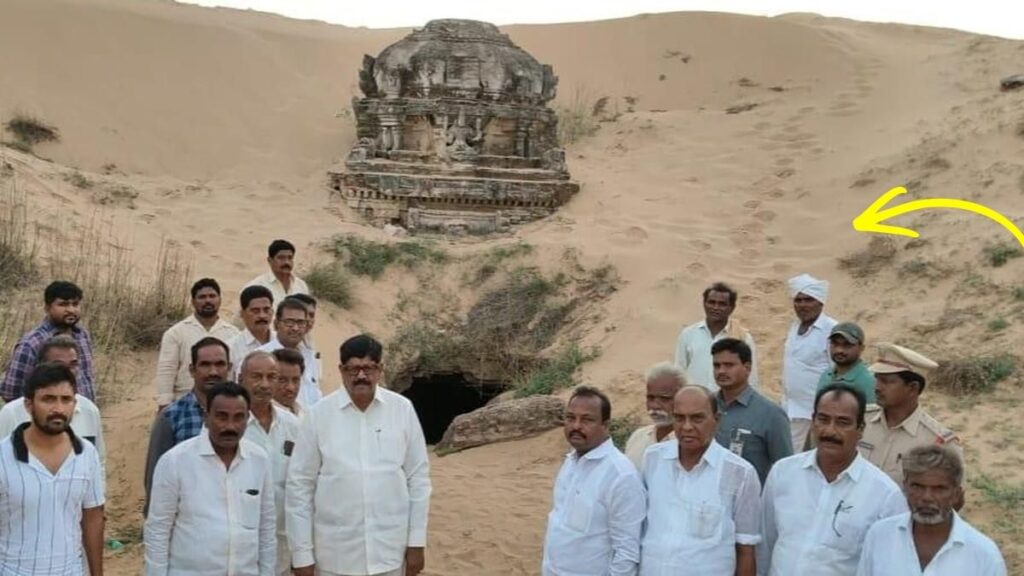
Ancient temple in Nellore, India: For over 150 years, the Penna River held a sacred secret. After catastrophic floods in the 1850s shifted its course, it quietly buried a temple under dunes of sand, erasing it from memory and map. The deity slept, and the story faded into local lore. Then, in the surreal quiet of the 2020 pandemic, mine workers digging for sand struck stone. What they uncovered was not just a ruin, but a remarkably intact, submerged shrine, waiting for its moment of return.
Now, the Sri Nageswara Swamy Temple in Perumallapadu, Andhra Pradesh, is receiving a historic rebirth. With a sanctioned grant of ₹1.50 crore, the state is not merely excavating stones; it is resuscitating a 1,000-year spiritual lineage and answering the fervent prayers of a community that never forgot. This is a story of accidental archaeology, persistent faith, and a government’s mission to physically reclaim a cultural identity that a river once washed away.
The Astonishing Rediscovery: An Accidental Time Capsule
The temple’s re-emergence is a narrative worthy of legend, blending modern labor with ancient destiny.
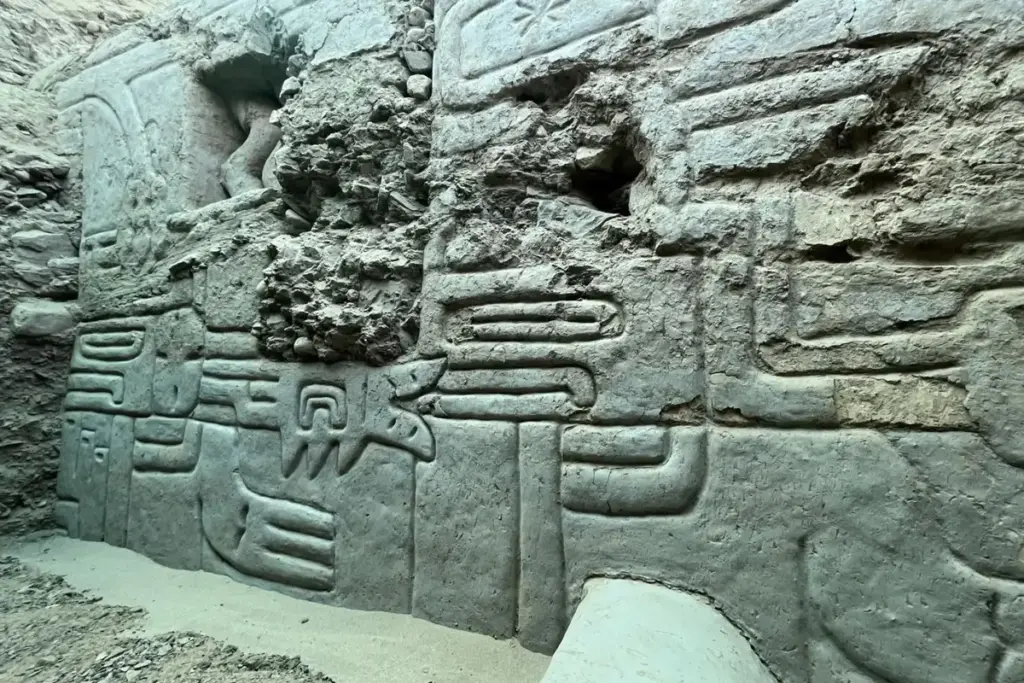
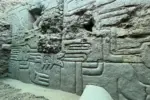
The Pandemic RevelationIn June 2020, while the world was in lockdown, local mine workers and youths were excavating sand in Chejerla mandal. Their tools hit not more sand, but carved stone and ancient masonry. They had inadvertently uncovered the gopuram (tower) and walls of a temple completely engulfed by the dunes. The river, which had concealed it, had also preserved it.
A Tale of Two Timelines The discovery ignited a debate that enriches its mystery. Local tradition and ministerial statements cite a rich history of around 1,000 years, potentially linking it to the era of the sage Parasurama, a figure of immense antiquity in Hindu cosmology. However, archaeologists performing physical assessments point to architectural styles and construction techniques from the 19th century.This gap is not a contradiction, but a common layering in Indian sacred sites: a 19th-century temple could very well have been constructed on the hallowed foundation (sthana) of a millennium-old shrine, inheriting its legend, deity, and spiritual potency. The sands may have hidden both timelines.
Deep Dive: More Than Restoration—Reconsecration
The state’s intervention, led by Endowments Minister Anam Ramanarayana Reddy, transcends typical heritage conservation. It is an act of cultural and spiritual reclamation.
The “Common Good Fund” for a Common Heritage The allocation of ₹1.50 crore from the Common Good Fund (CGF) is symbolically potent. This fund is designed for public benefit projects. By using it for the temple, the government frames cultural heritage preservation as a vital public good, essential for community identity, historical continuity, and spiritual well-being.
A Community’s Conviction The project is fundamentally driven by local will. For years, villagers petitioned officials, their faith undimmed by the temple’s burial. Their advocacy turned an accidental find into a political and administrative priority. This model showcases how grassroots devotion can be the most powerful force in heritage preservation, moving bureaucracy to action.
Engineering a Rebirth The technical challenge is significant. The work involves:
- Systematic Archaeological Excavation: Carefully removing tons of sand without damaging the structure.
- Structural Stabilization: Assessing the integrity of walls and foundations buried for centuries.
- Ritual Reconsecration: Following Vedic prana pratishtha rituals to re-invoke the deity’s presence, making the stone idol a living god once more.
Global Implications: Living Heritage vs. Static Ruins
The Perumallapadu project presents an alternative global model for handling rediscovered sacred sites.
Active Worship vs. Museumification In many parts of the world, an ancient uncovered temple would become a protected archaeological site, roped off for study and tourism. Here, the goal is explicitly to restore it as a living, breathing center of daily worship. This philosophy treats heritage not as a fossil to be studied, but as a continuous thread to be rewoven into the present.
Disaster Archaeology and Climate Legacy The temple is a direct artifact of historical climate disaster—the 1850 floods. Its study can offer insights into past extreme weather events and human adaptation. Its restoration is a symbolic victory over that historical trauma, a reassertion of permanence in the face of nature’s flux.
What This Means for History: Sand as a Keeper of Faith
The Sri Nageswara Swamy Temple’s story powerfully illustrates that in India, history and faith are often inseparable. A site is not lost just because it is buried; it remains alive in story and pilgrimage (sthalapurana).
The river’s sands acted not as a tomb, but as a protective cocoon. They shielded the temple from the wear of centuries and the potential ravages of conflict or neglect. Its accidental discovery feels fated, a divine reminder that the sacred landscape endures, even when invisible.
This restoration is more than construction. It is the physical manifestation of collective memory, proving that a community’s devotion can, quite literally, move earth and move governments to bring its heart back to light.
5 In-Depth FAQs
1. How can a temple be both 1,000 years old and from the 19th century?This is a common feature of Indian religious sites. The “1,000-year” claim likely refers to the sacredness of the location (kshetra) and the antiquity of the deity’s worship there, possibly in an earlier, simpler shrine. The 19th-century date refers to the current visible stone structure, which could be a major renovation or rebuilding on that ancient, consecrated ground. Archaeological scrutiny might reveal older foundations beneath the 19th-century walls.
2. What is the significance of the deity, Lord Nageswara? Nageswara is a form of Lord Shiva as the “Lord of Serpents” (Naga + Ishvara). Serpent worship is deeply ancient in India, associated with water, fertility, and protection of underground treasures. A Nageswara temple on a riverbank is highly symbolically resonant, guarding the life-giving waters. The sage Parasurama, linked to its consecration, is a mythical warrior-sage who reclaimed land from the sea, further connecting the temple to themes of taming nature and establishing sacred order.
3. What are the major challenges in restoring a sand-submerged temple? Key challenges include: Hydrological Pressure: Ensuring the excavated structure is stable without the surrounding sand’s support. Salt & Moisture Damage: Assessing decay to the stone and plaster from long-term moisture. Archaeological Sensitivity: Excavating in a way that preserves any artifacts or inscriptions that could reveal its true age and history. Ritual Protocol: Coordinating the engineering work with the ceremonial requirements for purification and reconsecration.
4. How does this project fit into broader trends in India’s heritage management?It reflects a growing, state-supported emphasis on reviving and beautifying Hindu temple infrastructure as part of cultural and spiritual policy. The use of the Endowments Department and specific funds like the CGF highlights an institutional approach to managing active places of worship as vital assets of community and civilizational heritage, not just as historical monuments.
5. Will this restoration alter the temple’s original architecture?The goal of such projects is typically conservation and recovery, not recreation. The aim will be to carefully expose the original 19th-century structure, stabilize it, and restore its functionality for worship (like repairing the vimana, mandapa, and pathways). Any new additions for visitor facilities (like shelters or walkways) would likely be discreet and modern. The primary objective is to reveal and preserve the temple as it was buried, not to re-imagine it.