
What first appeared to be scattered debris inside a remote mountain cave turned out to be something far rarer: a sealed ritual deposit preserved almost exactly as it was left centuries ago. Deep within Tlayócoc Cave in central Mexico, archaeologists have documented a collection of artifacts dating to the final centuries before Spanish contact—objects that shed new light on a little-known highland culture and its beliefs.
The find was accidental, but its implications are carefully measured. Protected by a narrow, flooded passage and the cave’s stable microclimate, the artifacts remained untouched for nearly 500 years, offering a rare snapshot of ritual life in pre-Hispanic Mesoamerica.
A Discovery Made by Chance, Not Excavation
The objects were spotted during a non-archaeological cave survey, when caver Katiya Pavlova and local guide Adrián Beltrán Dimas passed through a tight, water-filled squeeze with barely 15 centimeters of clearance beneath the cave ceiling.
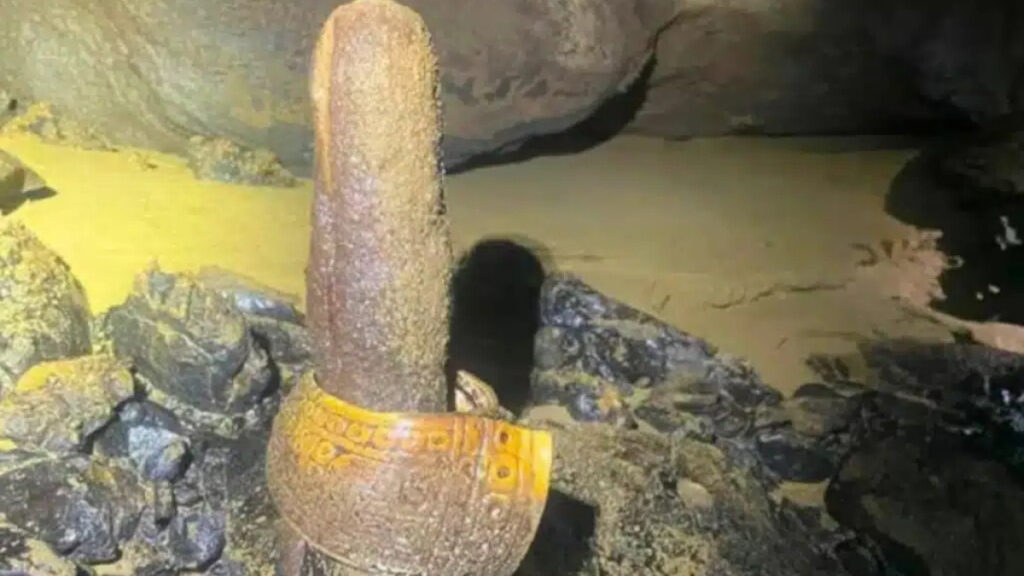
Beyond this constriction—deep enough to discourage looters or casual explorers—they noticed shell objects and carefully placed stone disks arranged around small stalagmites. The setting immediately suggested intentional placement rather than refuse.
Because the passage acts as a natural barrier, researchers believe the chamber had remained inaccessible since antiquity.
Where Is Tlayócoc Cave?
Tlayócoc, meaning “Badger Cave” in Nahuatl, lies at an altitude of more than 2,300 meters in Mexico’s mountainous interior. Such caves are common in karst landscapes but rarely preserve undisturbed ritual contexts.
The cave’s cool, humid, and stable environment slowed decay, allowing not only stone and shell artifacts but also organic materials—such as worked wood—to survive in exceptional condition.
Identifying the Culture Behind the Objects
Mexico’s National Institute of Anthropology and History (INAH) analyzed the artifacts and dated them to approximately 950–1521 CE, spanning the Late Postclassic period.
Based on style, materials, and regional context, archaeologists associate the deposit with the Tlacotepehua people, a highland group mentioned in early colonial sources but still poorly understood archaeologically.
The collection includes:
Shell bracelets and pendants
Stone disks
Carved organic elements
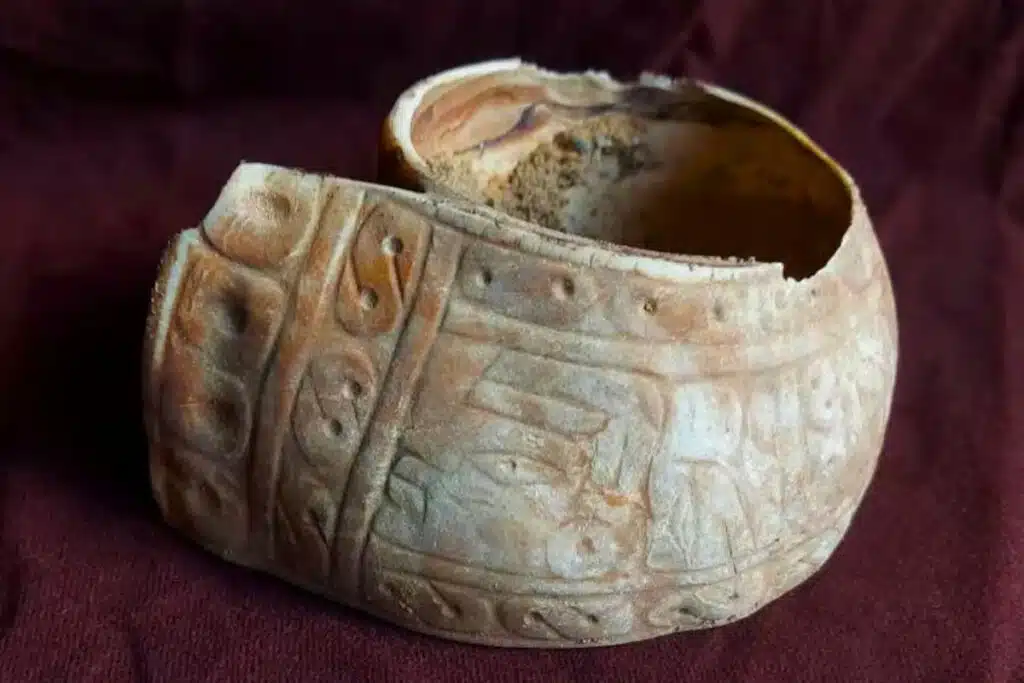
Several shell bracelets bear incised motifs, including:
An S-shaped symbol associated in Mesoamerican iconography with Venus, a planet linked to cycles, warfare, and ritual timing
A profile figure resembling Quetzalcoatl, the Feathered Serpent deity shared across multiple Mesoamerican traditions
These motifs suggest participation in wider religious networks rather than isolation.
Why Caves Mattered in Pre-Hispanic Belief
Across Mesoamerica, caves were not seen as empty spaces. They were understood as liminal zones—places where the human world met the supernatural.
Ethnohistorical and archaeological evidence shows caves were associated with:
The womb of the earth
Fertility and agricultural renewal
Rain, ancestors, and origin myths
At Tlayócoc, bracelets were found threaded onto small, phallic-shaped stalagmites, a configuration archaeologists interpret as symbolic offerings linked to fertility and regeneration rather than everyday adornment.
Preservation Without Human Intervention
What makes the Tlayócoc find especially valuable is not just what was found, but how it survived.
Unlike many cave sites disturbed by looting or reuse, this chamber shows no signs of later intrusion. The objects were not buried intentionally; instead, they were left in place as offerings and then sealed off naturally by the cave’s difficult access.
For archaeologists, such contexts are rare. They allow interpretation based on original placement rather than reconstruction.
Why This Discovery Matters
The Tlayócoc cave assemblage adds depth to our understanding of:
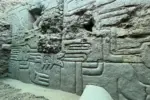
Lesser-documented highland societies before Spanish conquest
How regional groups expressed shared religious ideas in local ways
The continued importance of caves as ritual spaces well into the Late Postclassic period
Rather than rewriting history wholesale, the find fills a gap—providing tangible evidence of belief systems that written sources barely mention.
What We Know vs. What’s Uncertain
What we know
The artifacts date to roughly 950–1521 CE
They were deliberately placed, not discarded
The cave environment preserved them in near-original condition
INAH links the assemblage to the Tlacotepehua culture
What remains uncertain
The exact ritual sequence performed in the cave
Whether the site was used once or repeatedly
How widely these practices were shared across the region
The full symbolic meaning of each motif
A Quiet Reminder Beneath the Ground
The Tlayócoc discovery underscores a broader truth in archaeology: not all major finds come from grand monuments or planned digs. Some emerge from overlooked spaces—quiet, sealed, and waiting.
As analysis continues, the cave’s offerings may help scholars better understand how belief, environment, and ritual intersected in Mexico’s highlands on the eve of European contact.