
Look around you. The modern world is built on a paradox.
Our cities, bridges, and dams rely on concrete—the most consumed material on Earth after water. Yet, this very substance is crumbling. It’s also cooking our planet.
Cement production alone spews up to 8% of global CO₂ emissions. Our infrastructure decays, demanding endless, carbon-intensive repairs.
But what if the solution isn’t forward, but back? What if archaeologists, sifting through the ash of a doomed city, have found the blueprint for a revolution?
The answer lies in a wall in Pompeii, untouched for two millennia. It’s a discovery so profound, it’s merging ancient wisdom with cutting-edge biology to promise a future where our buildings heal themselves.
The Astonishing Find: A Pompeian Time Capsule
In AD 79, Vesuvius froze a construction site in mid-repair. For nearly 2,000 years, it lay buried.
Recent excavations, detailed in Nature Communications, revealed something extraordinary. It wasn’t just a ruin. It was a pristine snapshot of Roman concrete technology.
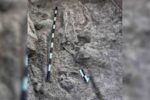
“It’s literally a time capsule,” declares Admir Masic of MIT, part of the international team. Here, the mixing methods were perfectly preserved.
The Romans used a secret ingredient: quicklime. Their process created “hot mixing,” producing tiny, durable calcium carbonate lumps. When microscopic cracks form, water reacts with these lumps. New crystals grow. The crack seals itself.
This isn’t just a historical curiosity. It’s a mind-blowing display of longevity engineering. While modern concrete fails in decades, Roman ports like Portus Cosanus have withstood the Mediterranean’s saltwater assault for two millennia.
Cracking the Code: From Ancient Insight to Modern Miracle
The Roman discovery provided the “why.” Modern science is now delivering the “how.” The goal? Autonomous healing.
Forget slow, natural repair. The new frontier is concrete that actively heals its own wounds.
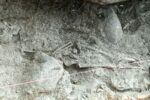
At McMaster University, researchers like Samir Chidiac are designing microscopic capsules. They’re engineered to survive concrete’s violent mixing, then rupture when a crack forms. Inside? A healing agent that rushes to the breach.
“In winter, Canada’s infrastructure faces a familiar, costly enemy: freeze-thaw cracks,” notes the team. Their capsules could stop those cracks in their tracks, saving millions.
The Bio-Revolution: When Concrete Comes to Life
This is where archaeology meets science fiction. The most revolutionary theories aren’t just chemical. They’re biological.
Inspired by nature’s genius, scientists are creating Engineered Living Materials (ELMs).
Picture this. Researchers at Montana State University grew a scaffold of fungal mycelium—the root network of mushrooms. They then infused it with a special bacteria, Sporosarcina pasteurii.
This bacterium performs a magic trick. It produces calcium carbonate, the very glue that holds Roman concrete together. The result? A living, breathing building block that can mineralize and strengthen itself.
The material stayed biologically active for over a month. Imagine a future where a crack in your foundation isn’t a disaster. It’s a trigger. Native spores awaken, weaving new mineral threads to stitch the gap closed.
Global Implications: Reshaping an Industry and a Planet
The implications are staggering. For an industry responsible for nearly 40% of global energy-related CO₂ emissions, this is a seismic shift.
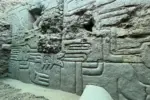
Think beyond mere repair. Think of regeneration. Structures could be grown locally with low-carbon, biological materials. Their lifecycle could extend for centuries, not just decades.
For asset managers, it means an end to endless maintenance cycles. For contractors and suppliers, it’s a total business model upheaval. New skills, new supply chains, and new performance specifications will emerge.
The very definition of strength will change. It will no longer be just about initial load-bearing capacity, but about resilience and longevity.
What This Means for History and Our Future
Archaeology has done more than uncover the past. It has handed us a key to a sustainable future.
The Romans weren’t smarter. They were more pragmatic. They built for eternity. In our rush for speed and scale, we forgot that wisdom.
Now, by decoding their methods and merging them with bioengineering, we stand on the brink of a materials renaissance. We can decouple development from degradation.
The goal is clear: to build a world where our infrastructure doesn’t drain our planet, but sustains it. Where our concrete, like ancient Roman piers, doesn’t just endure, but thrives.
5 In-Depth FAQs
1. How exactly was the Pompeii site discovered, and why is it so significant?
The site was uncovered during recent stabilization and excavation work by the Archaeological Park of Pompeii. Its significance is unparalleled preservation. It’s not a finished monument, but an active worksite, complete with raw materials and freshly mixed mortar. This gave scientists a pristine, uncontaminated sample of exactly how Roman builders mixed their legendary concrete, providing a direct recipe for modern analysis.
2. Can bacterial or fungal concrete really be strong enough for skyscrapers and bridges?
In the immediate term, these biological materials are likely to be used in non-structural elements, repairs, and finishes. However, their role is transformative. They can be used as self-healing agents within conventional concrete or as regenerative claddings. The “hybrid” approach—using biology to enhance and maintain the structural concrete we already use—is the most imminent and revolutionary application.
3. What are the biggest hurdles to bringing self-healing concrete to the mainstream?
Cost, scalability, and standardization are key challenges. Producing millions of reliable microcapsules or keeping bacterial spores viable for years in a concrete mix is complex. The construction industry is also highly regulated and risk-averse. New materials require new codes, standards, and a fundamental shift in how projects are specified—from initial cost to total lifecycle value.
4. Does this research make concrete a “carbon sink” or truly carbon-neutral?
Not yet. The primary carbon impact is from producing Portland cement. Self-healing technologies aim to drastically reduce the need for future cement-based repairs and reconstructions. The real win is in slashing the embodied carbon over a structure’s lifetime. Truly carbon-negative concrete would require combining these technologies with carbon capture in cement production or using alternative, bio-based binders.
5. How might this change the role of archaeologists and materials scientists?
It heralds a new era of deeply interdisciplinary collaboration. Archaeologists are no longer just historians; they are material detectives providing time-tested data. Materials scientists and bioengineers are the translators, decoding ancient performance into modern formulas. This partnership proves that the most cutting-edge sustainability solutions may be hidden in plain sight, waiting in the archaeological record for us to look back, and learn.