

Imagine a bustling port city, rich with traders, priests, and artisans. Now, imagine it vanishing in a single, cataclysmic day, swallowed by the relentless sea. Its memory fading into myth for three thousand years.
This is not the story of Atlantis. It is the real, breathtaking saga of a lost Indian metropolis.
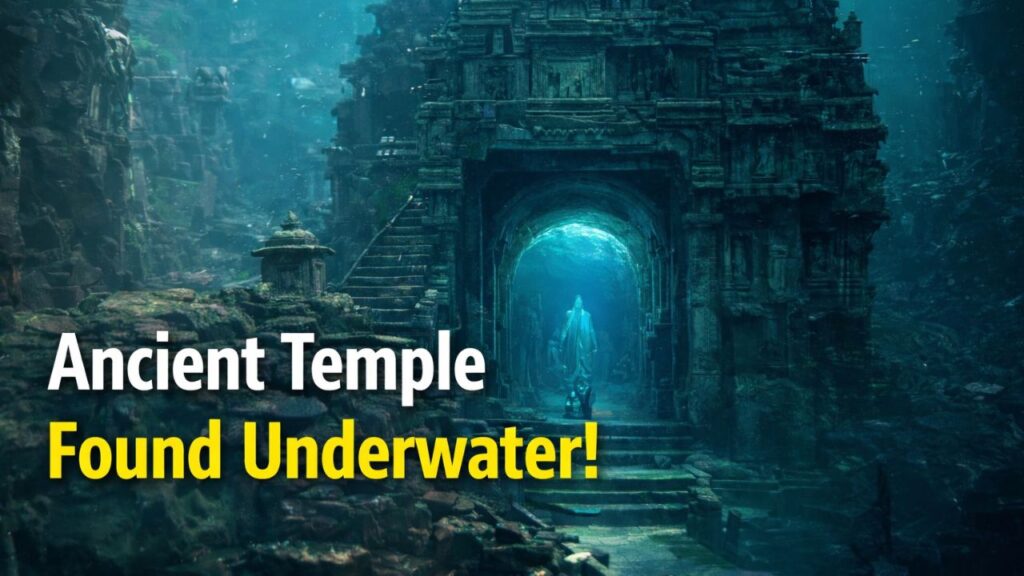
Off the coast of modern-day Tamil Nadu, a team of marine archaeologists has achieved the impossible. They have located and begun to unveil a sprawling, sunken city from the depths of the Bay of Bengal. The artifacts emerging from the silt are not just relics.
They are revolutionary pieces of a puzzle that rewrite our understanding of Indian civilization and its ancient connections to the world.
The Astonishing Find: How the City Was Rediscovered
The discovery is the culmination of years of painstaking work. It blends ancient folklore with cutting-edge technology.
Local fishermen had long spoken of “palaces” visible beneath the waves in certain tidal conditions. Their tales guided initial surveys.
The Tools of Revelation
Archaeologists employed side-scan sonar and magnetic anomaly detectors. These tools mapped the seabed without touching a single stone.
The data revealed a mind-blowing truth. An extensive urban layout lay hidden under layers of sediment and water.
Structures resembling grand walls, complex buildings, and a possible port facility emerged on their screens. This was no small settlement. It was a major, planned city, lost to time.
What the Artifacts Reveal: A Time Capsule from the Bronze Age
The real shock came when divers began their tangible exploration. The seafloor was a museum frozen in a moment of disaster.
Pottery That Tells a Trade Story
Among the first finds were enormous quantities of pottery. This wasn’t just local ware.
Specialists identified pieces of finely crafted Black and Red Ware and Russet Coated Painted Ware. These ceramic types are hallmarks of the later Iron Age in South India, dating roughly from 1200 BCE to 300 BCE.
Their presence confirms the city’s peak during this pivotal, formative era.
The Structures That Defy Expectation
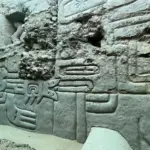
Divers then documented monumental stone structures. They found long, straight foundations suggesting massive fortified walls.
Most incredibly, they uncovered what appears to be a submerged river channel cutting through the city. This aligns with geological evidence of ancient shoreline changes.
It proves the city was built on a riverbank or estuary, a perfect location for a thriving port.

The Personal Treasures
Smaller finds humanize the catastrophe. Intact clay cooking stoves, grinding stones, and ornate beads were found.
A handful of semi-precious stone weights, used for ancient trade, were also recovered. Each object is a silent witness to daily life abruptly interrupted.
Global Implications: Redrawing the Ancient Trade Map
This sunken city is not an isolated wonder. It is a missing link in a global story.
The Myth of the Lost Continent
Some Indian scholars have long theorized about “Kumari Kandam,” a legendary sunken continent mentioned in Tamil literature. While this city is not a continent, its discovery gives dramatic, tangible weight to ancient flood myths.
It suggests these stories may be rooted in real, catastrophic geological events.
A Hub of International Commerce
The city’s location points to a shocking historical truth. South India was likely a major player in trans-oceanic trade a thousand years earlier than previously believed.
This port could have connected to ancient Mesopotamia, the Persian Gulf, and even Southeast Asia. The pottery styles and structural sophistication show a culture at the height of its powers, engaged with distant ideas and markets.
It forces a rewrite of the maritime history of the Indian Ocean.
Theories on a Catastrophic End: How Does a City Sink?
Why is this magnificent city 50 feet underwater? Scientists and archaeologists are piecing together a dramatic finale.
The leading theory points to a massive, rapid geological event. A significant earthquake coupled with a consequent tsunami is the prime suspect.
Evidence of Sudden Destruction
The arrangement of artifacts suggests a rapid inundation. Objects were found in contexts indicating daily use, not gradual abandonment.
Geological cores taken from the site show a distinct layer of marine sediment overlying the habitation layer. This is a classic signature of a sudden, catastrophic flood event.
This city did not fade away. It was likely silenced in a day of terror and chaos, preserved in a watery tomb for centuries.
What This Means for History: A New Chapter Begins
This underwater discovery is a watershed moment for global archaeology. It fundamentally alters our perception.
First, it pushes back the timeline for advanced urbanism and complex maritime activity in ancient South India. This region was not a peripheral backwater but a potential cradle of early civilization.
Second, it provides an unparalleled, undisturbed snapshot of life in the Indian Bronze Age. Unlike land sites rebuilt over millennia, this city is a single-period capsule, offering pristine context.

Finally, it proves that our planet’s history is literally submerged. Major chapters of human achievement lie not in deserts or jungles, but on the continental shelves, waiting to be rediscovered.
In-Depth FAQs
1. Where exactly is this sunken city located?
The precise location is being safeguarded by archaeologists to prevent looting. It is confirmed to be in the Bay of Bengal, off the coast of Tamil Nadu, India, near the ancient temple town of Mamallapuram (Mahabalipuram), which itself has legends of seven submerged pagodas.
2. How was the site dated to 3,000 years old?
Primary dating comes from typological analysis of the recovered pottery. The Black and Red Ware and Russet Coated Painted Ware are well-documented in Indian archaeology. Their styles firmly place the city’s peak activity in the period between 1200 BCE and 300 BCE. Further scientific dating, like Optically Stimulated Luminescence (OSL) on buried materials, is underway.
3. Could this be linked to the legendary Kumari Kandam?
While it does not prove the existence of a lost continent, the discovery validates the cultural memory of a great land loss. It provides a scientific, archaeological basis for the ancient Tamil flood myths, suggesting they originated from real, traumatic submergence events of coastal cities.
4. What is the biggest challenge for the divers and archaeologists?
The challenges are immense. Working at depth requires technical diving expertise and is limited by weather and currents. Visibility is often poor. The careful excavation of fragile artifacts from seabed silt, without damaging them, is a painstaking, slow-motion process far more complex than land archaeology.
5. What happens next at the site?
The current phase involves detailed digital mapping and controlled recovery of key artifacts for conservation and study. Long-term plans may include creating a 3D virtual model of the entire city for public access. A full-scale excavation is a decades-long project that will require international collaboration and significant funding.