



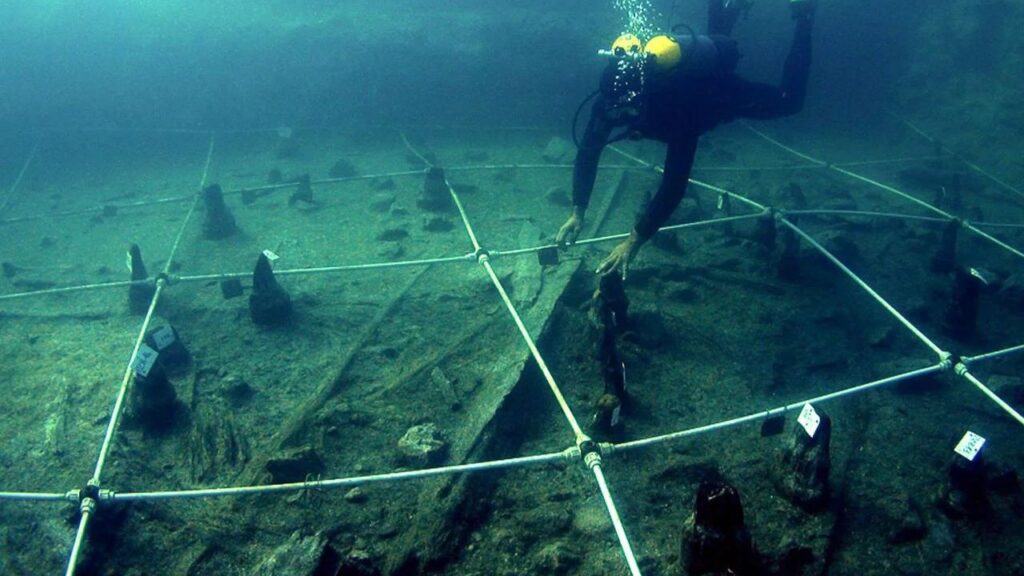
Forget the trope of a single, mysterious shipwreck. Imagine an entire timeline of human ambition, resting in silent formation on a lakebed. This isn’t the Mediterranean. This is Wisconsin. Beneath the familiar waters of Lake Mendota, archaeologists have found not a relic, but a library. A collection of sixteen ancient canoes, with the oldest whispering from over five millennia ago. This discovery doesn’t just add to history. It rewrites our understanding of ancient North American sophistication.
The Astonishing Find: A Submerged Fleet Emerges
The first canoe surfaced in 2021—a remarkable 1,200-year-old vessel. It was a headline. Then, in 2022, a second was dated to 3,000 years old. The plot thickened. Systematic surveys in 2025 delivered a mind-blowing revelation: fourteen more boats. The lake floor was a sacred graveyard of watercraft. This was no accidental loss. This was a repeated, millennia-long tradition. A single site now holds a continuous record of boatbuilding from 3000 BC to 1250 AD. It’s an archaeological jackpot.
The Oldest Sentinel: A Boat from a Forgotten Era
Carbon dating delivered the thunderclap. The oldest canoe was constructed around 3000 BC. Let that date resonate globally. This boat was shaped from a living tree when Stonehenge was just an idea. When the Great Pyramids were unbuilt dreams in the Egyptian desert. In Mesopotamia, cuneiform was in its infancy. Meanwhile, in the North American woodlands, a master craftsperson was expertly hollowing an oak log. This vessel is the oldest dugout canoe in the Great Lakes and the third-oldest in Eastern North America. It shatters timelines.
Global Implications: A New Map of Ancient Innovation
This fleet forces a dramatic rethink. For too long, narratives of advanced ancient technology centered on the so-called “Cradles of Civilization.” The Lake Mendota canoes prove parallel, independent innovation was flourishing here. These weren’t crude logs. They were engineered solutions. The discovery reveals a deep, sustained connection to the landscape. It points to a complex, settled society with sophisticated knowledge passed down for over 4,000 years at this very location. This is a civilization defined not by pyramids, but by profound ecological mastery.
Archaeologists Unearth a 4,000-Year-Old Temple Beneath Another on Kuwait’s Island of Mysteries
The Development Dilemma, How a Hidden Workforce Shortage is Threatening Canada’s History and Future
Gold Earrings of a Lost Girl: The Silent Stories Emerging from Egypt’s Newfound Necropolis
The Bioengineering Breakthrough: Ancient Mastery of Wood
The choice of wood is a revelation in itself. Eight canoes were made of red or white oak. To a modern boatbuilder, this seems counterintuitive. Red oak is porous. It sinks. So why use it? The answer is revolutionary. Archaeologists now believe ancient builders practiced an early form of bioengineering. They deliberately selected damaged trees or induced stress. This triggered the growth of tyloses—natural, balloon-like structures that clog the water-conducting vessels of the wood.
These builders didn’t just find wood. They manipulated it at a cellular level before it was ever felled. They created a more buoyant, rot-resistant material. This isn’t just woodworking. It’s a deep, symbiotic understanding of forest ecology. It was material science, passed through generations.
A Culture Casting Nets: The Evidence of Sustained Life
These canoes were workhorses of survival and prosperity. Archaeologists found fishing net weights inside several vessels. This simple artifact speaks volumes. It indicates organized, communal fishing. It suggests food surplus, specialized tool-making, and trade. The lake was a highway and a pantry. The fleet enabled access to remote resources, connecting communities across a watery landscape. This was a stable, thriving culture anchored to this lake for countless generations.
Theories and Mysteries: Why Were They All Here?
A profound mystery lingers. Why are sixteen canoes, from different millennia, all resting in one concentrated area? This was clearly a designated place. A cultural hotspot for launching, or perhaps, ritually retiring watercraft. Some theorists propose it was an ancient boatyard or a natural harbor protected from storms. Others wonder if older, damaged canoes were ceremonially sunk to honor them, creating an underwater monument to ancestral travel. Each canoe may represent a generation, deliberately placed with its forebears. The site feels sacred.

The Tiny Stamp That Shatters History, How a 7,500-Year-Old Seal Rewrites Our Past
What Lies Beneath Lichtenau? The Massive, Pristine Vault That Archaeologists Never Expected to Find
Concrete’s 2,000-Year-Old Secret, Unearthed in Pompeii, is About to Change Everything
What This Means for History: Rewriting the American Narrative
This discovery is a seismic correction to the historical record. It proves that long-term, technologically adept societies were shaping North America thousands of years before European contact. The “prehistoric” label feels inadequate. These were engineers, hydrologists, and master foresters.
The Lake Mendota canoes pull the focus from just megastructures to intimate, sustainable technology. They show that civilization thrives not only by dominating nature, but by understanding it with exquisite precision. This underwater fleet is a monument to a different kind of genius. A quiet, resilient intelligence carved in oak and preserved by cold, dark water.
In-Depth FAQs: Your Questions Answered
1. How were these incredibly old wooden boats preserved?
The cold, low-oxygen environment at the bottom of Lake Mendota created perfect anaerobic conditions. This halted the growth of microbes and fungi that would normally decompose wood. The fine silt further sealed and protected the vessels, effectively placing them in a natural time capsule.
2. What does “3000 BC” mean in a global context?
Globally, 3000 BC was a period of explosive innovation. In Egypt, the Early Dynastic Period was beginning. In Mesopotamia, the Sumerians were inventing writing. In the British Isles, construction started at Stonehenge. The Lake Mendota canoe places the societies of North America’s interior as active, contemporary participants in this age of human ingenuity.

3. What is carbon dating, and how accurate is it?
Carbon dating measures the decay of radioactive carbon-14 in organic material. All living things absorb C-14; it decays at a known rate after death. Scientists measure the remaining amount to calculate age. It’s highly accurate for objects up to about 50,000 years old and was crucial for establishing the breathtaking timeline at Lake Mendota.
4. Will these canoes be raised and displayed?
The two earliest discovered canoes (1,200 and 3,000 years old) have been carefully raised and are undergoing a multi-year preservation process. The decision to raise others will be made case-by-case. In-situ preservation is often safer. The new virtual reality technologies, like those used at the Roman House of the Griffins, could allow the public to explore this underwater site without disturbing it.
5. How does this change the view of early North American societies?
It obliterates the outdated notion of simple, nomadic hunter-gatherers. This points to sustained, sedentary, or semi-sedentary communities with advanced technical knowledge that was refined over thousands of years. It shows planning, communal labor, and a specialized understanding of materials that rivals contemporary ancient societies anywhere on Earth.