
The Grandest Act of Defiance: History is often written by the victors on battlefields. But what about the history written by those who refused to fight—who chose instead to disappear, leaving behind a monument of their absence as their final statement?
In the heart of the Thar Desert, under a relentless sun, lies a testament to this ultimate form of protest. Kuldhara is not a ruin from antiquity. It is a perfectly preserved fossil of a single, catastrophic night in 1825. Once a thriving hub of the ingenious Paliwal Brahmin community, it now stands as India’s most eloquent ghost town—a place where silence speaks louder than any war cry, and where empty streets tell a story of collective honor so powerful, it forged a legend that has lasted for two centuries.
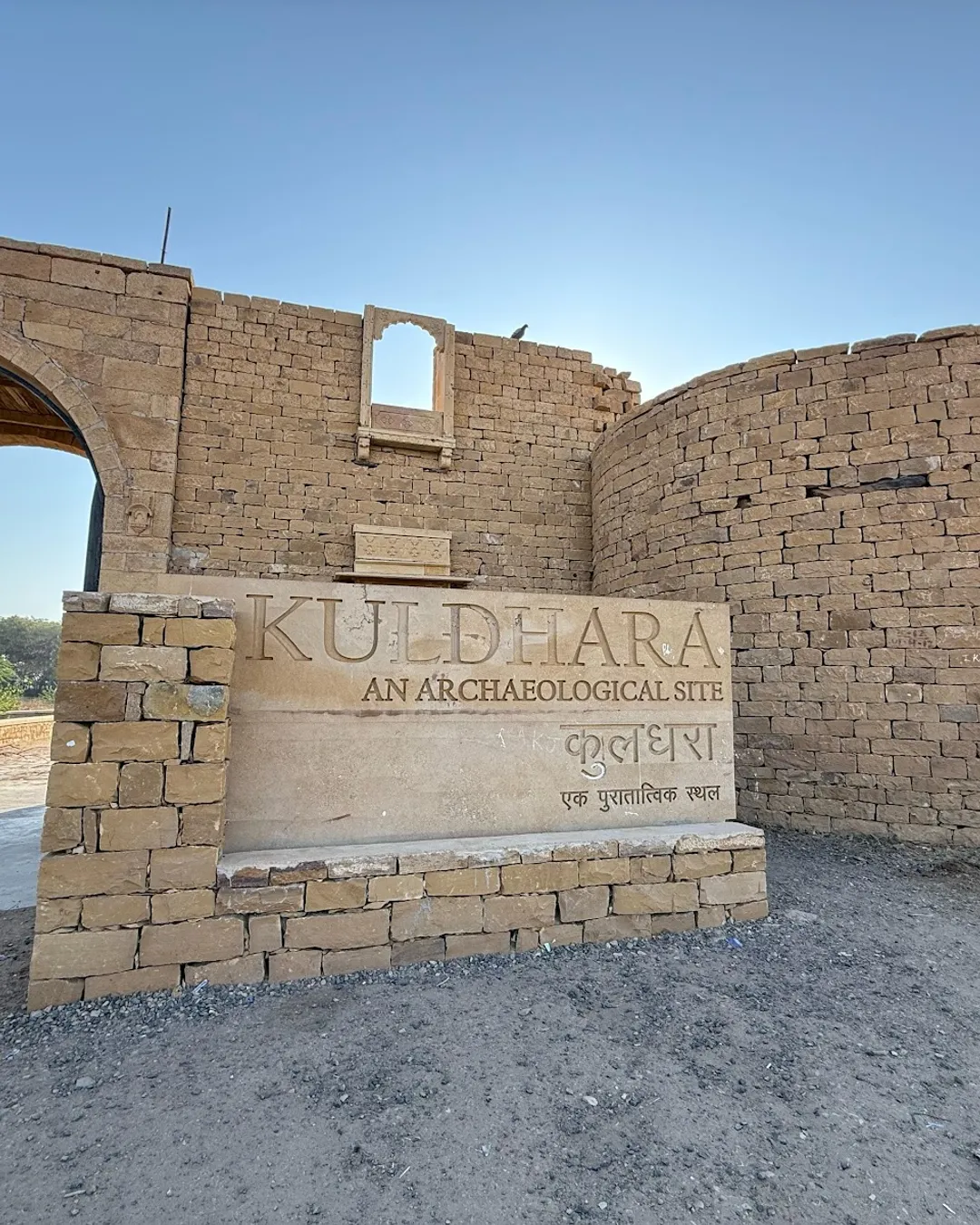
The Astonishing Find: A Town Frozen in Time
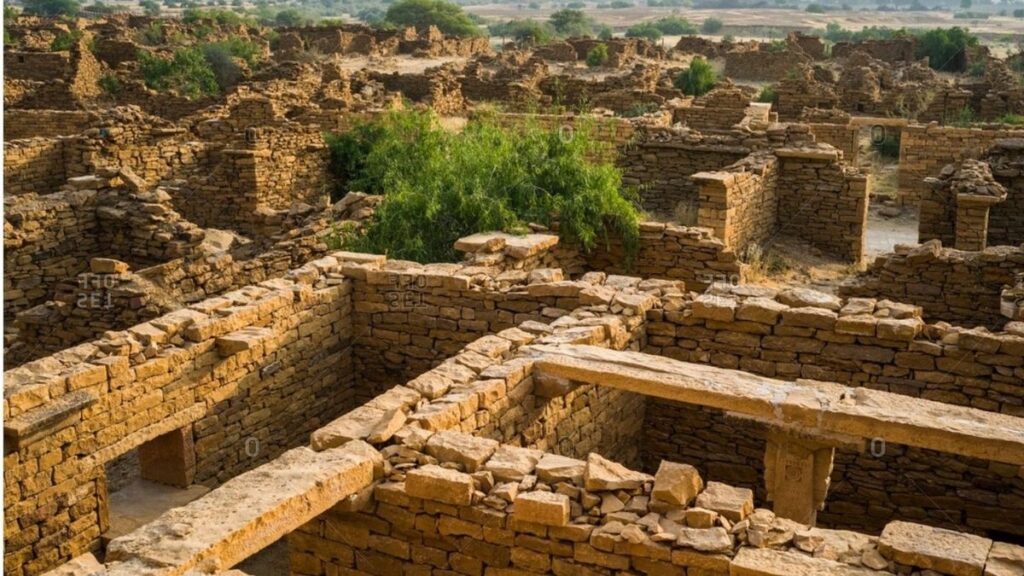
Protected by the Archaeological Survey of India, Kuldhara is not merely rubble. It is an open-air archive of sudden extinction.
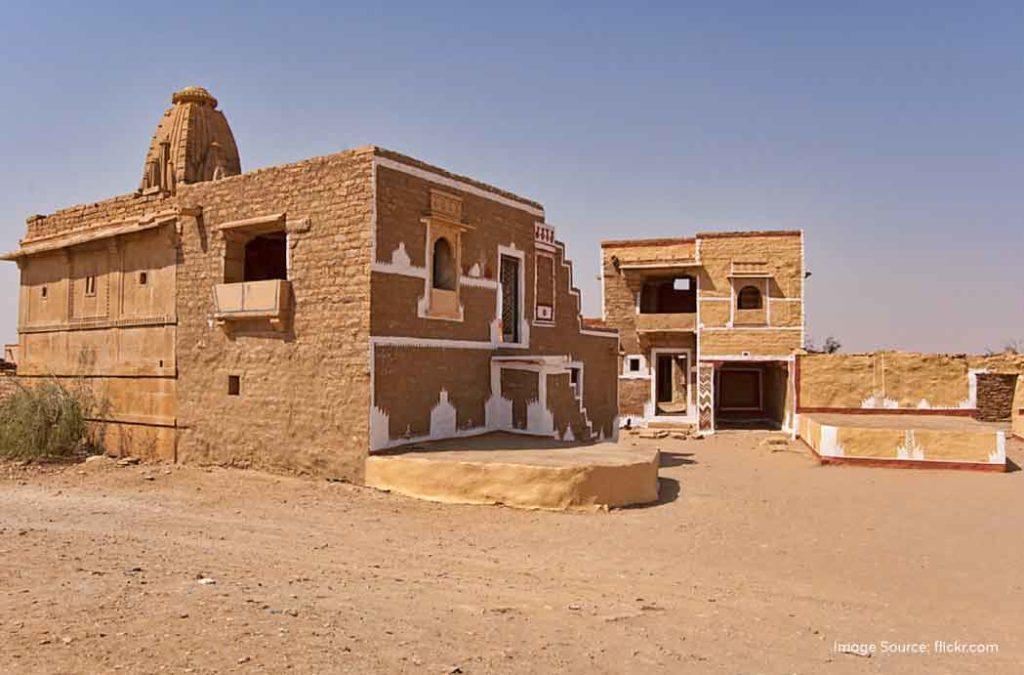
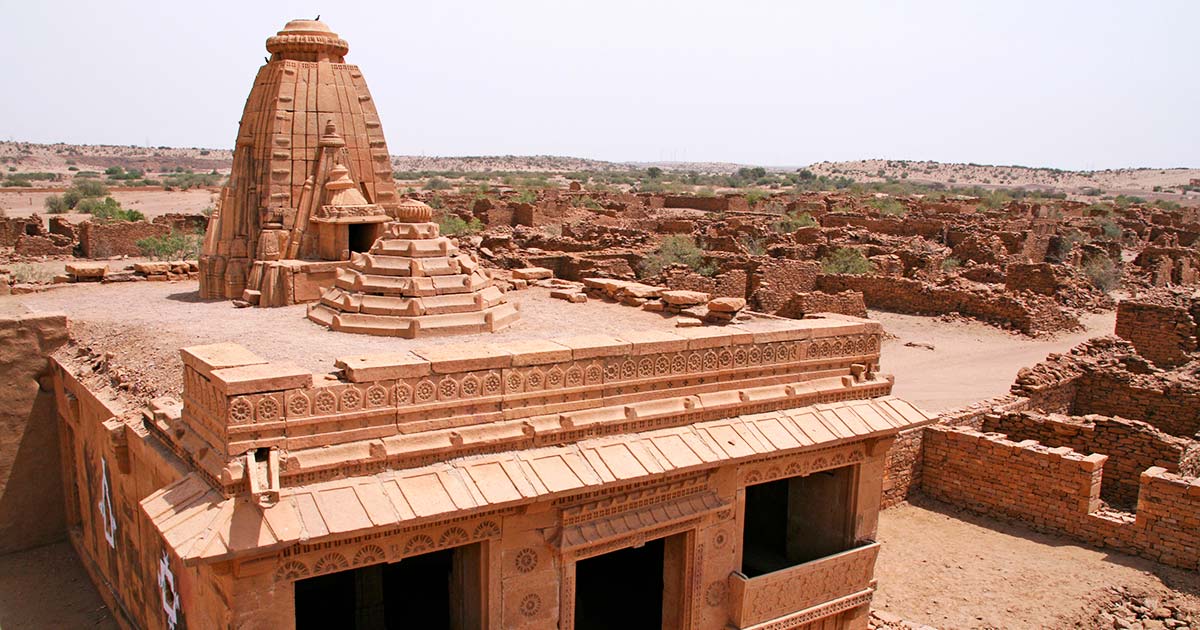
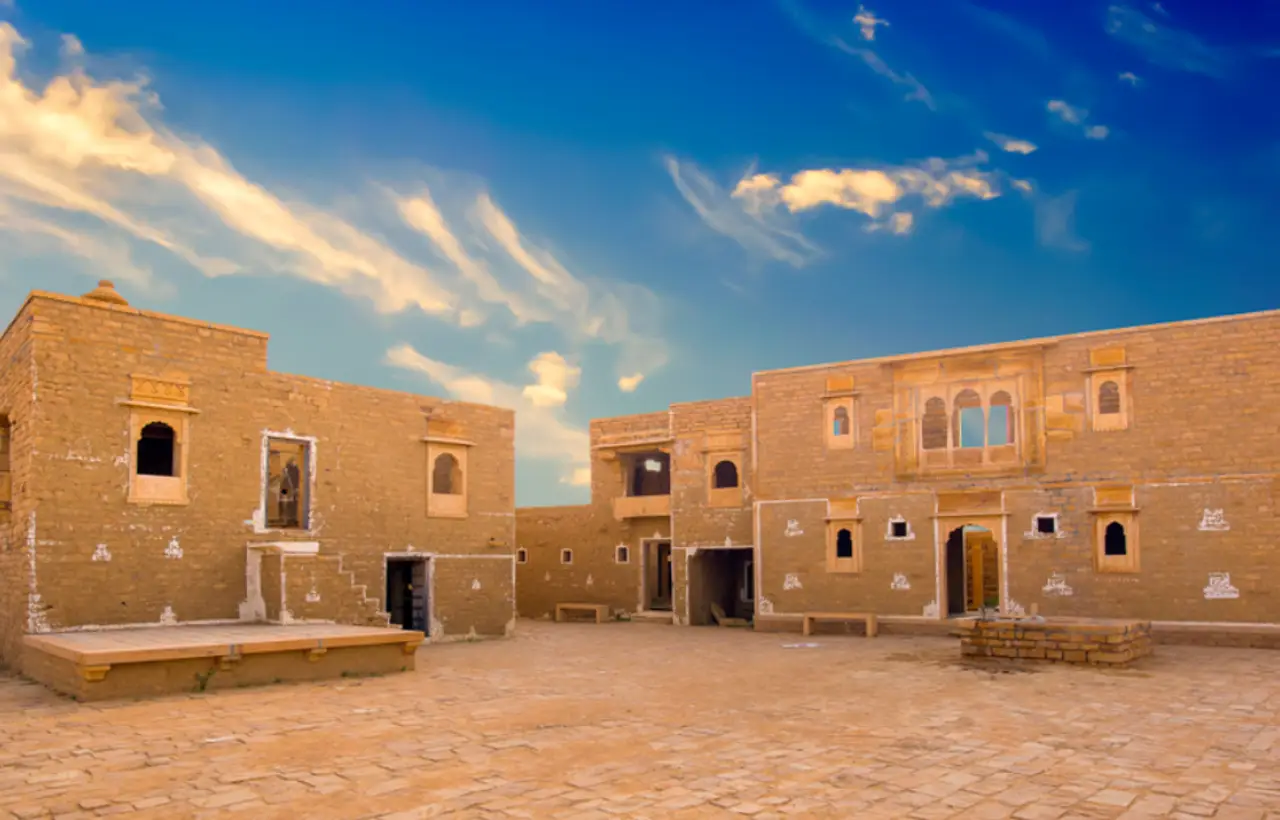
The Architecture of AbundanceWalking its grid-like streets, you see the bones of prosperity. Multi-storied havelis with intricate jharokhas (bay windows), carved facades, and sophisticated rainwater harvesting systems reveal a society that was wealthy, organized, and architecturally advanced. They mastered the desert, turning it fertile. This context makes their abandonment not an act of poverty, but one of profound, deliberate sacrifice.
The Catalyst: A Tyrant’s Ultimatum The oral and historical record points to a specific, chilling event. Salim Singh (or Salivahan), the powerful and cruel prime minister of the Jaisalmer state, set his sights on a young woman from the village. He demanded her, threatening ruinous taxes and violence upon the community if refused. The Paliwals faced an impossible choice: submission or annihilation.
The Unthinkable PactIn a supreme act of communal resolve, the elders of Kuldhara and 83 neighboring villages made their decision. They would not surrender their dignity. They would not wage a futile war. Instead, they would enact a breathtaking protest: total exodus. Under the cover of a single night, over 1,500 people gathered their most sacred possessions and vanished into the desert, leaving everything else behind.
Deep Dive: The Anatomy of a “Curse”
The legend of the curse is not mere superstition; it is the psychological and cultural aftermath of a traumatic, principled stand.
The Oath That Shaped a Century As they left, the story goes, the community invoked a solemn oath: that no one would ever be able to settle this land again, and that the village would stand as a barren memorial to the injustice they suffered. For nearly 200 years, this has held true. The “haunting” of Kuldhara is not of ghosts, but of this powerful, lingering vow—a moral shadow cast by a righteous anger so potent it seemingly altered the fate of the land itself.
Archaeology Meets LegendArchaeological examination supports a swift, organized departure, not a violent end. The absence of evidence of battle or massacre aligns perfectly with the narrative of a planned, collective flight. The silence of the stones corroborates the story. The curse, therefore, can be interpreted as the enduring cultural memory of that oath, a story so powerful it has preserved the village’s ruins and its narrative with unparalleled potency.
Global Implications: The Ultimate Price of Sovereignty
Kuldhara’s story is a universal archetype that resonates far beyond the Rajasthan desert.
Non-Violent Resistance Before Its Time Centuries before Mahatma Gandhi’s satyagraha, the Paliwals performed a radical act of non-cooperation. They weaponized their absence. By removing themselves—their labor, their intellect, their prosperity—they stripped the tyrant of his prize and inflicted an economic and cultural wound on the kingdom. Their victory was pyrrhic and tragic, but it was a victory of principle.

The Echo of Collective Trauma It forces a haunting question: What must a people endure to make oblivion preferable to life under oppression? Kuldhara stands as a somber monument to the extreme limits of community resilience and the catastrophic human cost of predatory power. It is a story not of kings and conquests, but of ordinary people making an extraordinary choice to control their own narrative in the only way left to them.
What This Means for History: The Legacy in the Void
Kuldhara challenges how we define historical significance. Its power lies not in what was built, but in what was willingly forsaken.
The ruins are a permanent echo of that final, defiant night. The so-called “curse” is the indelible mark of their collective will. In choosing to become a ghost town, Kuldhara achieved a form of immortality that a thriving village might never have known. Its empty windows and doorless frames are not just haunted; they are watching. They remind us that history is also written by those who walk away, leaving behind a silence that speaks volumes across the centuries.
5 In-Depth FAQs
1. Is Kuldhara scientifically proven to be cursed? No, there is no scientific basis for a supernatural curse. The persistent abandonment is better explained by sociological, environmental, and economic factors. The powerful legend, however, has created a strong cultural taboo, and the village’s eerie, preserved state naturally fuels paranormal speculation. The “curse” is a profound cultural narrative, not a paranormal fact.

2. Where did the people of Kuldhara go after 1825? This is history’s great unanswered question and a key part of the mystery. After the exodus, the Paliwals are believed to have dispersed across present-day Rajasthan, Gujarat, and Madhya Pradesh. They assimilated into other communities, their distinct identity as the “Paliwals of Kuldhara” fading into history. Their precise destinations remain lost, deepening the aura of a complete, silent vanishing.
3. Can tourists visit Kuldhara? Is it safe? Yes, it is a major tourist attraction managed by the Rajasthan government and ASI. It is perfectly safe to visit during daylight hours. Facilities include an entry ticket, informational signs, and sometimes guides. Staying overnight is strictly prohibited, a rule that adds to the site’s mysterious allure.
4. What is the most striking thing to see there today? Beyond the general ruins, visitors are struck by the palpable silence and the sheer scale of the abandonment. Key features include the remains of the once-grand havelis, the intact street layout, and the old temple complex. The experience is less about a single artifact and more about the overwhelming atmosphere of a life interrupted.
5. Why does this story still matter today? Kuldhara’s story is a timeless parable about the abuse of power, the defense of community dignity, and the extreme forms resistance can take. In a modern world where displacement and cultural erosion are still realities, Kuldhara serves as a powerful, stone-made memorial to the cost of injustice and the enduring human spirit’s refusal to be broken, even in retreat.