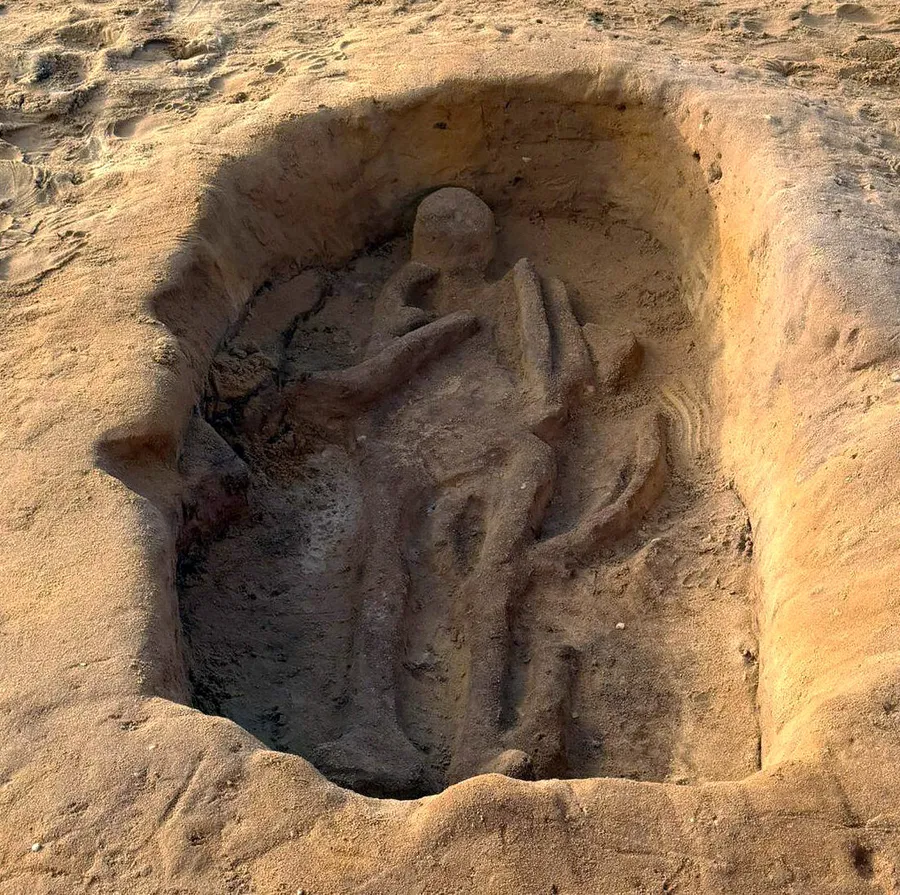
Imagine a king and his loyal horse, buried together in a final, majestic ceremony. For over a millennium, their story was erased by the very earth that held them. The flesh and bone dissolved away.
But the sand remembered.
In a plot destined for a modern nuclear power station, archaeologists have peeled back the turf to reveal a forgotten cemetery of the Anglo-Saxon elite. The crown jewel is a burial of staggering significance. A ‘princely’ grave directly comparable to the legendary Sutton Hoo.
This is not just another ancient find. It is a national treasure emerging from the acidic soil of Suffolk. The discovery promises to rip a new window into the turbulent, glittering world of 7th-century Britain. A time when kingdoms rose and fell, and power was buried with swords and steeds.
The Astonishing Find: Silhouettes of a Lost Elite
The discovery was made near Leiston, Suffolk, during preparatory work for the Sizewell C nuclear project. What began as routine archaeology exploded into a historic revelation.
The site is one of Britain’s largest-ever digs. A staggering 200 archaeologists are scouring 70 sites across two million square meters. They are unpacking 40,000 years of history. But one find has eclipsed all others.
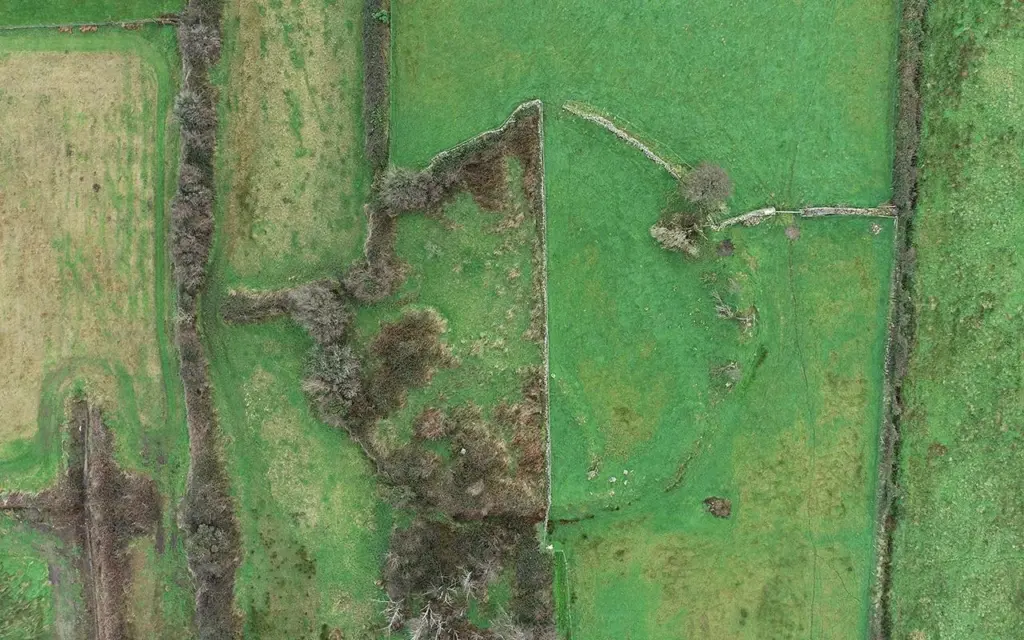
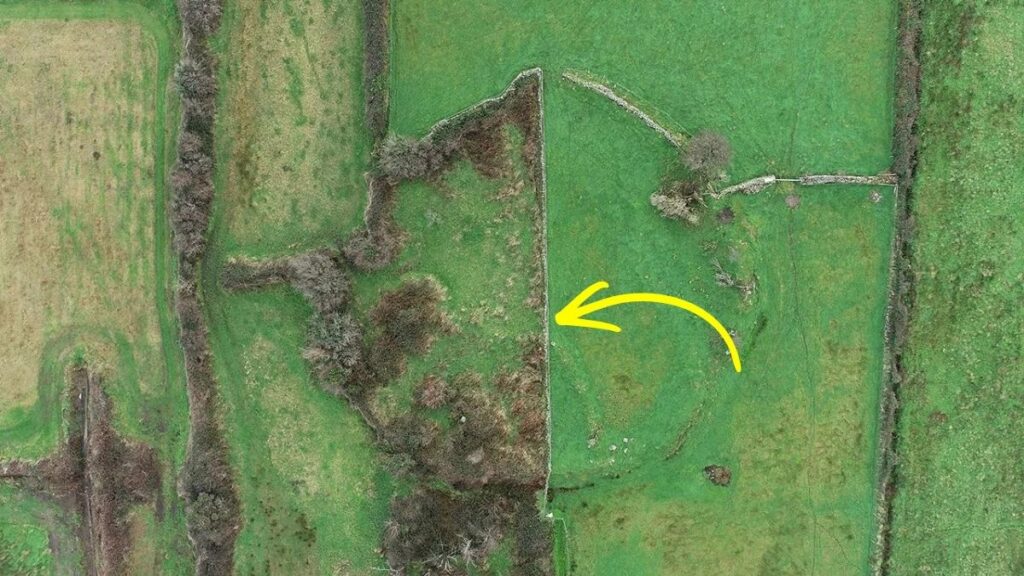
They found a burial ground arranged with deliberate power. At least 11 burial mounds crown a prominent landscape point. This was a statement in earth and turf. A declaration of lineage and territory visible for miles.
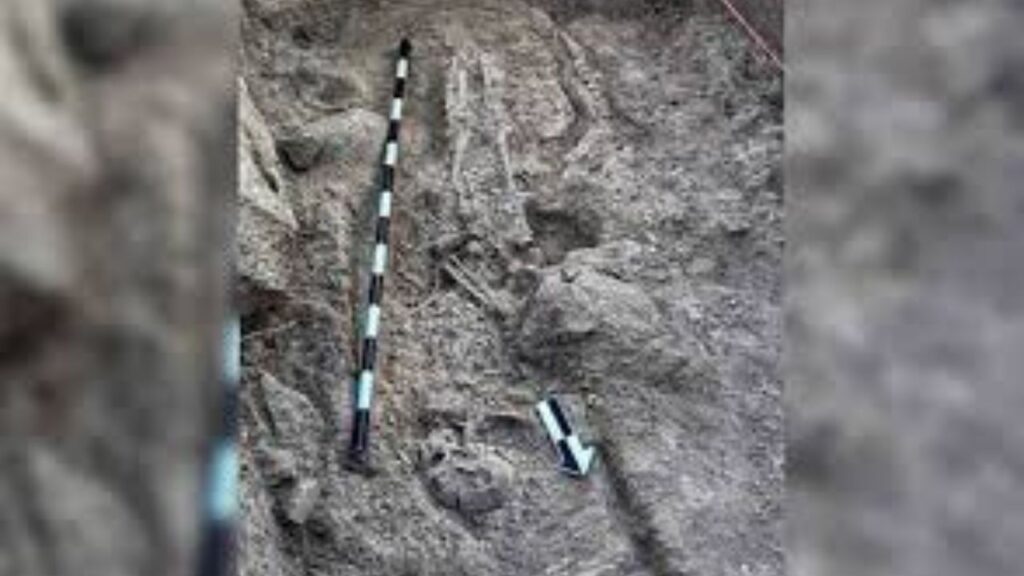
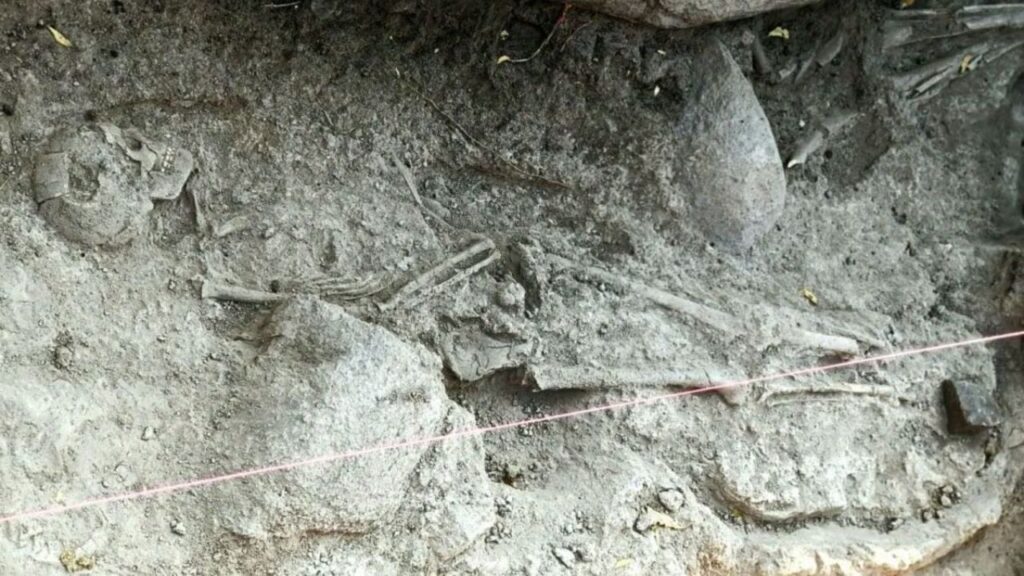
Within this cemetery of the powerful, one barrow stood out. It contained a scene frozen in ritual time. Two individuals were buried alongside a fully harnessed horse. Weapons and personal belongings accompanied them.
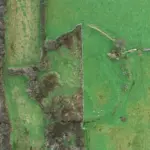
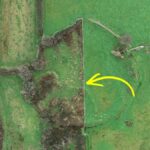
The acidic sand performed a strange magic. It consumed all organic matter but left perfect, ghostly impressions. These “sand silhouettes” capture the haunting outlines of the bodies with chilling clarity. They are negative images of death, and positive proof of immense status.
Time is Running Out: The 2-Million-Year-Old Site Vanishing Before Our Eyes
Kushan-Era Buddhist Complex Discovered in Kashmir Baramulla District
Decoding the ‘Princely’ Grave: A Horse, Weapons, and Status
The term “princely burial” is used with precision. It places this grave within an exclusive club of early medieval power displays. It shares direct DNA with the ship burials at Sutton Hoo and Snape, and the chamber grave at Prittlewell.
The inclusion of a horse is a mega-watt status symbol. In life, it was a weapon of war, a symbol of mobility and elite authority. In death, it was a supreme sacrifice. A companion for the journey to the afterlife, signaling the deceased’s unparalleled rank.
The presence of weapons—likely swords, spears, or shields—confirms a martial identity. This was a ruler or a supreme warrior-noble. Personal items like jewellery or vessels speak to wealth and identity.
This burial package is a deliberate performance. It was designed to awe the living and equip the dead for a prestigious existence beyond. It shouts of a society where power, honor, and pagan-esque ritual were intertwined.
The Site’s Global Significance: A Coastal Power Corridor
Why here? The location is not random. Suffolk’s coastline was a dynamic highway in the 6th and 7th centuries. It connected the Anglo-Saxon kingdom of East Anglia to the wider North Sea world.
This was a corridor of trade, ideas, and conflict. Sites like Sutton Hoo, just 20 miles away, show this region was a crucible of emerging kingdoms. The Leiston burial ground is another powerful node in this network.
Discovering another elite cemetery so close to Sutton Hoo is revolutionary. It suggests a landscape dense with competing centers of power. Perhaps this was a rival noble family’s seat. Or a satellite of the East Anglian royal dynasty.
The find shatters the idea of a single, isolated royal site. It paints a picture of a politically complex, richly connected coastline. A forgotten era where local chieftains displayed their power in burial to legitimize their rule over the living.
A Tapestry of Time: From Neanderthals to Norman Coins
The ‘princely burial’ is the star, but the wider dig is a time machine. The site contains a staggering accumulation of history, layer upon layer.
Archaeologists have found a Neanderthal hand axe, whispering of human activity over 40,000 years ago. Neolithic arrowheads from 4,000 BC speak of ancient hunters. An incredibly rare intact Iron Age oak ladder hints at sophisticated woodland engineering.
Then came the Romans, followed by the Anglo-Saxons who created the princely barrows.
The timeline leaps forward to 2023, when the team unearthed a hoard of 321 silver coins from the 11th century. Nicknamed “the pasty” for its shape, this was hidden wealth from the tumultuous Norman Conquest period.
This continuum of finds makes the site a national archive. It tells the complete story of human ambition on this stretch of coast. From deep prehistory to the dawn of medieval England.
What This Means for History: Rewriting the Dark Age Map
The Leiston discovery is of “national importance,” as lead archaeologist Len Middleton states, because it forces a historical rewrite. It deepens our understanding of power, belief, and identity in early medieval England.
Firstly, it proves Sutton Hoo was not a lonely outlier. Elite burial traditions were widespread along this coast. This suggests a more fragmented, competitive political landscape than previously assumed.
Secondly, the haunting sand silhouettes provide a new type of archaeological record. They offer a perfect mold of the burial layout, allowing for unprecedented study of body position, attire, and object arrangement.
Finally, it highlights the incredible historical wealth lying beneath “development” land. This find, on a nuclear site, is a powerful argument for rigorous archaeological investigation. It reminds us that the roots of our national story are still being uncovered, often in the most unexpected places.
The prince and his horse have ridden out of oblivion. They bring with them a clearer, more complex vision of a critical century. A time when England’s kingdoms were being forged, one lavish burial at a time.
The 8,000-Year-Old Guardian: How a Box-Shaped Tumba Madžari Goddess Protected Stone Age Homes
In-Depth FAQs
1. How does this discovery compare to Sutton Hoo?
It is directly comparable in date (6th-7th century), elite status, and geographic context. While Sutton Hoo is a ship burial and this is a barrow burial, both represent the absolute peak of aristocratic funerary display. They are part of the same elite “language” of power in early East Anglia.
2. What are “sand silhouettes” and why are they significant?
In acidic sandy soil, bones and organic materials dissolve over centuries. However, they can leave a stained, compacted outline in the sand—a perfect negative impression of the body or object. These silhouettes are incredibly significant because they preserve the exact position and form of what decayed, offering detail often lost in other soils.
3. Who might the buried individuals be?
They were certainly high-status members of the Anglo-Saxon elite—a ruling noble, a warrior prince, or a powerful local chieftain. Their exact names are lost to history. Further analysis of the silhouettes, soil chemistry, and grave goods may reveal more about their age, health, and even relationships.
4. What happens to the site now?
The archaeological excavation is a careful, recorded rescue operation before construction. The finds, including detailed 3D records of the silhouettes, will be conserved, studied, and likely displayed in local museums. The site’s importance will be formally documented for the historical record.
5. Could there be more burials like this undiscovered in Britain?
Absolutely. This find proves major elite sites are still out there. Development-led archaeology, geophysical surveys, and even erosion are constantly revealing new chapters. The British landscape, especially in historically rich areas like East Anglia, still holds countless ancient secrets.